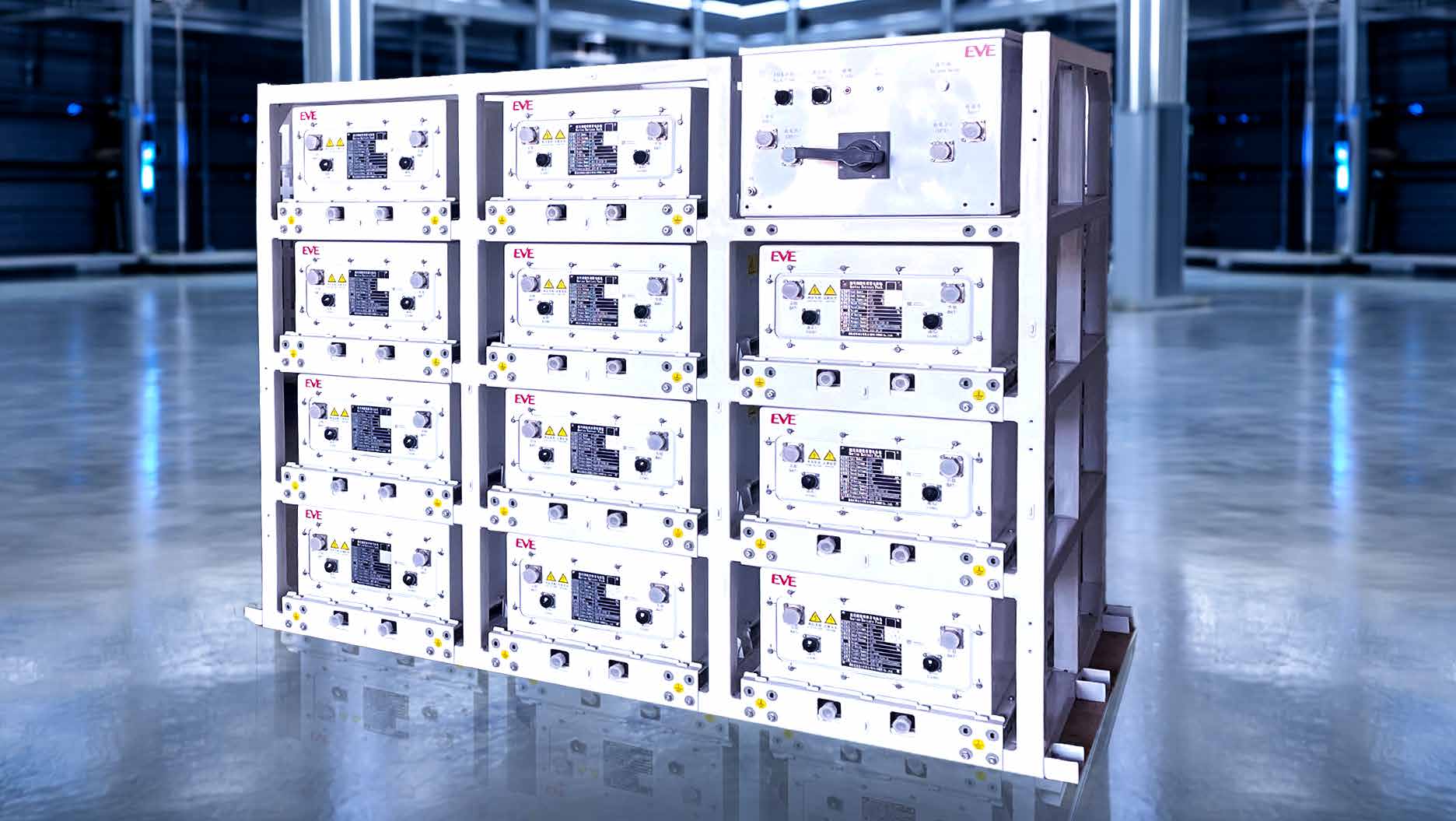
Battery systems for naval electric propulsion

Powering a sustainable future for the naval sector

Completely emission-free operation, designed for maritime and inland-waterway traffic in environmentally sensitive areas.

100%Electric · zero direct emissions
IP67Protection across the series
6,000–8,000Life cycles
IACSStandards compliance
The naval sector's transition

Naval electrification demands battery systems that are safe, modular and adapted to each operation.

Regulatory pressure, the reduction of in-port emissions and the need for more efficient operations are accelerating the adoption of electric solutions in professional vessels.

At SYM Naval we develop Blu-e Propulsion, our own system based on modular LFP batteries, designed to integrate into 100% electric propulsion projects with custom configuration, liquid cooling and an architecture built for naval use.

LFP batteries

LFP batteries for naval use: lifespan, stability and safety

LFP batteries have established themselves as one of the most suitable options for demanding maritime applications. Although they offer a lower energy density than other chemistries, they stand out for their thermal stability, long lifespan and robustness. And, above all, for their safety: unlike other chemistries, LFP batteries eliminate the risk of self-sustained fire (thermal runaway), a decisive factor for onboard operation.

Longer lifespan

Between 6,000 and 8,000 life cycles, with a longer lifespan than other technologies.

Thermal stability

Predictable behaviour under temperature and load, key to on-board safety and certification.

Improved safety

Superior thermal stability and elimination of the risk of self-sustaining fires. Thermal Run Away without propagation.

Zero direct emissions

100% electric operation, ideal for ports, coastal zones and environmentally protected areas.

Lower cost

A more competitive cost per cycle and more predictable fleet management across the vessel's life.

Robustness

Preferred in the maritime industry for their robustness under demanding charge and discharge cycles.

System architecture

From cell to complete battery system

The architecture is organised in levels, from the individual cell to a redundant system with its own energy management. Each configuration is sized according to the power, autonomy, available space and technical requirements of the project.

01 / CELL

Cell

The smallest unit of the battery system.

02 / MODULE

Battery Module

Grouping of cells that forms the basic battery unit.

03 / PACK

Battery Pack

Set of modules with integrated BMS for control, protection and monitoring.

04 / BANK

Battery Bank

Electrical connection of several Battery Packs to reach the required capacity and power.

05 / SYSTEM

Battery System

Complete system with at least two independent Battery Banks, cooling and its own EMS.

The Battery System integrates at least two independent Battery Banks, cooling panels and its own energy management system (EMS), allowing a redundant solution adapted to the operation of each vessel.

Battery Module

Battery modules custom-configured for each project

The following configurations are representative of the series. Each module is defined in engineering according to the project, meeting the technical requirements and the applicable IACS standards.

Battery Module Nom. voltage (VDC) Nom. capacity (Ah) Life cycle Nom. energy (kWh) Weight (kg)
BP-B3-2P18S-157.62106,000 / 8,00012.096100 ±5
BP-B3-3P12S-138.43156,000 / 8,00012.096100 ±5
BP-B2-1P12S-1238.42806,000 / 8,00010.75183 ±5
BP-B2-1P18S-157.62806,000 / 8,00016.12118 ±5
BP-B3-1P36S-11115.23046,000 / 8,00035.020225 ±5

Reference values. The final configuration of modules, packs and battery banks is defined according to the needs of each project.

Lightweight design and compact
Liquid cooling and efficient heat dissipation
Independent and safe preprocessing
Thermal Run Away without propagation
IP67 protection across the series
1C charge and discharge rate
Plug & play battery swapping
Intuitive panel and adaptable installation
Pack & Bank

Modularity, redundancy and electrical safety

The Pack & Bank architecture allows the battery system to scale in a modular and redundant way. Each configuration can be adapted to the available space, the operating regime and the technical requirements of the vessel.

Battery Pack

Maximum electrical safety
  • Modular design to ease transport, installation and integration on board.
  • Integrated liquid cooling to control temperature, protect the system and extend battery life.
  • Custom configuration of Battery Modules to reach the voltage defined for each project.
  • Independent operation, allowing one pack to be charging while another is discharging.
  • Optional onboard battery charger (OBC) in each Battery Pack.

Battery Bank

Consistency and stability
  • Liquid cooling and temperature equalization to keep stable system behaviour.
  • Standard interface output (GB and CCS2).
  • Port power compatibility.
  • Minimum composition of two Battery Packs to add redundancy to the system.
  • Flexible parallel configuration to reach the power and capacity required by the project.
General requirements

Designed for demanding marine conditions

The system takes into account environmental conditions typical of naval applications, including temperature variations, high relative humidity, corrosive exposure and protection requirements for onboard operation.

Max. temp.
45 °C
Min. temp.
−5 °C
Rel. humidity
≤95 %
Altitude
≤2000 m
Anti-corrosion
C5-H
Protection
IP67
Expertise

A track record backed by leading shipowners

SYM Naval has built vessels for shipowners in Europe, America and other strategic regions, with experience in tugboats, auxiliary vessels and naval projects of different capacities and configurations. Its references include the development of the first 100% electric tugboat in Spain.
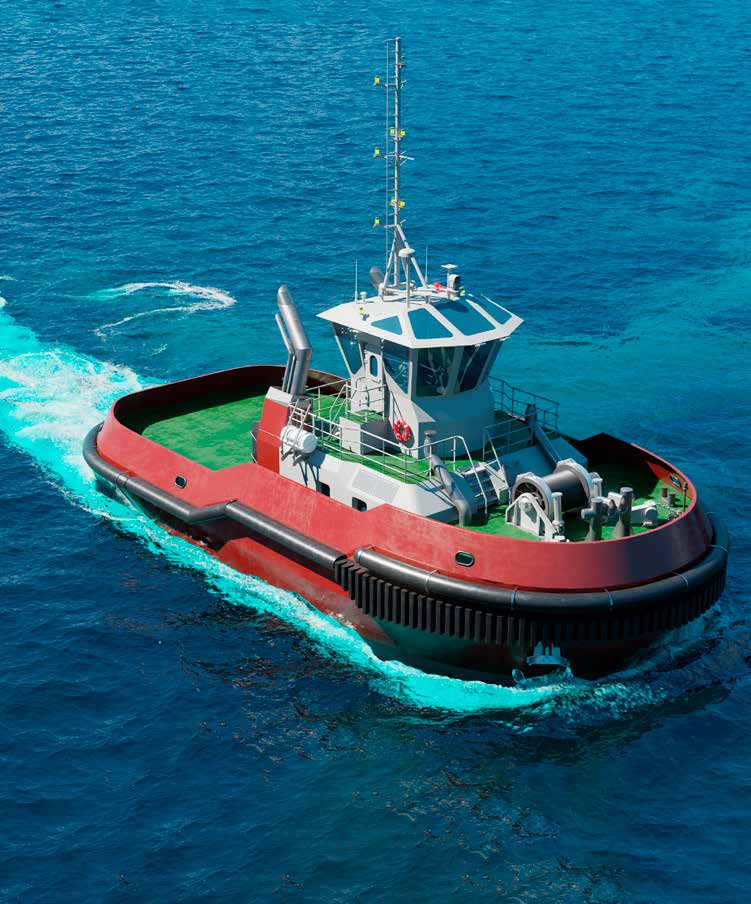
SYM Naval 100% electric harbour tug
Reference caseFirst 100% electric tugboat in Spain
Spain
Boluda Corporación Marítima
4 tugboats delivered and 2 under construction.
Spain
Consulmar
1 fully electric tugboat delivered and 1 under construction (up to 19 tons bollard pull).
Spain
Tradebe
MARPOL-compliant liquid waste collection vessel (flash point < 60 °C).
Spain
Galaxidy
1 fish farm catamaran.
Libya
Harouge Oil Operations
Two tugboats delivered and a third in the signing process.
Panama
PTP
1 tugboat under construction.
Argentina
Pontemar
2 tugboats delivered.
New Caledonia
SMGM
1 tugboat delivered.

Every vessel is delivered certified and flying its destination flag. Custom engineering, clean technology and European quality standards.

ContactLet's talk about your electrification project

Tell us the vessel type and operation. We’ll prepare a technical proposal sized for your case.

Fast
response

Get in Touch