A breakdown onboard does not always justify diverting the vessel to port. In many cases, the most efficient—and most cost-effective—solution is to bring the technicians to the ship, not the ship to the workshop.
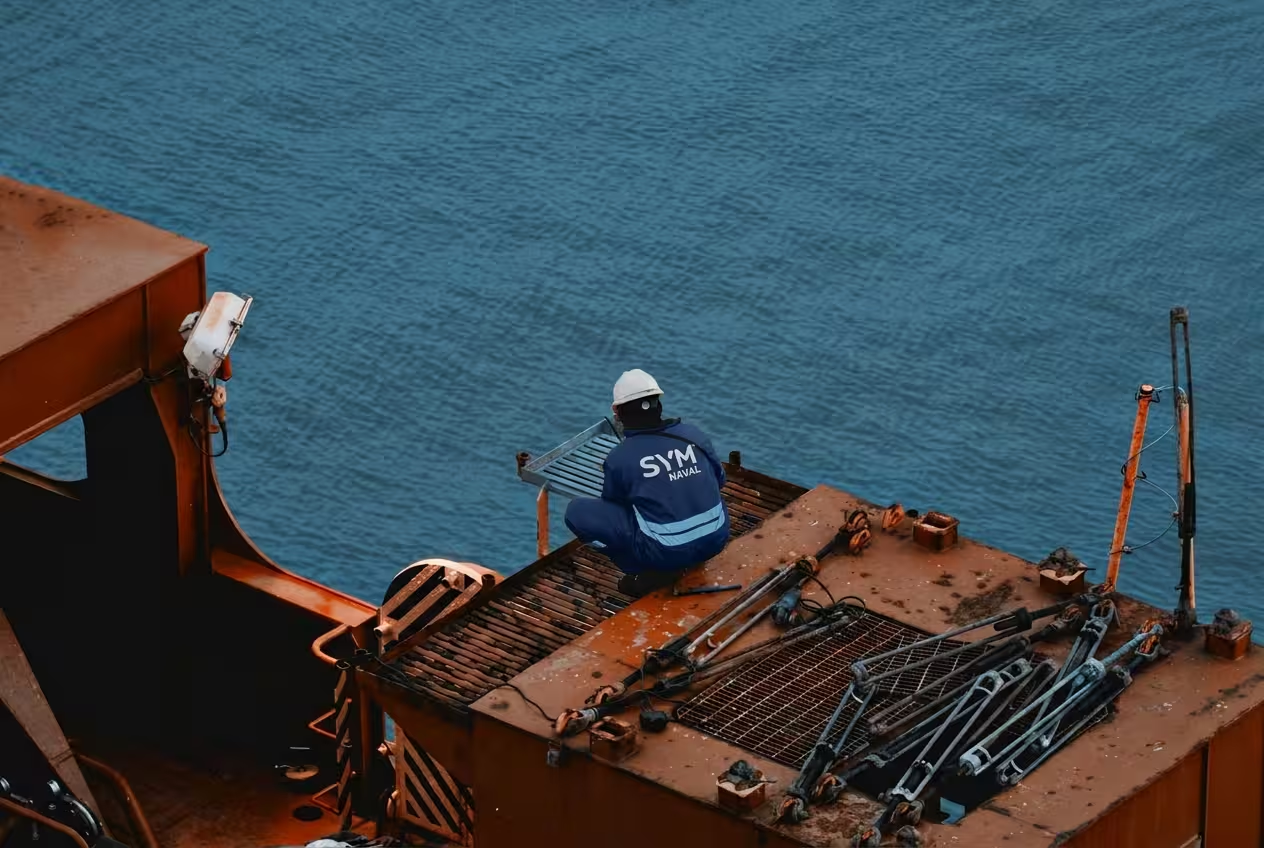
Riding squads are specialised technical teams that board an operating vessel to execute repairs while the ship continues sailing or at anchorage. This intervention model reduces downtime, avoids costly deviations, and helps owners protect the vessel’s commercial schedule.
What is a riding squad and how does it work?
A riding squad is a multidisciplinary team—welders, electricians, mechanics, pipe fitters—who board the vessel at a port of call or an agreed anchorage area and carry out the scope during the transit to the next destination.
The concept is straightforward: use sailing time to complete work that would otherwise require a technical stop with the vessel immobilised.
A typical engagement follows a clear sequence: pre-assessment with the owner, scope definition and materials planning, preparation of tools and consumables, boarding at the agreed point, execution with progress reporting, and final documentation delivered to the owner and, where applicable, to the classification society.
What types of work can a riding squad perform?
Riding squads can cover a wide range of onboard interventions, provided the scope is compatible with safety, access and quality control. The most common include:
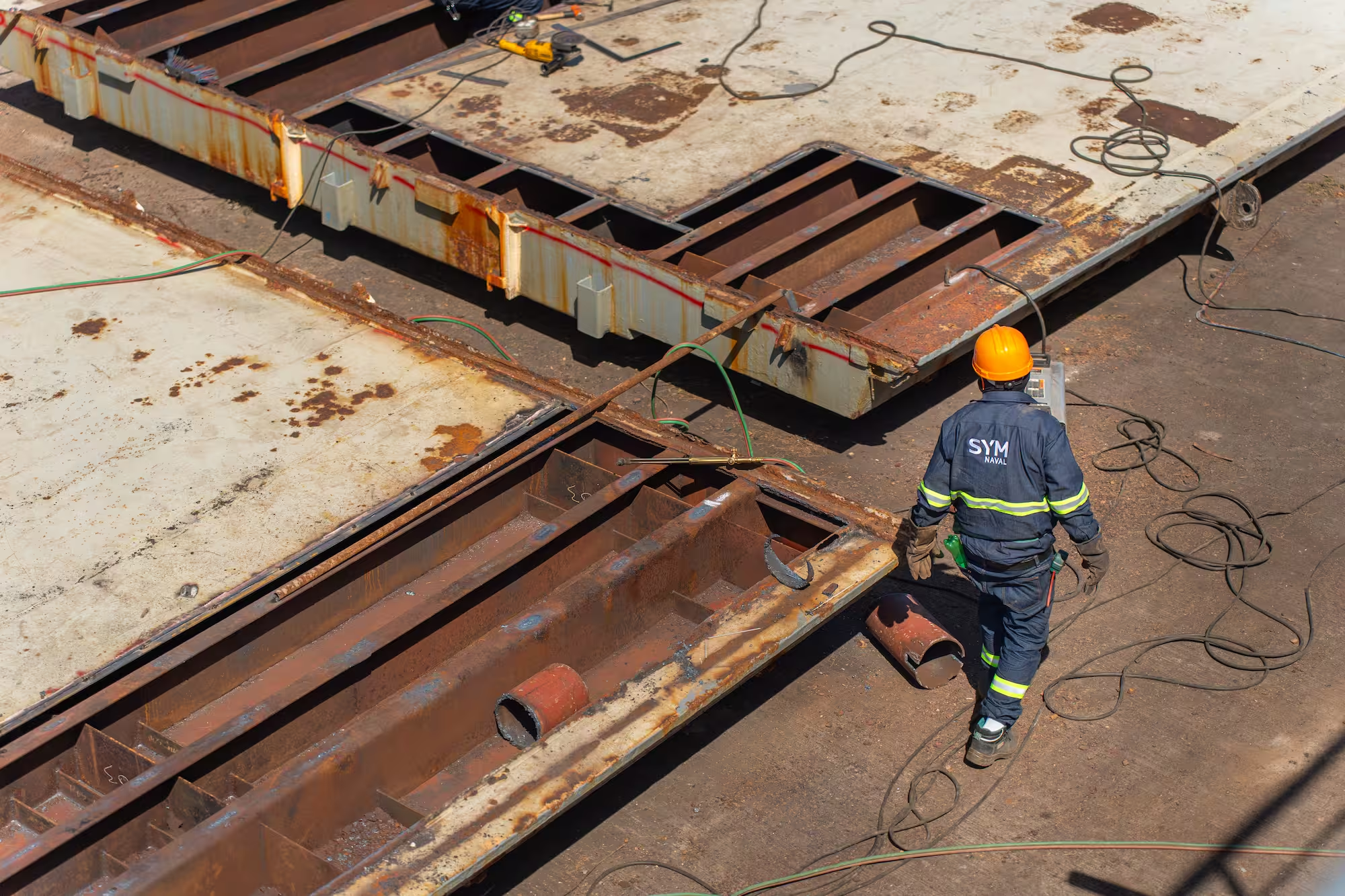
- Steel and structure: plate renewals, local reinforcements, work in tanks and bulkheads, in steel and aluminium according to class requirements.
- Piping: repair or replacement of lines in carbon steel, copper-nickel (CuNi) and aluminium (fuel, ballast, bilge, cooling, hydraulics), including testing and verification.
- Electrical: diagnostics and repairs on switchboards, cabling, lighting, control and automation systems.
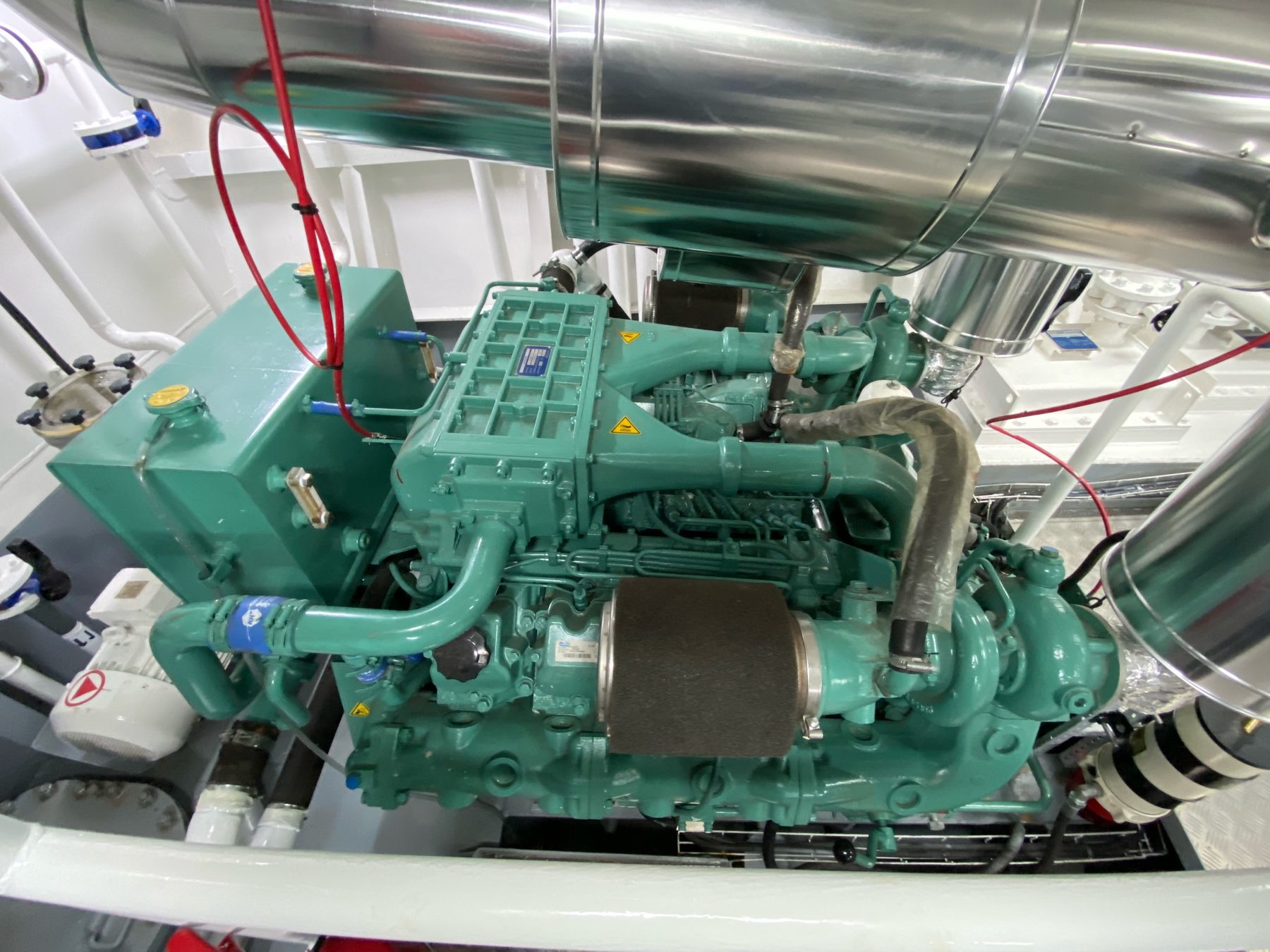
- Mechanical and hydraulics: auxiliary engines, pumps, valves, servos, hydraulic systems and deck equipment.
- Coatings (local scope): surface preparation and coating application in accessible areas, using approved solutions when required.
The key is understanding the limit: riding squads work when the intervention can be executed with portable equipment and controlled procedures. If the scope requires underwater hull access, extensive structural renewal, or conditions that demand a fully stopped vessel, the right solution is typically dry docking or a planned technical stop.
Operational advantages for shipowners
The main advantage of riding squads is reduced off-hire. Every day a vessel is immobilised for repairs is a day without revenue while fixed costs keep running.
Lower cost and time impact. By executing work during transit or waiting windows, the operation avoids costs associated with immobilisation: deviations, lost charter time, contractual penalties and schedule disruption.
Geographical flexibility. With real coverage, riding squads can board at ports of call or anchorage points along the vessel’s route—so the operation follows the ship, rather than forcing the ship to follow the shipyard.
Operational continuity. The vessel keeps moving. Repairs are executed in parallel with commercial operations, helping maintain charter commitments and timelines.
When does a riding squad make more sense than a port stop?
Not every repair can be carried out in navigation. The decision depends on scope, material availability, onboard safety conditions, access constraints and the transit time available.
As a general rule, riding squads are most efficient when the scope is clearly defined, does not require dry docking, and there is sufficient operational time between ports (or during an anchorage wait) to execute and validate the work.
By contrast, if the repair involves underwater hull access, large-scale structural work or interventions that require the vessel to be fully stopped, a planned technical stop is usually the appropriate option.
Quality and traceability: QA/QC onboard
In-navigation repair does not mean compromising quality control. Professional riding squads work to the same standards expected in shipyard execution.
This includes approved welding procedures (WPS/PQR/WPQ), inspection and test plans (ITP) coordinated with class when required, material traceability (MTR), non-destructive testing where applicable (MPI, dye penetrant, ultrasonic testing), and final deliverables that remain fully traceable.
Technical personnel must also hold valid approvals and relevant safety training: hot work, confined space entry (CSE), lockout/tagout (LOTO) and HSE procedures.
How SYM Naval delivers riding squads
At SYM Naval, riding squads are part of our in-navigation repairs capability, delivered by qualified teams and executed with a traceable QA/QC approach.
Coordination is supported by an operational network across the Mediterranean, the Caribbean and Panama, enabling planning and response aligned with the vessel’s route. Intervention areas cover electrical, mechanical, hydraulics, piping and steel, including localised surface preparation and coatings, always aligned with class requirements when applicable.
Frequently asked questions
What qualifications do riding squad technicians have?
Qualified technicians with valid approvals according to scope (including welding approvals where applicable), maritime safety training and project-specific authorisations for hot work, CSE, LOTO and other requirements.
Can a riding squad be coordinated with class inspection?
Yes. It is common to coordinate the work with a class surveyor at the next port of call to inspect, approve and close the documentation for the repairs performed during transit.
Can a riding squad operate at anchorage, not only in navigation?
Yes. Riding squads operate both in navigation and at anchorage, using waiting windows to execute planned work.
If your vessel needs repairs and you cannot afford a stop, contact our team to assess the feasibility of a riding squad adapted to your route and operational schedule.