Five years ago, bringing up an electric tug in a meeting with a shipowner often triggered scepticism. The technology existed on paper, but real references were missing: vessels operating in port environments with measurable power demand, availability and reliability. Today the conversation is different. Fully electric harbour vessels are already in service, emission limits have tightened, and port authorities are increasingly including environmental criteria in concessions.
The question is no longer whether electric propulsion makes sense in port operations. The question is when, for which operating profile, and with what integration model.
This article is written for shipowners, port operators and technical managers assessing a new harbour vessel, who need to understand the propulsion options available, their real implications and the criteria that should guide the decision.
Why electric propulsion is no longer a “future option”
Harbour electrification is not moving forward as an environmental trend. It is moving forward because the regulatory and operational framework has changed in very concrete ways—and those changes directly affect operating cost and the conditions to obtain or renew concessions.
A relevant milestone is the entry into force of the Mediterranean Emission Control Area (ECA) under IMO MARPOL Annex VI, which limits fuel sulphur content to 0.10% within the area. For harbour vessels—operating entirely inside the zone—this forces a choice: burn a cleaner and more expensive fuel, install exhaust-cleaning systems (scrubbers), or adopt a propulsion architecture that removes the exposure at its root.
Electric propulsion enters this equation not as a statement of intent, but as a technical solution that reduces exposure to a regulatory tightening that will keep progressing.
But regulation is not the only driver. Other factors are accelerating adoption:
- Noise restrictions in urban ports. Port operations increasingly coexist with residential and tourism pressure. An electric vessel eliminates engine noise as a source and also reduces associated vibration.
- Environmental criteria in port concessions. More authorities value—or require—measurable emission reductions. A zero-emission harbour vessel can become a tangible competitive advantage in tenders and renewals.
- Energy operating cost. In intermittent profiles (short manoeuvres, waiting time, short transits), the cost per operating hour with electricity can be lower than marine diesel, and it avoids inefficient low-load running of combustion engines.
- IMO mid-term trajectory. The IMO roadmap towards emission reduction will continue tightening the framework. Designing with a forward-looking architecture reduces obsolescence risk and future retrofit exposure.
In this context, the maritime industry in 2026 is no longer debating whether electrification is viable, but how to integrate it reliably in newbuild projects.
Three propulsion choices: diesel, hybrid and fully electric
There is no single answer. The choice depends on the vessel’s operating profile, port conditions, local regulation and the shipowner’s mid-term strategy. The key is understanding what each option delivers and where it makes sense.
Diesel propulsion
Conventional diesel remains the most widespread solution. It is proven technology with strong response, long service life and a global maintenance and supply chain.
Its main advantage is sustained power: it fits operations where the vessel works at high load for extended periods.
Its limitation is clear: emissions (GHG, particles, SOx/NOx) and increasing exposure to fuel and regulatory cost in certain markets.
Hybrid propulsion (diesel-electric)
Hybrid propulsion combines diesel engines with electric systems, allowing operation in diesel, electric or combined mode depending on the moment. It is the intermediate option that brings flexibility.
In electric mode, the vessel can perform low-load manoeuvres with zero direct emissions and minimal noise. In diesel mode, it recovers full power for higher-demand operations. This makes hybrid particularly attractive for ports seeking emission reductions without sacrificing peak capability.
Emission reduction versus conventional diesel can be significant, especially in low-speed or waiting profiles where electric mode allows diesel engines to remain off. Maintenance cost is typically moderate, and charging infrastructure needs are lower than for a fully electric solution.
Fully electric propulsion
Fully electric propulsion removes the combustion engine. The vessel operates exclusively with electric motors powered by battery packs—zero direct emissions, zero engine noise, and an energy operating cost that, depending on the market and duty cycle, can be lower than diesel.
It is particularly suitable for urban ports with high environmental pressure, short-cycle operations (manoeuvres, in-port transits, auxiliary harbour services) and environments where acoustic impact is a real operational constraint.
The key consideration is autonomy: it depends directly on battery sizing and the usage profile. That is why operational planning and port charging availability become central design inputs from the earliest engineering phase.
At SYM Naval, all three options are considered for harbour vessel types such as tugboats, multipurpose harbour vessels and MARPOL units. Each project starts with a tailored technical definition where propulsion choice follows the real scenario—not a generic bet.
How electric propulsion works in a harbour vessel (real architecture)
For shipowners evaluating this technology for the first time, it helps to understand what sits behind the concept and how it translates into a real vessel.
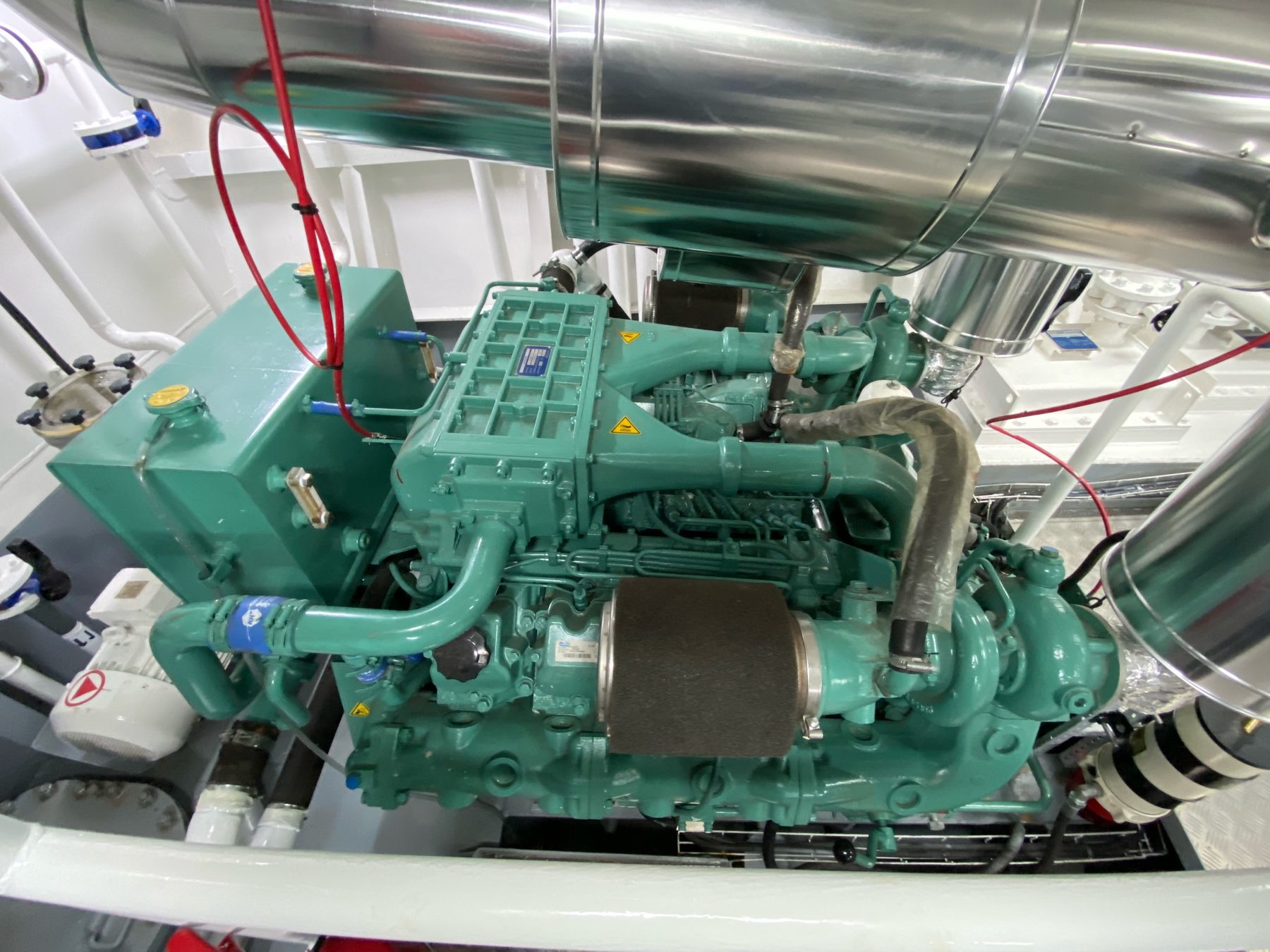
Electric motors. The core of propulsion is high-efficiency electric motors with immediate power-control response and near-silent operation. In current projects it is common to use solutions such as permanent-magnet synchronous motors (PMSM), particularly attractive for efficiency and low-speed control.
Batteries. Energy is stored in high-density battery packs. Capacity is sized around the real duty cycle: expected working hours, peak power events, waiting periods and charging cycles.
Energy management. A control system monitors state of charge, power demand and component performance in real time. It optimises consumption, manages operating modes and protects battery life through appropriate charge/discharge strategies.
Operating modes. An electric vessel does not run at a single power level. Different modes—transit, manoeuvring, standby, MARPOL duty—adapt delivered power to the operational moment, maximising autonomy without losing response.
Steering and low-speed control. Electric architecture is integrated with high-performance steering to maintain control and precision in harbour manoeuvres. In port operations, low-speed response is a safety and efficiency criterion, not an optional extra.
Charging. The vessel connects to the port electrical network during idle periods. Charging infrastructure must be designed as part of the project, matched to available quay power and the shipowner’s actual operating windows.
All of these systems are integrated in engineering. And when the project is validated through a digital mock-up, battery rooms, switchboards, cable routes, ventilation and access can be verified before construction—reducing clashes and rework.
Decision matrix: when diesel, hybrid or fully electric makes sense
To decide with real criteria, it helps to translate “technology” into operational variables. These questions usually close the decision faster than comparing brochures:
- Duty cycle. Short peaks + long idle periods, or sustained power for hours?
- Real charging window. How much time alongside with grid access exists per day? What power can the quay supply?
- Environment and constraints. Urban port with noise/emission pressure? Environmental criteria in concession or contract?
- Required availability. Can the vessel stop to charge, or must it be available 24/7?
- TCO. CAPEX vs OPEX: energy, maintenance, consumables, downtime and regulatory horizon.
In general, the more intermittent and predictable the cycle (harbour service, manoeuvring, short transits) and the more relevant the regulated/urban context, the more electrification makes sense. In sustained-demand operations with continuous availability requirements, hybrid is often the most frequent balance point.
What the shipowner gains—and what must be evaluated
The decision to build an electric vessel should not be driven by technology enthusiasm or diesel inertia. It should be driven by an honest analysis of what it delivers and what it requires.
What you gain
- Zero direct emissions. No SOx, NOx, CO₂ or particles during operation. This simplifies local compliance and reduces exposure to future restrictions.
- Elimination of engine noise. Electric propulsion is nearly silent. In urban ports this is a real operational advantage and it reduces underwater acoustic impact.
- Lower energy operating cost. In intermittent profiles, electricity cost per hour can be lower than diesel, depending on market and charging strategy.
- Lower mechanical maintenance. Removing combustion engines removes oil changes, filters, injectors, turbochargers and exhaust systems. Maintenance chains simplify and intervals extend.
- Regulatory resilience. An electric vessel built today reduces the likelihood of costly retrofits under tighter future frameworks.
- Positioning. In concessions and tenders, operating zero-emission vessels is a tangible differentiator.
What must be evaluated
- Autonomy linked to battery sizing. It depends on pack sizing and real duty cycle. Defined, intermittent harbour days are often compatible; 24/7 full-load operation requires a more detailed analysis.
- Port charging infrastructure. The vessel needs a grid connection with sufficient power. Many ports are accelerating electrification investments, but infrastructure must be designed as part of the project.
- Upfront investment. CAPEX is typically higher due to batteries and energy management systems. TCO can compensate, but it must be modelled.
- Battery lifecycle. Battery life is cycle-limited. Energy management quality is decisive and must be included in long-term economics.
- Technical support. It requires specialised providers. Having a shipyard able to integrate and support the system across the vessel’s life is a key selection criterion.
The key is addressing these points from the engineering phase, not after construction. A project defined from the start—duty cycle, charging infrastructure and economic cycle—removes most of the uncertainty.
How SYM Naval approaches electrification in newbuilds
Electric propulsion requires system-level integration beyond conventional shipbuilding. It is not a matter of swapping a diesel engine for an electric motor. It is about designing a complete vessel where propulsion, energy storage, energy management, control and monitoring form an interdependent system.
SYM Naval approaches this complexity with in-house engineering for the vessel design: hull, structure, general arrangement, system integration and production engineering. This allows full control of the project and adaptation to the shipowner’s real operational needs—rather than a standard product.
The propulsion system SYM Naval integrates in these projects is its own: Blue Propulsion, with LFP batteries and sized for each vessel.
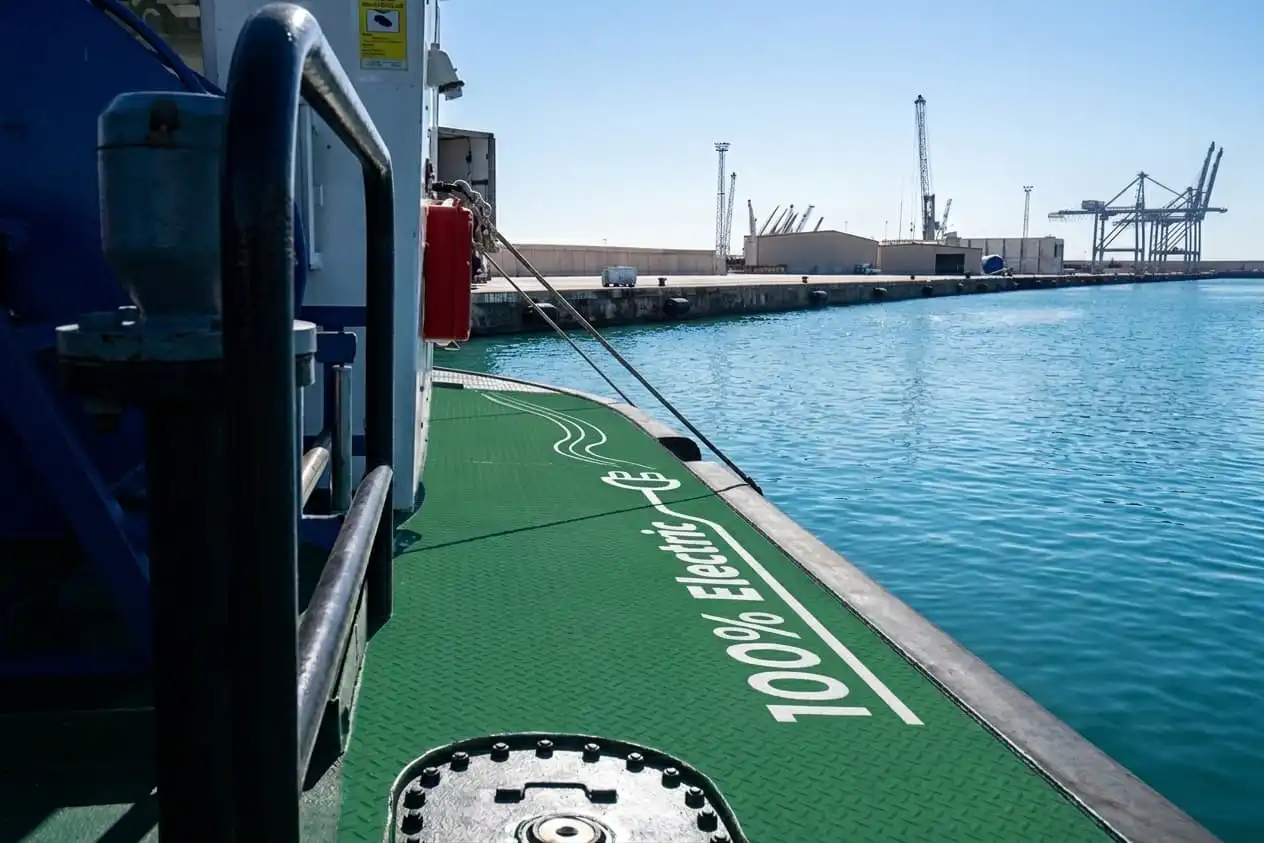
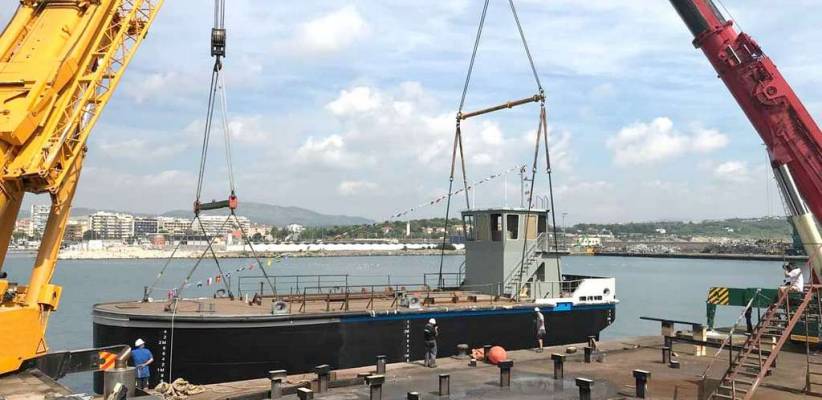
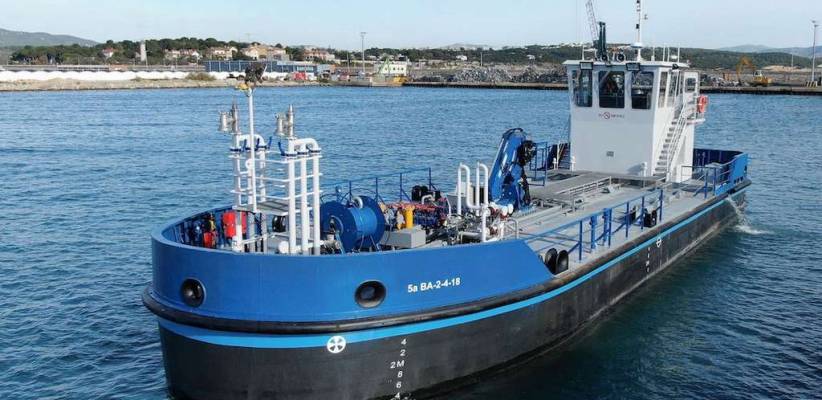
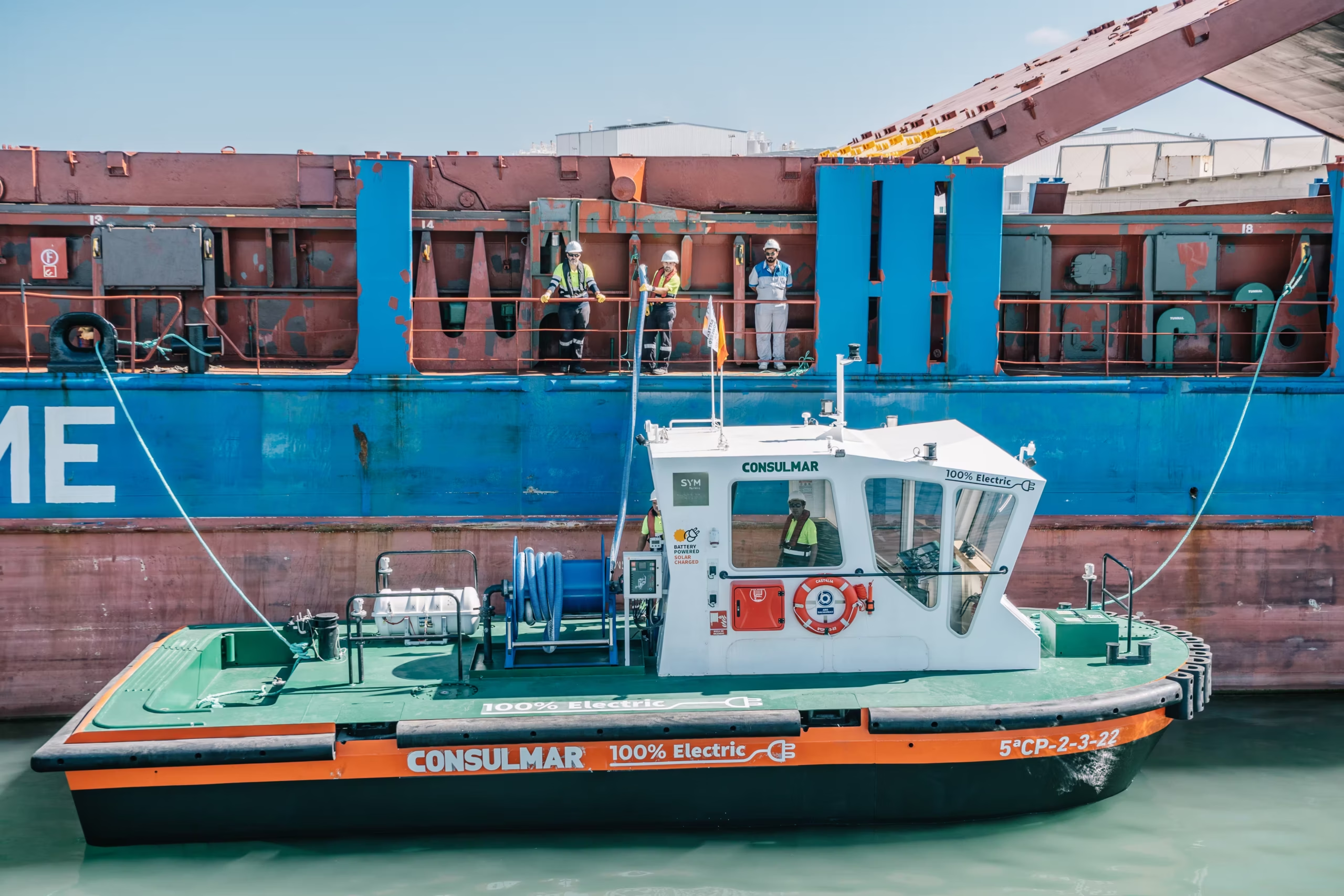
Operational reference: Castalia. In 2023, SYM Naval delivered Castalia, the first 100% electric multipurpose harbour vessel in Europe. It was not an experimental prototype: it was designed, built and delivered to operate in a real port under real operational requirements.
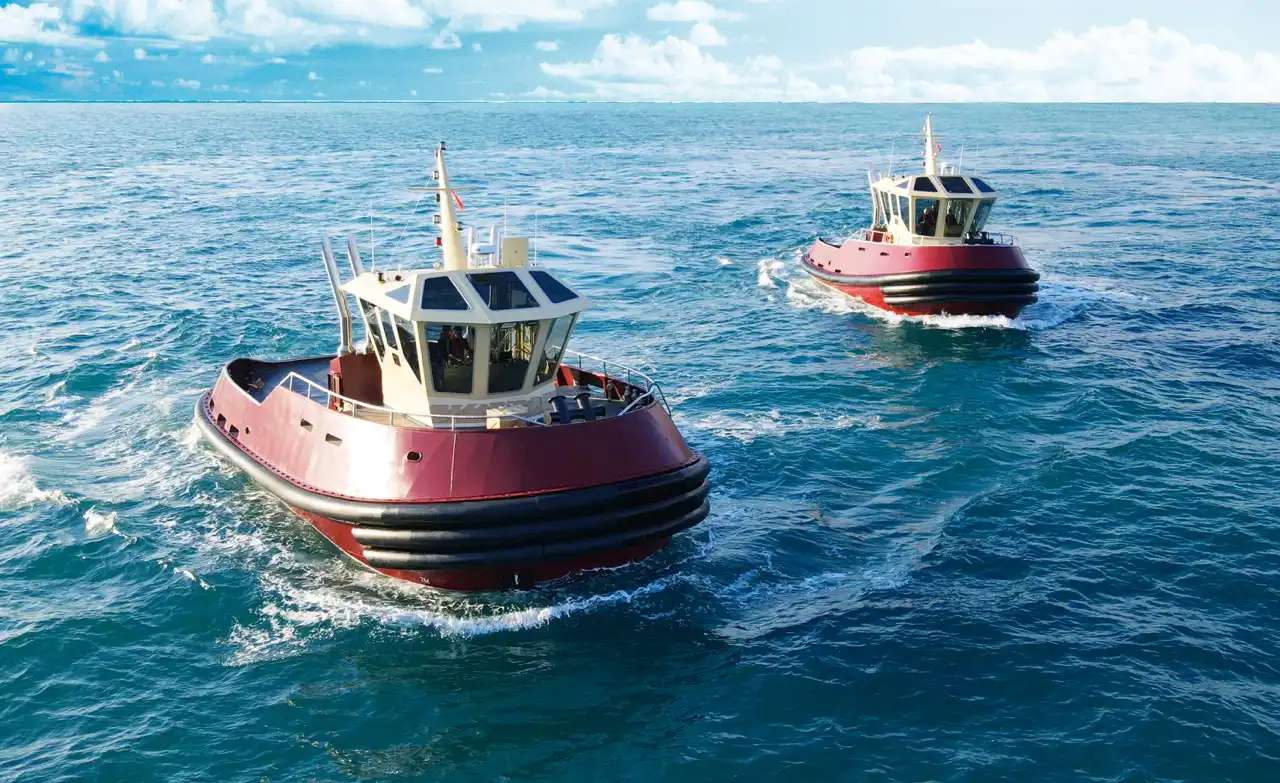
The approach is not limited to a single vessel type. SYM Naval offers electric, hybrid and diesel configurations for harbour tugs, multipurpose vessels and MARPOL units, with construction capability in Spain and the Caribbean.
All projects are developed in line with IMO regulations and IACS classification societies, with ISO 9001, 14001 and 45001 certifications supporting traceability. Vessels are delivered ready for flagging in the destination country.
Propulsion arrangement: conventional (shaft/propeller) vs azimuth
Choosing a powertrain (diesel, hybrid or electric) is inseparable from choosing the propulsion arrangement. These decisions must be made together because they affect manoeuvrability, maintenance and operational performance.
Conventional shaft and propeller
This is the most proven and reliable arrangement: a fixed shaft and propeller generating thrust. Its simplicity provides low maintenance cost, high durability and easy access to spares worldwide.
It is typically suitable for small to mid-capacity harbour tugs performing general manoeuvres where extreme position control is not required.
Azimuth propulsion
Azimuth thrusters rotate 360 degrees, providing superior manoeuvrability and very precise position control in confined spaces. The vessel can move laterally, pivot on its axis and perform complex berthing/unberthing manoeuvres with high precision.
This is often preferred for mid and high-capacity tugs assisting large vessels in congested ports where manoeuvre precision is critical.
Maintenance is more complex than conventional systems, but the design optimises energy use and reduces the need for aggressive directional changes—potentially compensating through higher operational efficiency in specific profiles.
Both propulsion arrangements can be combined with any of the three powertrain options. The optimal configuration depends on vessel type, mission and the operating conditions of the port.
Frequently asked questions
Is a 100% electric tug viable for harbour operations?
Yes, provided the duty cycle is compatible with autonomy and charging strategy. Intermittent cycles with waiting time between manoeuvres and defined working days are particularly suitable scenarios.
What is the difference between hybrid and fully electric propulsion?
Hybrid combines diesel and electric systems to operate in one mode or the other depending on demand. Fully electric removes combustion entirely and operates only with batteries and electric motors. Hybrid offers more flexibility; fully electric offers zero direct emissions and lower mechanical complexity.
What infrastructure does an electric vessel need in port?
A grid connection point with sufficient power to charge batteries during idle periods. Charging infrastructure is designed as an integral part of the newbuild project, adapted to quay power availability and the shipowner’s duty cycle.
How long do electric vessel batteries last?
Battery life is measured in charge/discharge cycles and depends heavily on the quality of the energy management system. Replacement cost must be included in long-term project economics.
How does the Mediterranean ECA affect harbour vessels?
It raises the compliance threshold within the area. For vessels operating entirely in the zone, electrification reduces exposure to fuel constraints and future restrictions.
Does SYM Naval build electric vessels for markets outside Europe?
Yes. SYM Naval operates from Spain, the Dominican Republic and Panama, delivering vessels ready for flagging in the destination country. Projects are developed with the same engineering and certification standards regardless of the final market.
If you are evaluating a new harbour vessel and want to analyse which powertrain option best fits your operation, contact our engineering team. We assess each project from the design phase so that the technical decision is also the best economic decision.