One of the most frequent decisions—and one with the biggest economic impact—in a vessel’s technical management is determining whether a scope can be solved afloat or requires dry docking.
The answer is not always obvious. Some repairs look like they require dry dock and can be executed perfectly afloat. Others are planned as minor interventions and, once the real scope is assessed, it becomes clear that without taking the vessel out of the water the outcome cannot be guaranteed.
Choosing correctly is the difference between an efficient stop and avoidable overruns. This article lays out practical criteria to make that decision with rigour.
The real cost of the decision: it’s not only the dock
When people say “go to dry dock”, the cost is not limited to dock rental. The real impact includes deviation from the commercial route, days of off-hire, port charges, mobilisation of personnel and materials, and potential contractual penalties for schedule disruption.
That is why, whenever there is a technically viable afloat alternative, it is worth evaluating it properly. Not to avoid dry dock at all costs, but to reserve it for when it is truly necessary.
What can be done afloat (more than many assume)
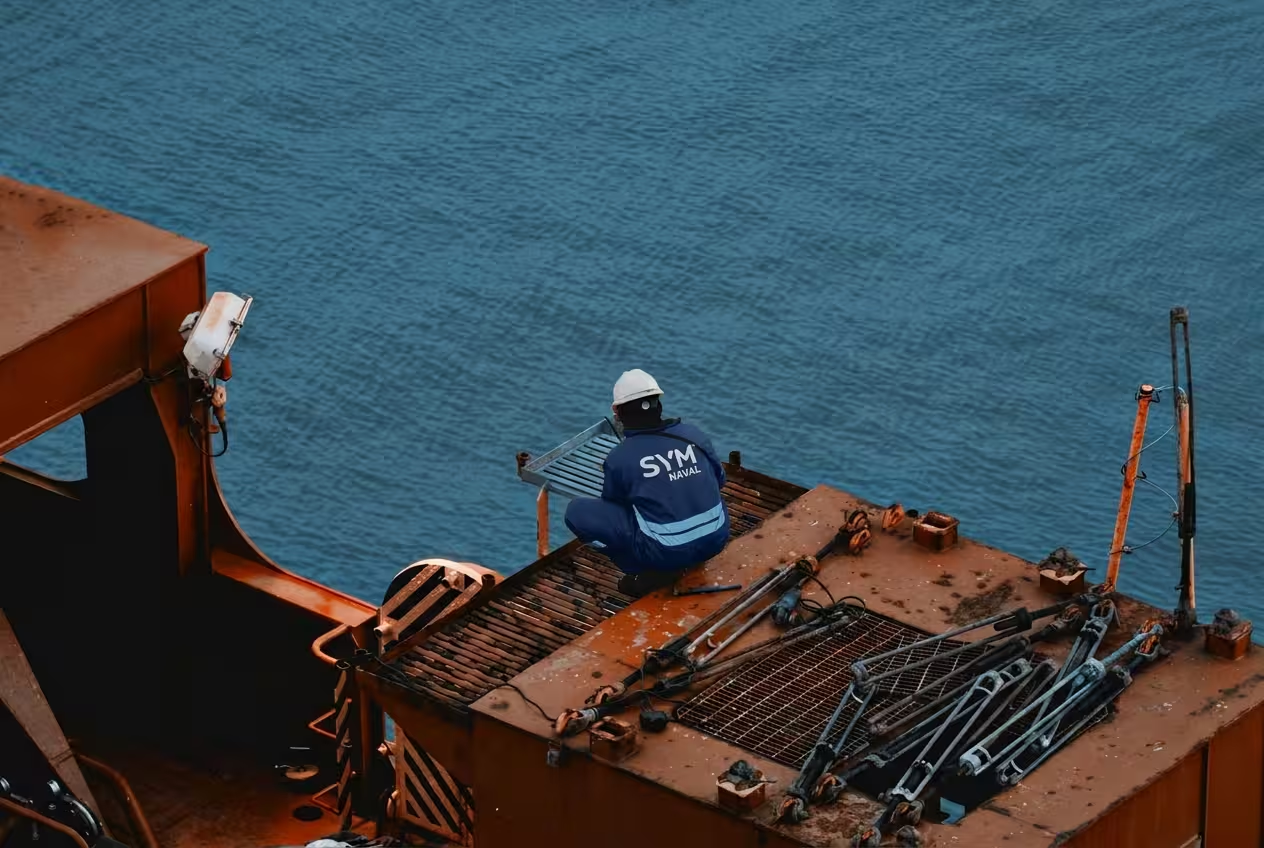
With the right equipment, qualified personnel and proper planning, afloat repair covers a wider range of work than many operators expect. In practical terms, it is often viable to execute:
- Steel and structure (accessible areas): bulkheads, tanks, deck, superstructure and internal reinforcements above the waterline.
- Piping: repair/replacement of fuel, ballast, bilge, cooling and hydraulic lines (carbon steel, CuNi and aluminium), including testing and documentary closure.
- Electrical: switchboards, cabling, lighting, control and automation.
- Mechanical and hydraulics: auxiliary engines, pumps, valves, servos, cranes, winches and deck machinery.
- Coatings (local scope): surface preparation and application in accessible areas.
- Technical inspections: thickness measurements (UT/UTM), non-destructive testing and checks required to lock scope.
The key condition is that the intervention does not require access to the underwater hull and does not demand conditions that can only be achieved with the vessel out of the water.
When planned intelligently, many projects combine afloat work where possible and leave dry dock only for what truly requires it. In the industry this is often referred to as wet docking: optimising what can be done afloat before or after docking to reduce expensive dry-dock days.
If you want context on approach and capabilities, see afloat ship repairs and dry docking.
When dry docking is unavoidable
There are cases where taking the vessel out of the water is the only viable option. The clearest include:
Underwater hull work. Any intervention below the waterline: bottom/bilge plating, keel, sea chests, sea inlets, cofferdams and submerged elements.
Propulsion, rudder and appendages. Tailshaft, stern tube, propeller, rudder, stabilisers and bilge keels generally require direct external access. The same applies to inspection and renewal of cathodic protection anodes.
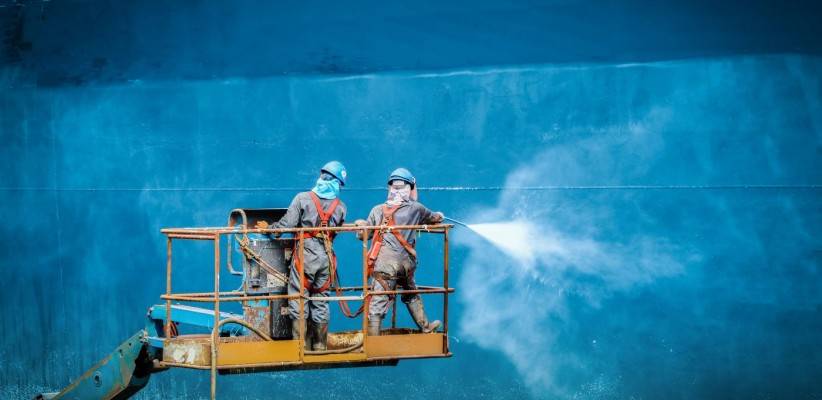
Antifouling and full hull treatment. Applying an antifouling system requires full access to the underwater hull, controlled surface preparation and application conditions that are not feasible afloat.
Class surveys requiring underwater access. Special Surveys and certain Intermediate Surveys require visual and physical access to the underwater hull, thickness measurements on bottom areas and verification of submerged elements.
Extensive structural renewal in bottom/double bottom. When the steel scope affects areas not accessible from inside the vessel, or the extent is such that safe, controlled execution requires dry conditions.
Decision criteria: a practical guide
The choice between afloat and dry dock can be systematised by evaluating five factors:
- 1) Affected area. Above the waterline and accessible from inside/deck → candidate for afloat. Underwater hull → dry dock.
- 2) Class requirements. If class requires the vessel in dry dock for survey/closure, there is no alternative. If class accepts afloat execution with coordinated documentary closure, it can be evaluated.
- 3) Scope and complexity. Well-defined scopes executable with portable means → afloat, or even in-navigation via riding squad. Large scopes, multi-discipline concurrency or “workshop-like” conditions → dry dock or a planned technical stop.
- 4) Dry dock availability vs waiting cost. In some regions, dock availability is limited and waiting times are long. If the work is viable afloat without compromising quality, avoiding the queue can be a major operational advantage.
- 5) Operational window. Afloat repair only works if it fits real operations: transit time, anchorage window or a planned port call where execution and testing can be coordinated.
Two frequent (and expensive) mistakes
Mistake 1: booking dry dock for work that could be done afloat. This is more common than it seems. It creates unnecessary stops, avoidable off-hire days and cost with no return. With a rigorous technical assessment beforehand, many operators find that a meaningful portion of the planned dry-dock scope can be advanced or executed afloat—leaving only what truly requires dry docking.
Mistake 2: forcing afloat repair when dry dock is required. The opposite risk: attempting to solve afloat what clearly requires dry conditions. The typical outcome is a temporary fix, lack of class closure or repeated work—turning into a larger problem later.
The decision should always be based on technical criteria and traceability, not only short-term cost.
How SYM Naval approaches it
SYM Naval operates in both modes—afloat repairs and dry docking—allowing a technical recommendation based on scope, access, safety and class requirements.
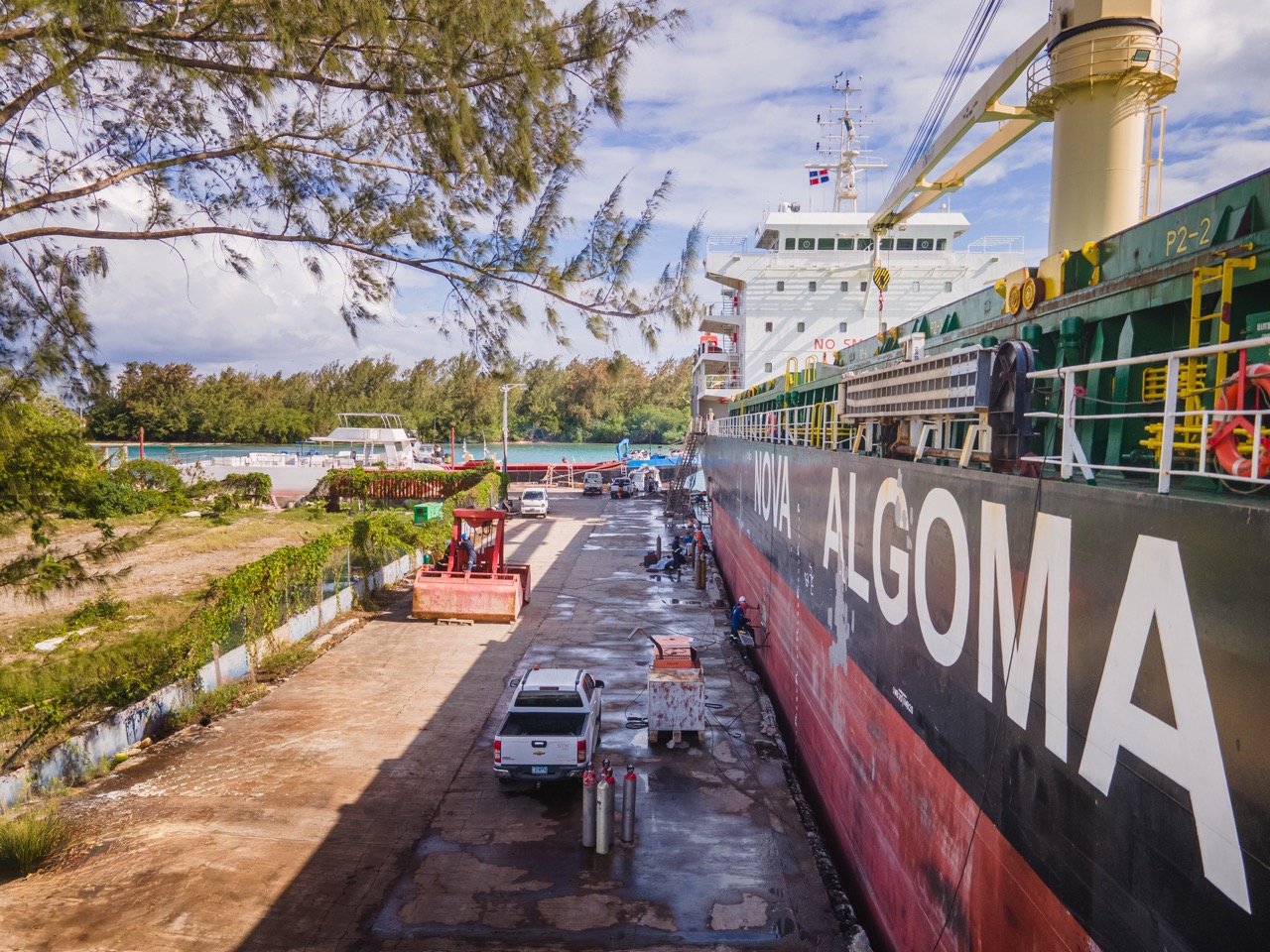
Afloat repairs can be executed alongside, in port or at anchorage, covering steel, piping, electrical, mechanical, hydraulics and localised coatings, with QA/QC documentation and class coordination where required. For more, see afloat ship repairs.
When the scope requires dry docking, the work is planned and executed according to vessel constraints and fleet schedule. For our approach and capabilities, see dry docking.
Frequently asked questions
Can a project combine afloat work and dry docking?
Yes—and it is often the most efficient option. Advancing all work that does not require dry conditions reduces dry-dock days to the minimum essential.
Do class societies accept repairs executed afloat?
Yes, provided approved procedures, required testing and traceable documentation are in place. The difference is not where it is done, but how it is executed and documented.
Is afloat repair cheaper than dry docking?
Not always in direct cost. But when you add off-hire, deviation, port charges and indirect costs, afloat repair is often significantly more efficient—if the scope is technically viable without dry docking.
Not sure whether your vessel needs dry dock or whether the scope can be solved afloat? We can help you assess it. Contact our technical team.