In 2026, antifouling directly impacts fuel consumption, hydrodynamic performance and real maintenance scheduling. When hull efficiency drops, fleets pay through higher power demand, more fuel, more emissions and less operational margin.
The common mistake is searching for a universal solution: “the best antifouling,” as if it were a product. In reality, the right approach depends on vessel type, operating profile, idle time and the trading environment. Choosing correctly is not about brands—it is about engineering criteria applied to real operations.
Why antifouling affects profitability
Biofouling increases surface roughness and resistance through the water. Even small increases translate into accumulated losses over every mile, especially on vessels with continuous operation.
But there is a more critical point: when the coating system is not aligned with the vessel’s operating reality, antifouling stops performing earlier than expected. At that moment, dry-docking is no longer “when planned”—it becomes “when the hull forces it.”
The right approach: define the scheme from operations
Before discussing coating technologies, one base must be clear: what the vessel does and how it operates. In practice, four variables drive the decision:
- Speed profile: sustained sailing vs. short legs and frequent manoeuvring.
- Idle time or low-activity periods: anchorage waiting, lay-ups, seasonal inactivity.
- Environment: temperature, salinity, tropical vs. temperate waters, ports with high biological load.
- Maintenance window: the real time available for surface preparation, application and schedule compliance.
With these variables defined, antifouling stops being a purchase and becomes an engineering decision.
Three solution families (and when they fit)
There are no universally “better” systems—only systems that fit or do not fit a given operating profile. In practice, selection usually falls into three families:
Self-polishing systems (SPC)
They release biocide in a controlled way and maintain a stable surface through use. They often perform well on vessels with regular operation. If the vessel spends long periods idle in fast-growth environments, performance can drop.
Hard antifoulings
Mechanically robust in certain scenarios, but they can build up layers and increase roughness if maintenance is not properly planned. They require discipline in surface preparation and film thickness management.
Foul-release (low-adhesion)
They reduce adhesion so growth detaches with vessel movement. They can be highly effective on higher-speed, continuously operating profiles, but results depend heavily on real usage and application quality. They are not an automatic answer for vessels with long idle periods.
The right question is straightforward: which system minimises operational losses for this specific vessel, under this maintenance schedule?
Where you win or lose: surface preparation
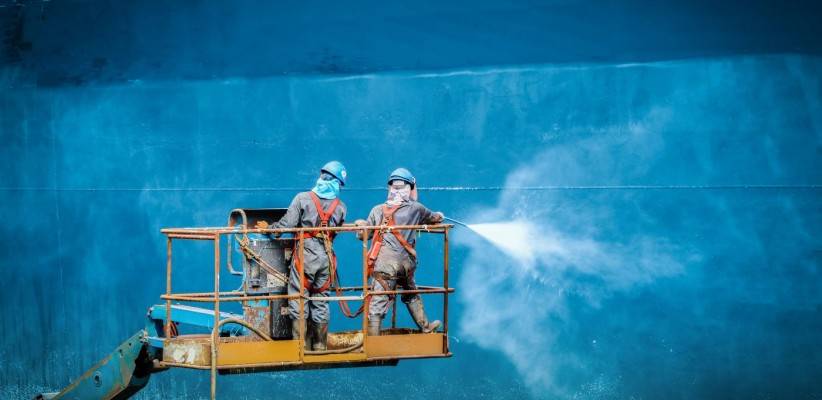
Antifouling cannot compensate for poor preparation. If the hull enters dry-dock degraded and the work is “done quickly” without criteria, the coating may look acceptable at departure and then fail earlier than expected.
Surface preparation must achieve three objectives:
- Remove contamination and unstable layers to ensure real adhesion.
- Control roughness, which directly affects hydrodynamic performance.
- Ensure intercoat compatibility to avoid premature failures.
What is “saved” during docking is often paid later in fuel consumption—and in the next stop.
Antifouling and planning: the direct link to dry-docking
If antifouling is decided late, dry-docking becomes reactive. If it is decided early, it becomes controlled.
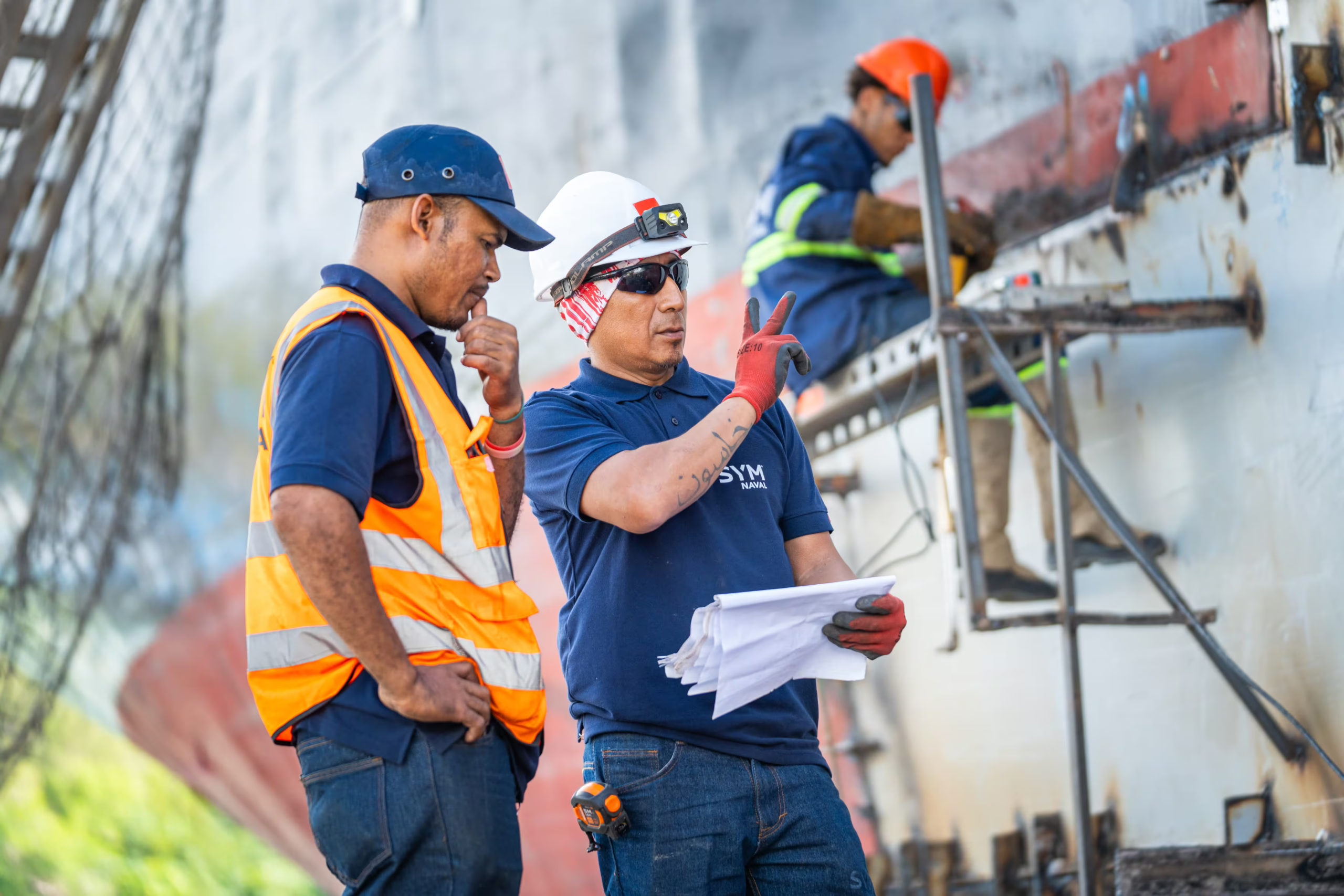
With a properly planned inspection before dock entry, it becomes possible to:
- Assess the condition of the existing coating and identify recurring failure patterns.
- Define the coating scheme with criteria, avoiding “default” decisions.
- Estimate real material consumption and time requirements to protect the schedule.
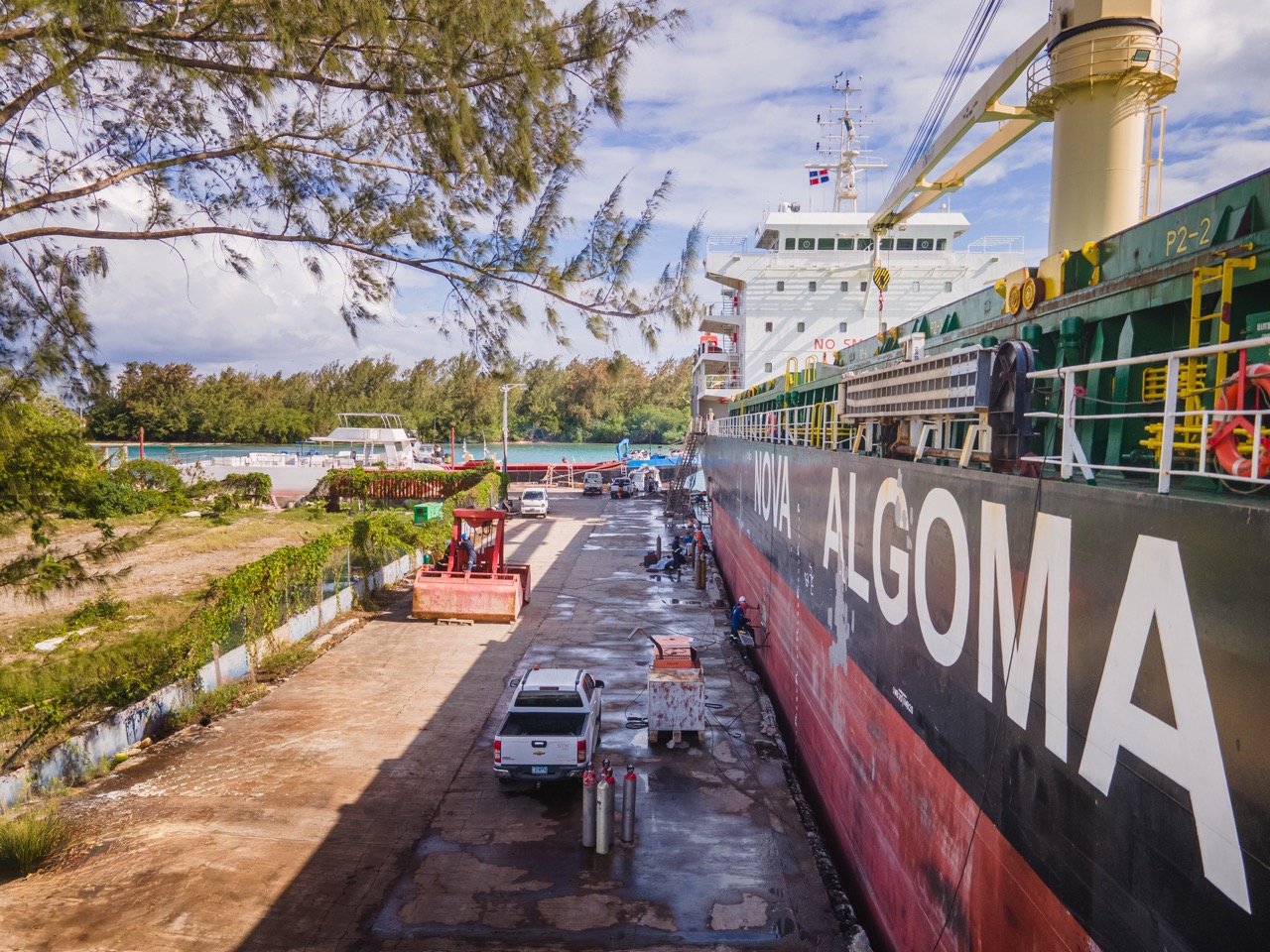
If the vessel also requires hull or structural steel works, coordination is critical. The coating plan must fit the steel scope and the work sequence. To see how we handle docking projects: dry-docking. For an overview of our operational approach: ship repair & conversion.
Typical mistakes that make antifouling more expensive
These patterns explain why a coating system that looks “right on paper” fails in operation:
- Choosing by product, not by mission: routes or operating patterns change and the system no longer fits.
- Underestimating idle time: long anchorage periods accelerate growth and penalise performance.
- Cutting surface preparation to protect the schedule: the failure appears months later, when there is no margin.
- Poor compatibility management: adhesion issues, blistering or premature degradation.
- Evaluating success “by eye”: without criteria, real performance remains uncontrolled.
Conclusion
In 2026, antifouling is defined by operational profitability. There is no universal solution. There is a correct scheme for each vessel—defined from real operations and executed with technical discipline.
If you are planning a dry-docking or want to review your hull coating strategy, our team can help define the scheme and work sequence to protect budget and schedule. Contact SYM Naval.