Any shipowner who has signed a newbuilding contract has seen this pattern: the project progresses, the schedule tightens, and at some point a problem appears that should have been detected much earlier. A pipe run clashes with a frame. A piece of equipment does not fit the allocated space. A maintenance access is blocked by structure or outfitting.
In a shipyard, these are not “small details”. They become rework, wasted material and schedule drift that ultimately impacts cost and delivery. In many cases, the root cause is not execution, but a design phase validated with incomplete information—typically relying on 2D drawings without a fully integrated 3D model that would reveal conflicts early.
A digital mock-up solves exactly that. It is not a theoretical concept or a future trend: it is a working methodology used to validate before production—so decisions are made in engineering, not on the shop floor.
What a digital mock-up is in shipbuilding
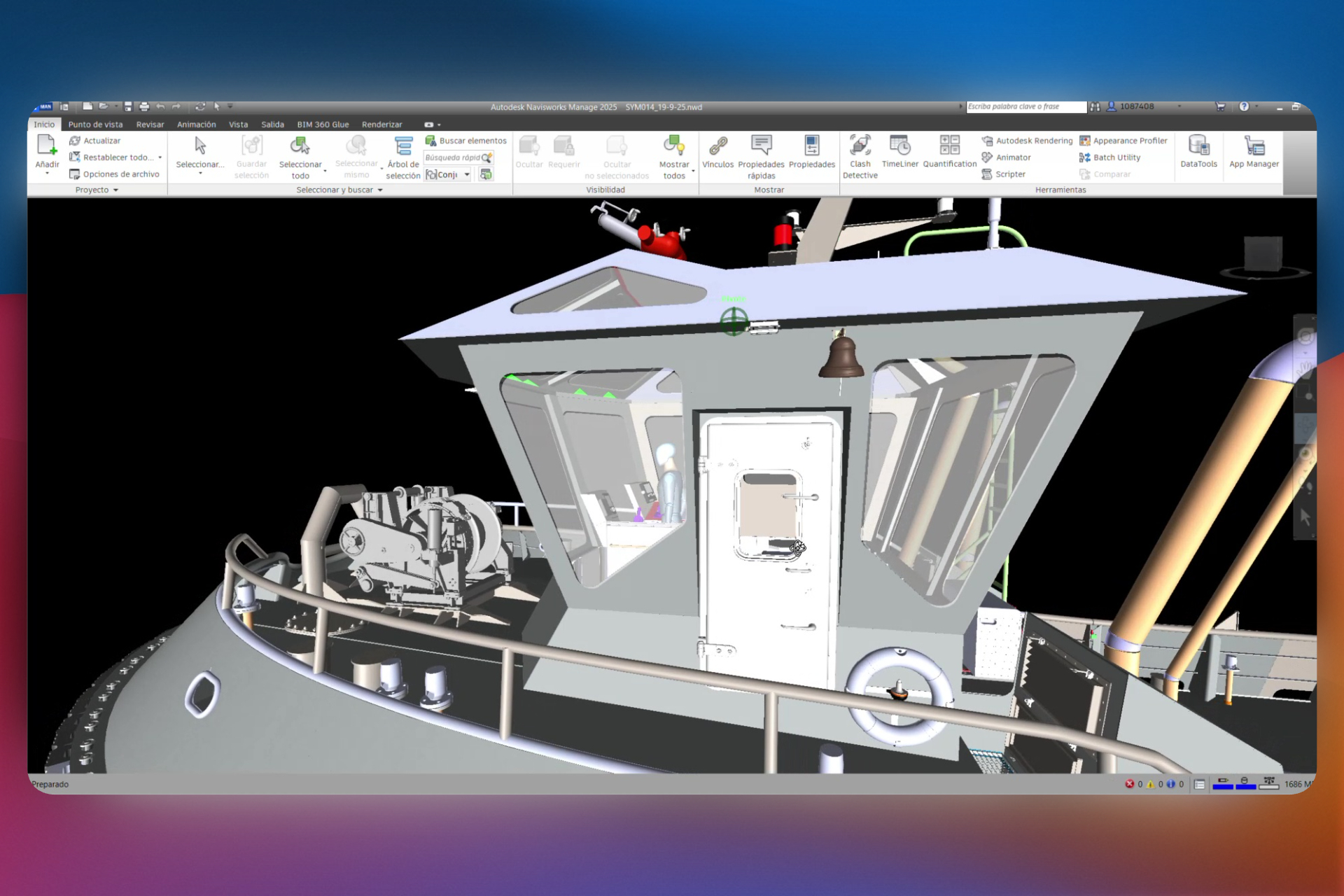
A digital mock-up is a complete 3D model of the vessel, developed in a CAD environment before production starts. It is not a purely visual 3D representation. It is a technical model that integrates structure, systems (piping, ventilation, electrical, hydraulics), propulsion equipment, accommodation and deck arrangements.
Unlike traditional 2D documentation—where each discipline is represented in separate drawings and clashes tend to be discovered during installation—the digital mock-up allows all systems to be visualised together in the same virtual space.
The outcome is a vessel that exists digitally before the first steel plate is cut. That changes the project dynamic: decisions are made with full context, clashes are resolved on screen (not in the workshop), and the shipowner can validate critical details when changes still cost engineering hours—not weeks of rework in production.
How it works: from concept to a validated 3D model
Creating a digital mock-up is not an isolated step. It becomes the backbone of design and planning. In practical terms, the workflow looks like this:
Technical definition. The engineering team captures the shipowner’s requirements: the vessel mission, operating profile, preferred equipment, applicable regulations and class constraints. This sets the project foundation.
Progressive 3D modelling. The CAD model is built in layers, integrating sequentially: hull forms, primary and secondary structure, propulsion, piping systems, ventilation, auxiliaries, accommodation and deck equipment.
Clash detection. As systems are integrated, the model reveals collisions and geometric conflicts before production. A pipe crossing a frame, a valve with no access, a duct invading a critical volume—these issues are solved in engineering.
Weight and space optimisation. The model supports early review of mass distribution and centres of gravity. In workboats and harbour vessels—where space is tight—this visibility reduces late decisions that are costly to fix.
Joint validation with the shipowner. The client can access 3D visualisation to virtually walk through the vessel, review layouts, verify access and propose changes. This is the right moment to adjust—before fabrication.
Production documentation. Once the model is validated, fabrication drawings, material lists and production documentation are generated with overall consistency across structure and systems.
What problems the digital mock-up solves (and what it costs not to use it)
A shipowner commissioning a new vessel accepts inherent risk: trusting that specifications will be translated into an operational unit, class-compliant, on time and within budget. A digital mock-up reduces that risk directly across multiple fronts:
Interferences between systems. This is one of the most frequent—and most expensive—problems to solve during construction. When piping, structure and equipment are designed in separate documents, clashes appear during installation. With a digital mock-up, clashes are detected and resolved in engineering, when corrections are cheaper.
Production rework. Rework means dismantling, cutting, rebuilding and reinstalling. Multiply that by dozens of incidents across a project and the impact on cost and schedule becomes significant. A validated 3D model reduces that rework dramatically.
Contractual schedule drift. Unresolved clashes create stops, technical queries, extra approvals and reconfigurations. In shipbuilding, this quickly turns into weeks of delay if it accumulates.
Accessibility and maintainability. A common failure in projects without a complete mock-up is blocked maintenance access—structure or later-installed equipment ends up preventing service operations. In 3D, access and maintainability can be verified before fabrication.
Class and regulatory alignment. Reviewing against a coherent model helps anticipate class comments and resolve them in engineering, rather than turning them into non-conformities during construction.
In short: the cost of a digital mock-up is carried in engineering. The cost of not using it is paid throughout production.
Shipowner involvement: deciding before steel is cut
One of the most valued benefits is the ability for the shipowner to participate early and meaningfully. The digital mock-up is not only an internal tool—it becomes a clear communication channel between shipyard and client.
Through 3D visualisation (including remote access where appropriate), the shipowner can:
- Walk through the vessel virtually before it is built
- Review wheelhouse, engine room, accommodation and deck with real spatial context
- Verify access and maintainability of critical equipment
- Propose changes on the model, not on a live build
This changes the relationship: decisions are taken with complete visual information. It is not about “reading drawings”; it is about validating the vessel in three dimensions before fabrication.
The Digital Twin in shipbuilding: what we mean (and what it is not)
It is common to see “digital mock-up” and “digital twin” used interchangeably. In practice, they are not the same thing—but they are directly connected.
In shipbuilding, a Digital Twin starts with a complete, consistent 3D engineering model that integrates structure, systems and equipment. This model is used to validate the design, detect clashes, optimise space and generate coherent production documentation before fabrication begins.
A “connected” digital twin goes one step further: it is linked to operational data (sensors onboard) to monitor performance, consumption and equipment condition over the vessel’s life and support predictive maintenance.
The key point is simple: without a robust 3D model as the foundation, there is no solid base to build a truly connected digital twin later. That is why we treat the Digital Twin approach as a methodology that reduces risk first in engineering and production—and can evolve further when the operational data layer is in place.
How SYM Naval integrates digital mock-up into projects
At SYM Naval, the digital mock-up is used as a central engineering tool to validate design before production, particularly on projects where system integration and operational space are critical. The objective is to reduce technical risk and ensure the vessel is delivered to specification, schedule and regulatory requirements.
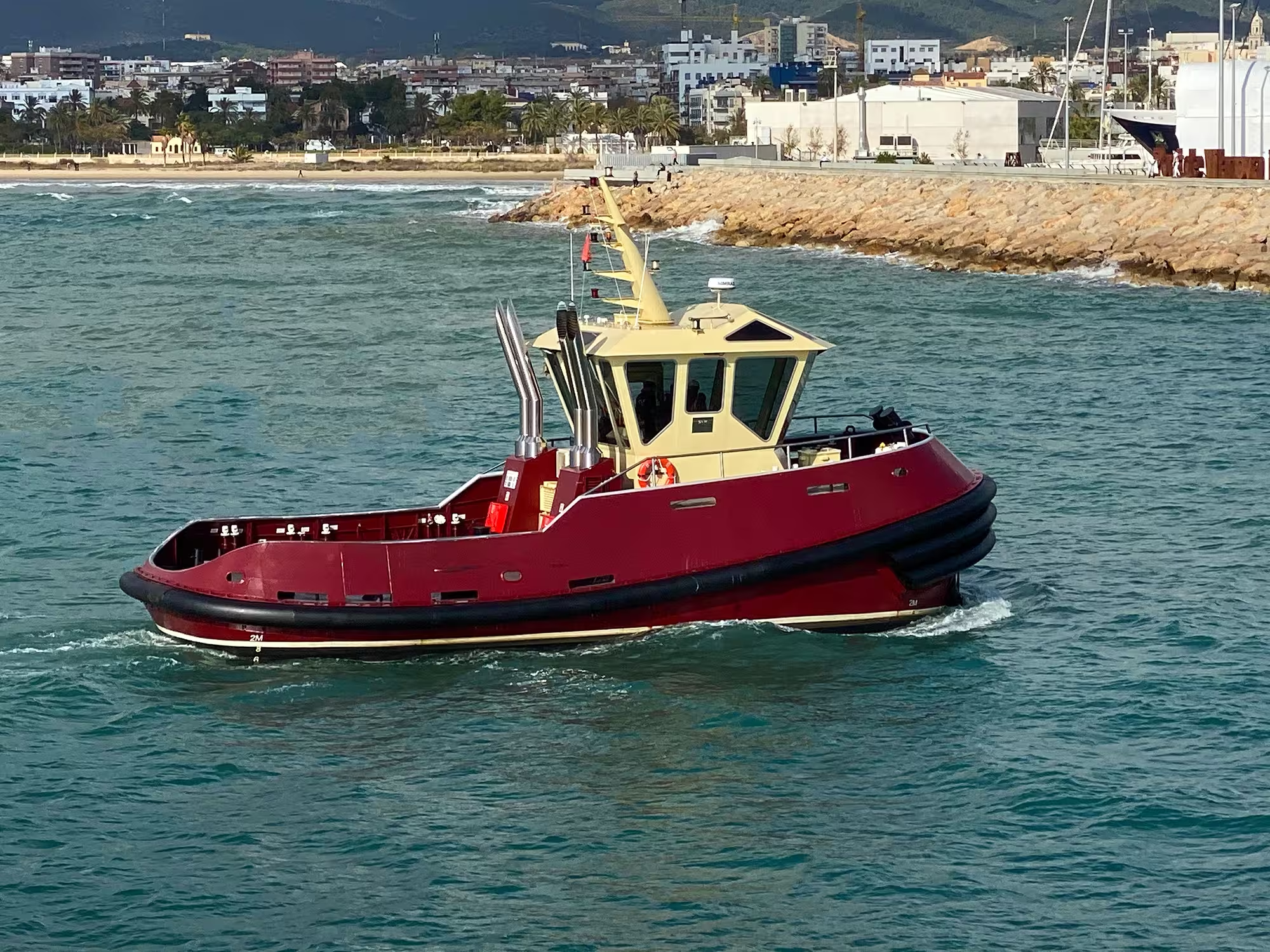
In harbour tugs and multipurpose harbour vessels—where each unit is tailored to a specific operating profile—the digital mock-up helps close layout, access and system coordination early in the process.
If you want to explore vessel types where this approach delivers clear value:
If you are planning a shipbuilding project and want to assess how a digital mock-up would apply to your case, you can contact the technical team: contact.
Frequently asked questions
What is a digital mock-up in shipbuilding?
A complete 3D CAD model of the vessel integrating structure, systems and equipment before production, used to validate the project and reduce build risk.
What is the difference between a digital mock-up and a digital twin?
A digital mock-up is the 3D design/build model. A digital twin is connected to real operational data during the vessel’s life.
How does a digital mock-up reduce cost?
By detecting clashes, design errors and access problems before fabrication, when correction cost is minimal. It reduces rework, schedule drift and coordination friction.
Can shipowners participate in the design through the digital mock-up?
Yes. It enables virtual walkthroughs, layout reviews and changes while still in engineering—when change is manageable and controlled.