
Three engineering vectors to protect fleet profitability.
An analysis of global shipbuilding and repair trends, contrasted with the operational reality of the Mediterranean and the Caribbean.
The global context
The naval industry is going through a period of strong market concentration. Based on the latest available figures (2024–2025), Asian yards have reinforced their dominance in volume, with Chinese shipyards booking around 74% of global newbuilding orders in 2024.
This places European and American players in front of a clear reality: competing on price is rarely a viable strategy. In 2026, shipowners are not looking for experimentation; they are looking for certainty. Competitiveness comes from technical precision, reliable execution, and fleet availability.
After reviewing macro trends and contrasting them with day-to-day operational experience, three engineering vectors stand out as decisive for technical performance and economic outcomes this year.
1) The digital twin as a financial tool (not an aesthetic one)
Digitalisation is no longer an aspirational concept. Advanced modelling and simulation only create value when they are embedded into engineering workflows and execution planning. The point is not “having a model” — the point is using it to reduce uncertainty and control cost.
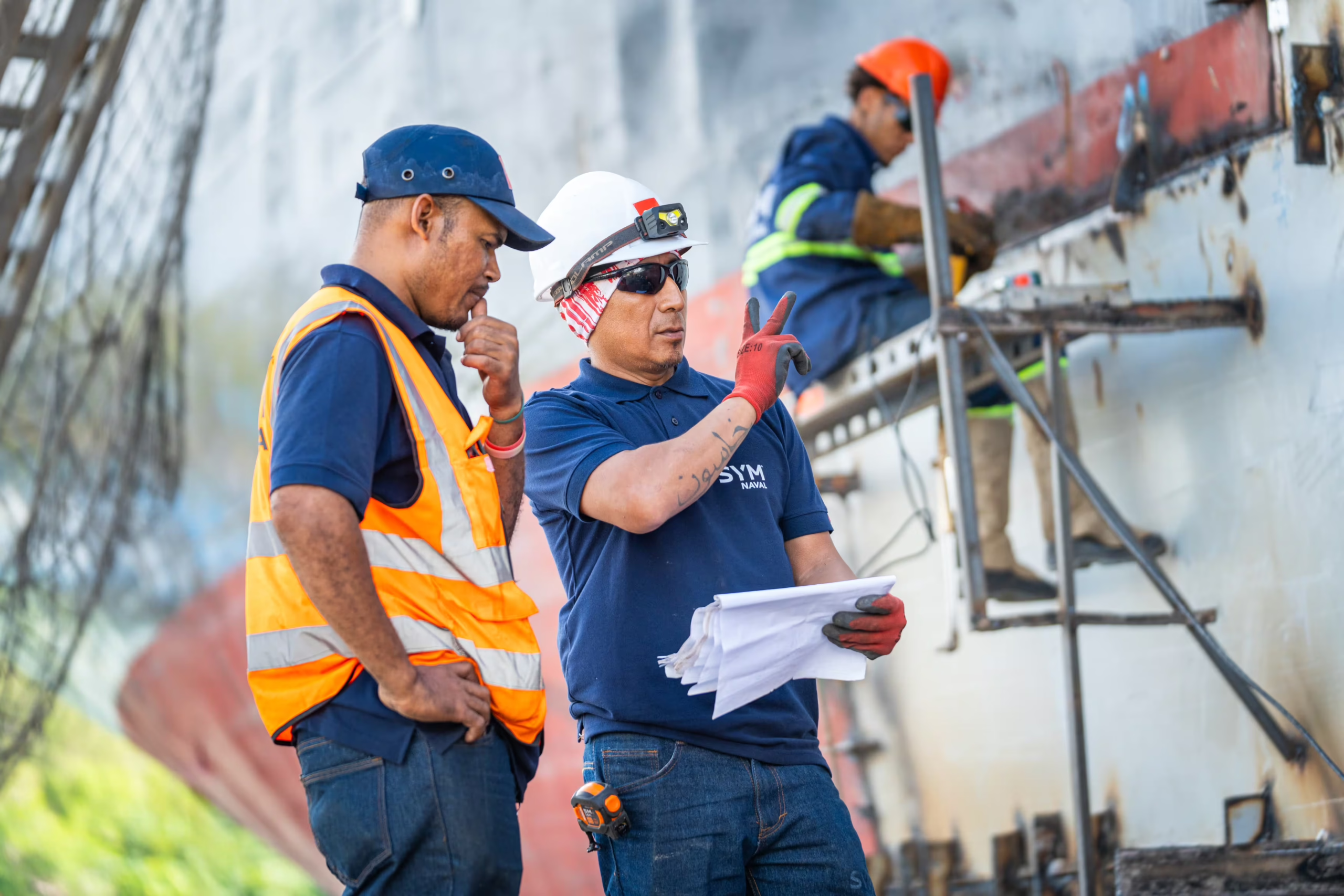
In repair and conversion projects, digital models significantly reduce risk during the work phase. Pre-intervention 3D scanning captures the vessel’s real as-built condition, preventing the common gap between legacy drawings and onboard reality — a gap that often triggers unplanned modifications, delays, and cost overruns.
This technical anticipation directly reduces time off-hire. Early clash detection makes it possible to prefabricate blocks, spools, and systems in the workshop while the vessel is still operating. When the vessel reaches the repair window or dry dock, installation time is compressed — and the critical path becomes more predictable.
In 2026, engineering that does not simulate often ends up absorbing overruns during execution.
2) Decarbonisation and ECA compliance: a pragmatic response
For most of the existing fleet, 2026 is not defined by long-term scenarios, but by regulatory and operational constraints already in force. The Mediterranean Sea is now a SOx Emission Control Area (Med SOx ECA), with a 0.10% sulphur limit, which forces immediate decisions on fuel, auxiliary systems, and overall efficiency.
At the same time, pressure to reduce carbon intensity is increasingly operationalised through indicators such as the CII, which affects day-to-day operation and real consumption performance.
There is no single universal solution. The response has to be engineered and tailored to each vessel profile. In practice, most decisions fall into two clear directions:
- Electrification where it is operationally viable. In port environments and service vessels, electric propulsion and power management systems have already demonstrated technical reliability and operational return. In well-defined duty cycles, they enable near-zero-emission operation without sacrificing availability. Explore Castalia.
- Holistic optimisation of the existing fleet. For most vessels, efficiency gains come from engineering decisions: hydrodynamic optimisation, weight reduction, and appropriate material choices in superstructures. These measures reduce consumption and improve CII performance without changing the operational profile or introducing unnecessary risk.
This is not only about replacing propulsion. It is about improving the vessel’s global behaviour — aligning engineering, regulation, and operational profitability. In that context, retrofit and modernisation remain a key lever. Ship conversion services.
3) Flexible and modular design: the end of the “standard vessel”
The shift toward modular design and customisation is not a trend for its own sake — it is a response to real operational needs. Shipowners are moving away from generic vessels and toward units built to perform a specific mission as efficiently as possible. The vessel must adapt to operations, not the other way around.
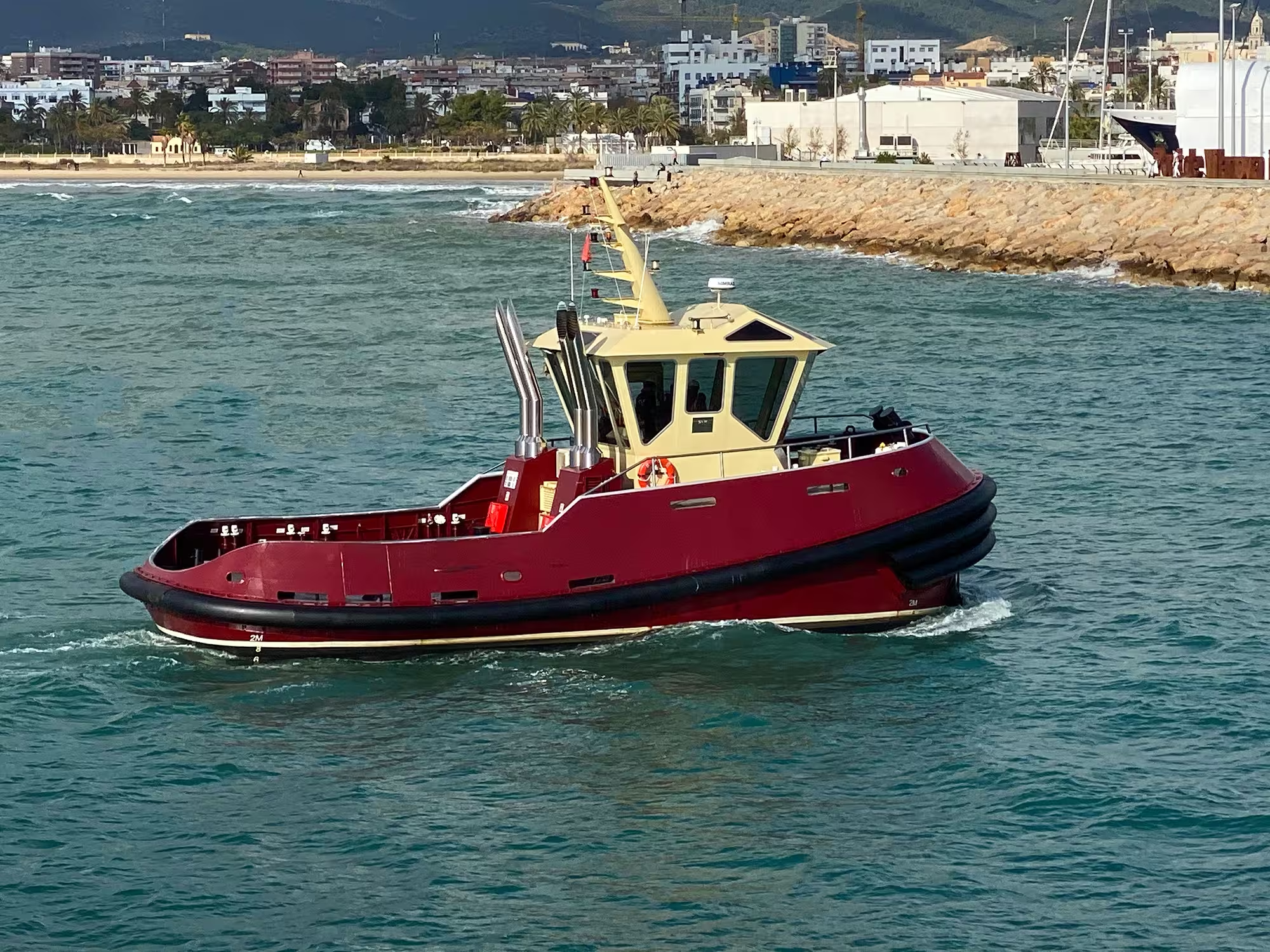
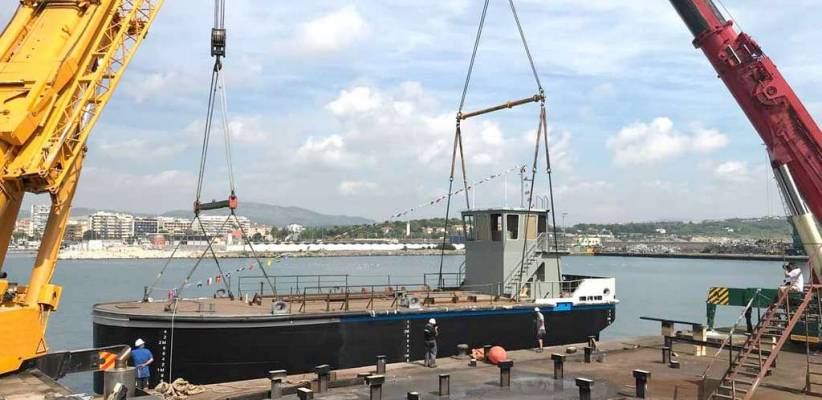
From an applied engineering perspective, this translates into mission-driven design. High-bollard-pull harbour tugs, multipurpose vessels, and MARPOL units operate in very different environments and under demanding duty cycles. Manoeuvre type, frequency of use, port constraints, and operating horizon all drive critical design decisions that directly impact efficiency, safety, and operating cost.
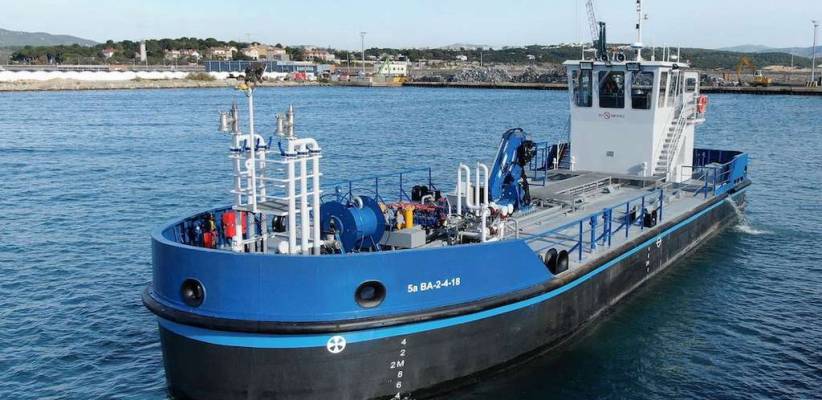
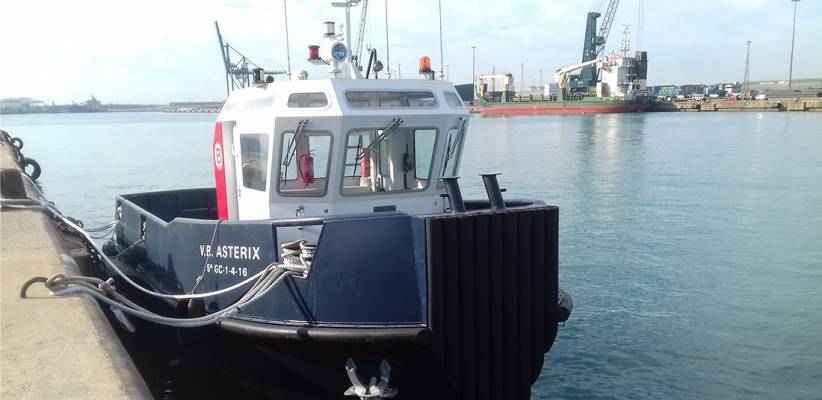
At SYM Naval, this approach is developed across specialised vessel families: harbour tugs, auxiliary harbour vessels, and MARPOL harbour vessels.
The same logic also requires thinking beyond delivery. Preparing for future transformation is increasingly strategic. Designing with structural margins, space reserves, and accessible system layouts makes future upgrades and conversions feasible without disruptive reconstruction — from machinery space accessibility to allowances for additional loads and integration of new systems.
Designing today with retrofit in mind is not a technological bet; it is an economic decision. It protects the initial investment, extends service life, and reduces the operational and financial impact of adaptations that will inevitably come.
2026 will be a demanding year. Regulatory pressure is increasing and operational margins do not tolerate mistakes. Technology is a means; proprietary engineering and execution capability determine outcomes.
Fleet profitability depends on planning, rigorous design, and timely technical decisions. Contact SYM Naval.