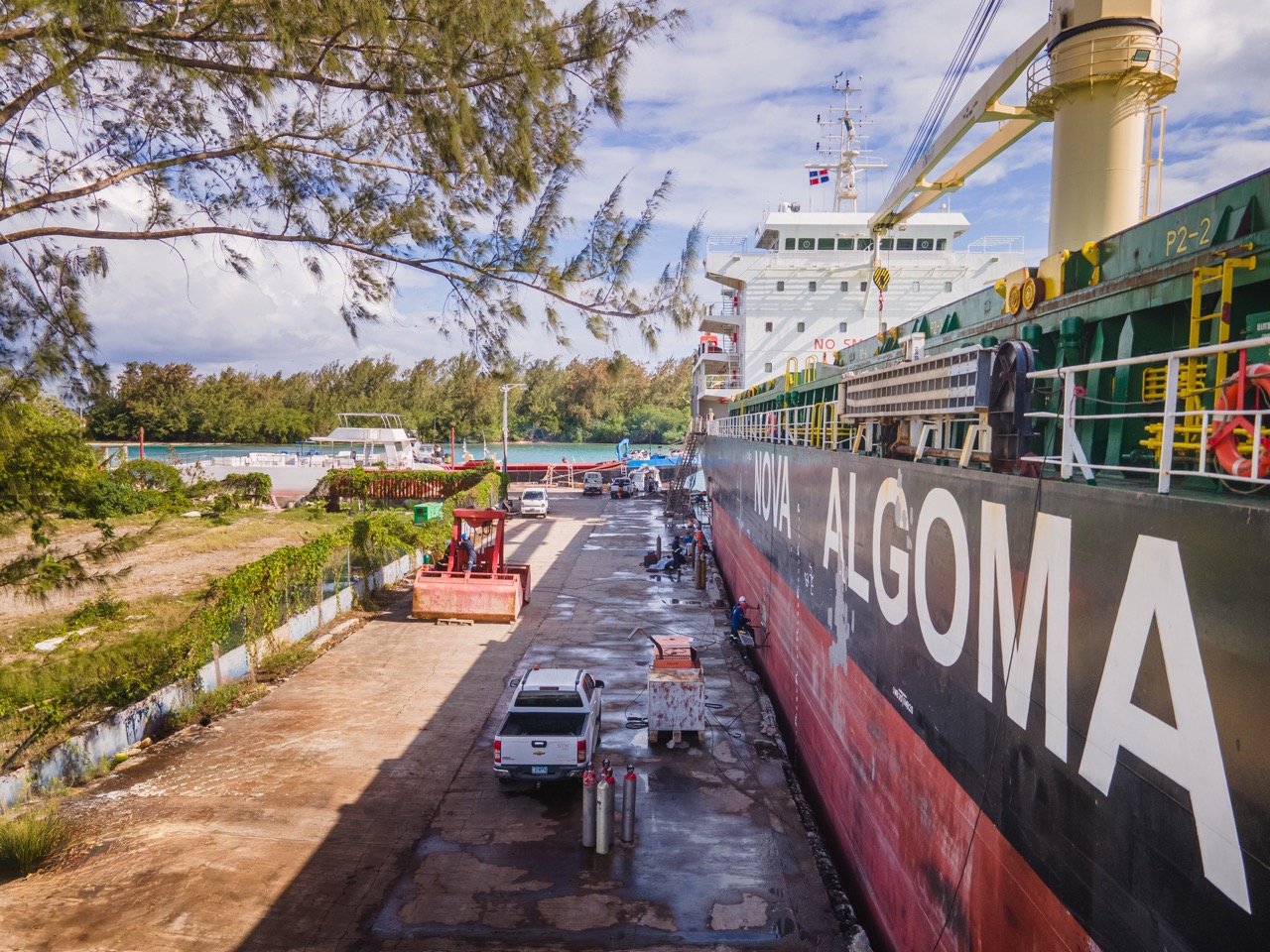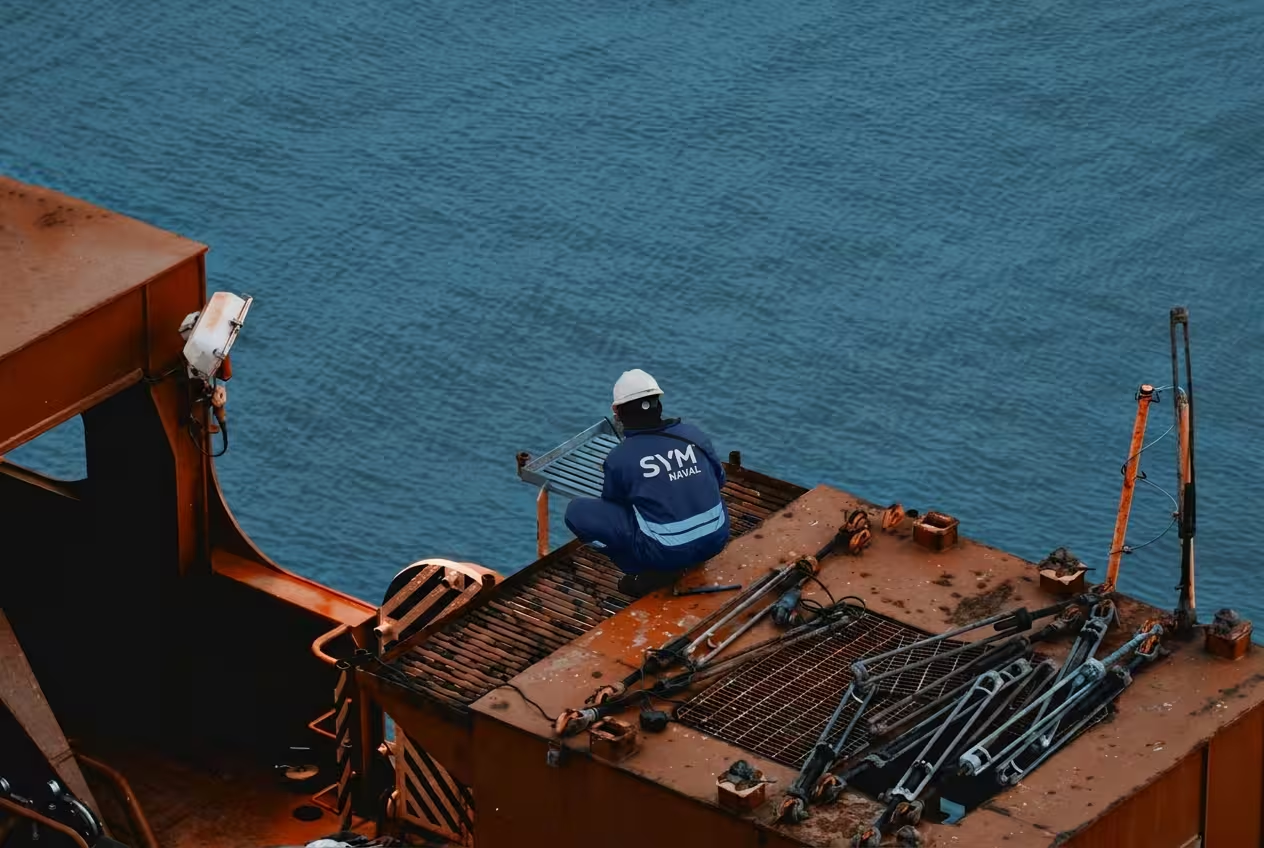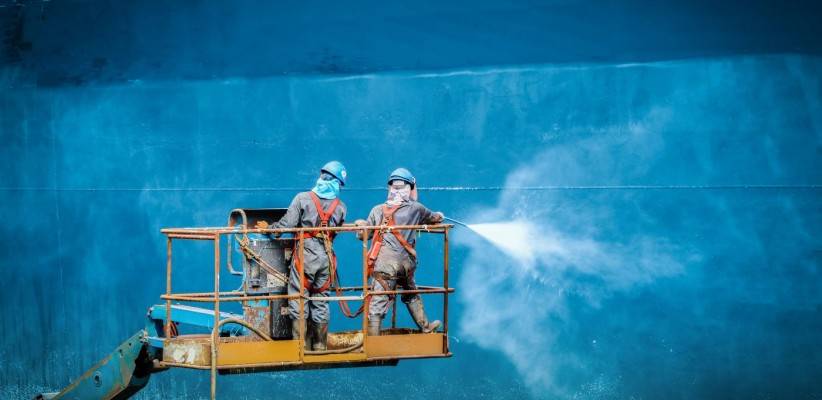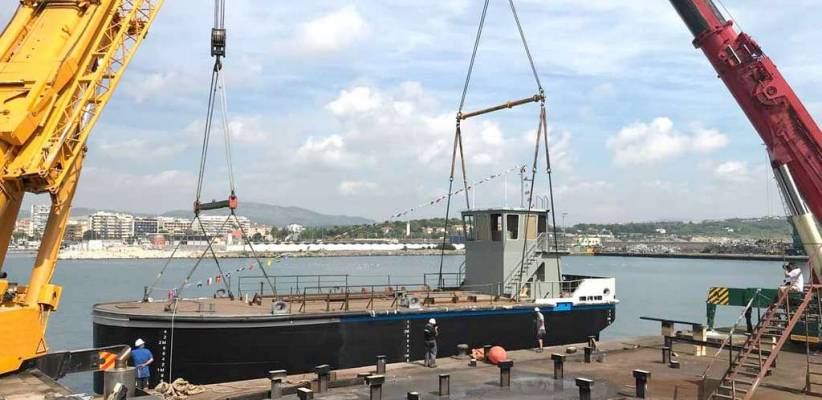
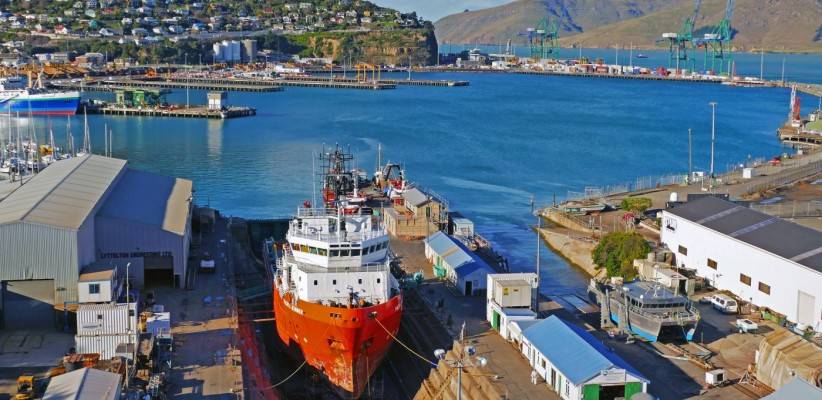
A dry dock is an essential facility in any shipyard focused on ship repair, maintenance or shipbuilding. Its purpose is simple to explain yet complex to execute: allow a vessel to enter an enclosed chamber, remove the water and make the hull accessible so work can be carried out safely on areas that normally remain below the waterline.
Because of the scale of civil works, water control, pumping systems and the logistics involved, dry docks are among the most demanding infrastructures from a technical and operational standpoint.
The role of a dry dock in a shipyard
A dry dock enables work that is impossible—or significantly limited—when afloat: full hull inspections, thickness measurements, steel renewals, underwater hull painting, propulsion and steering maintenance, sea valve replacement and more. That is why, regardless of whether a shipyard is oriented toward newbuilding or repairs, the dry dock is a core asset.
Depending on the primary activity, dry docks are typically used for:
- Repair and maintenance (scheduled dockings or emergencies).
- Shipbuilding (construction stages and controlled launching).
- Mixed use (shipbuilding and repairs, depending on planning and capacity).
In all cases, the dock relies on auxiliary assets—cranes, quays, workshops, power supply, safety systems and logistics—that allow work to be executed with quality control and predictable schedules.
How a dry dock works
In general terms, a dry dock is a chamber separated from the surrounding water by a gate (or caisson). Its structure includes the dock floor, side walls, the front wall and the closing system. Operation is based on controlled flooding and dewatering, supported by pumps (typically located in a pumping station).
The standard cycle is:
- Flooding: with the dock empty, water is allowed in until the internal level matches the external level. At that point, the gate can be opened.
- Vessel entry: the vessel enters the dock and is positioned in a controlled manner.
- Closure: the gate is closed and dewatering begins.
- Dewatering: water is pumped out while the vessel is centred and progressively lands on the blocks.
- Hull access: once fully dry, the underwater hull becomes accessible for inspection and repair.
What happens during dry docking
Docking (landing the vessel on the support system) is one of the most critical parts of the process. It cannot be improvised: each vessel requires a docking plan considering drafts, displacement, load distribution, stability and—when applicable—detailed damage information before entry.
Based on this information, the blocking arrangement is calculated and prepared. The configuration depends on vessel size and geometry and typically includes:
- Keel blocks, carrying the main vertical load.
- Bottom blocks, distributing load where required by hull form.
- Side blocks, stabilising and controlling heel.
During dewatering, the vessel lands progressively. Once the dock is dry, correct support is verified and repair work begins.
Undocking: the reverse process
After completion of work, the dock is flooded again until the vessel floats freely. When the internal water level matches the outside level, the gate is opened and the vessel is towed out. This stage also requires coordination and control, as watertight integrity, system readiness and safety conditions are verified before the vessel returns to operation.
Dry docking with SYM Naval
At SYM Naval, we deliver dry docking repair and maintenance for a range of vessel profiles. To learn more about scope, planning and capabilities, visit our dry docking page or explore our overall ship repair services.
For projects and technical enquiries, contact our team via the contact form.