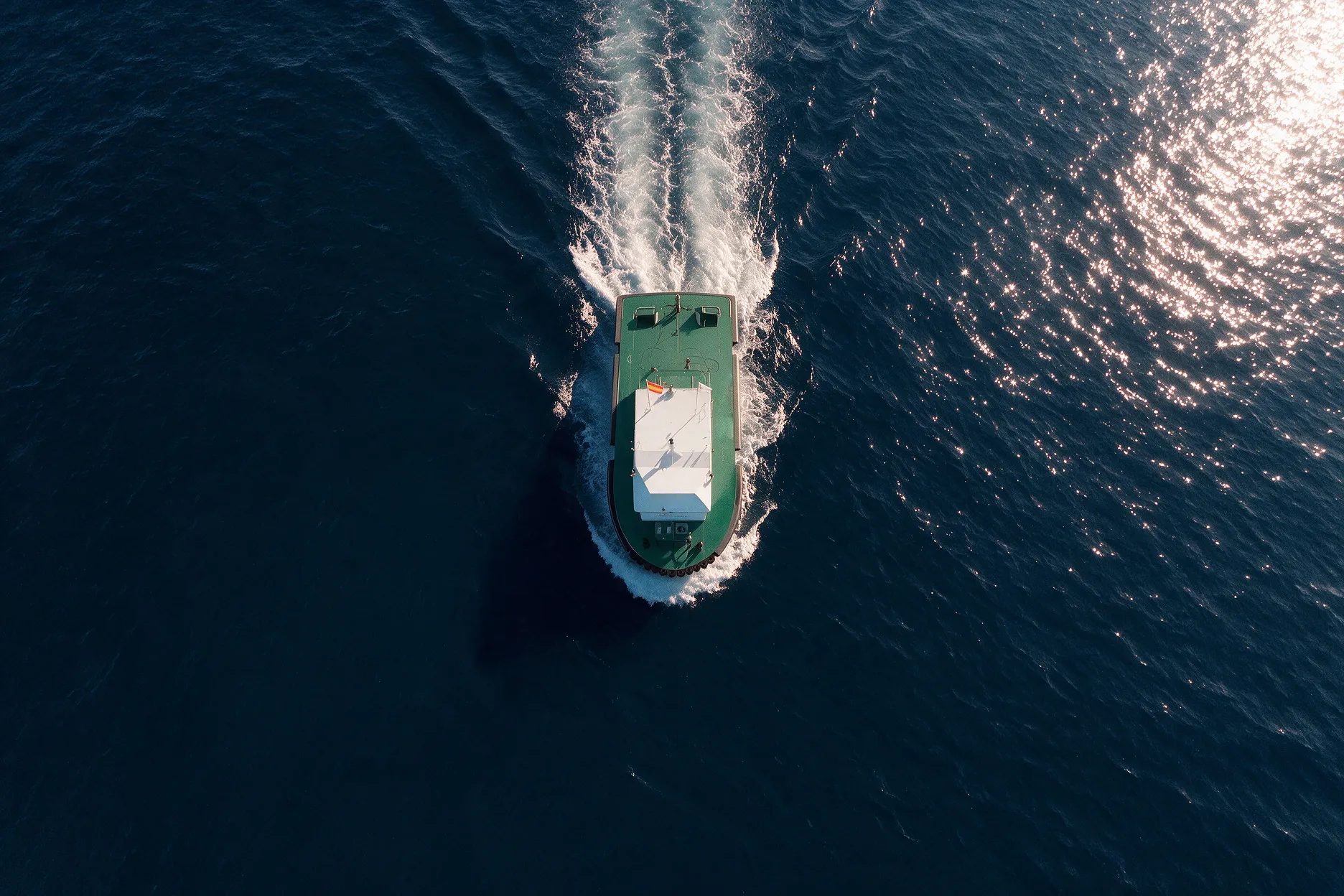
Aerial view of Castalia, SYM Naval's fully electric harbour vessel, under way
Blue Propulsion by SYM Naval

Harbour and inland fleet electrification

Blue Propulsion is SYM Naval's 100% electric propulsion system for harbour vessels and inland fleets. It makes use of the higher efficiency of the electric motor and is already in operational service.

Energy efficiency

The difference starts with the motor

An electric motor converts around 90% of the energy it consumes into useful work; a diesel engine, around 30%.

It is a straightforward engineering calculation, and the energy saving is real and measurable. Each vessel's saving is calculated from its operating profile, and whether it can be certified is assessed afterwards.

Estimate your vessel's savings

Data analysed to estimate a vessel's savings

01

Current consumption

Fuel, installed power and running hours of the existing propulsion.

02

Operating profile

Work phases, power demand, stops and the range the service requires.

03

Available charging

Shore infrastructure and the time available between services to recharge.

The product

Blue Propulsion, a complete system

Blue Propulsion is the 100% electric propulsion system developed by SYM Naval. It is configured with an LFP battery system designed together with one of the world's leading manufacturers. The BMS integrates SYM Naval's own energy management system (EMS), which makes it possible to configure a redundant solution adapted to the vessel's operation. This 100% electric propulsion system removes the complexity of diesel engine systems and already has operational references: the first 100% electric tug in Spain.

Blue Propulsion is offered as a complete system, from the batteries and their management to on-board integration and after-sales technical service.

  • Electric motors
  • LFP batteries
  • BMS in every pack
  • Own EMS
  • On-board integration
  • Technical service
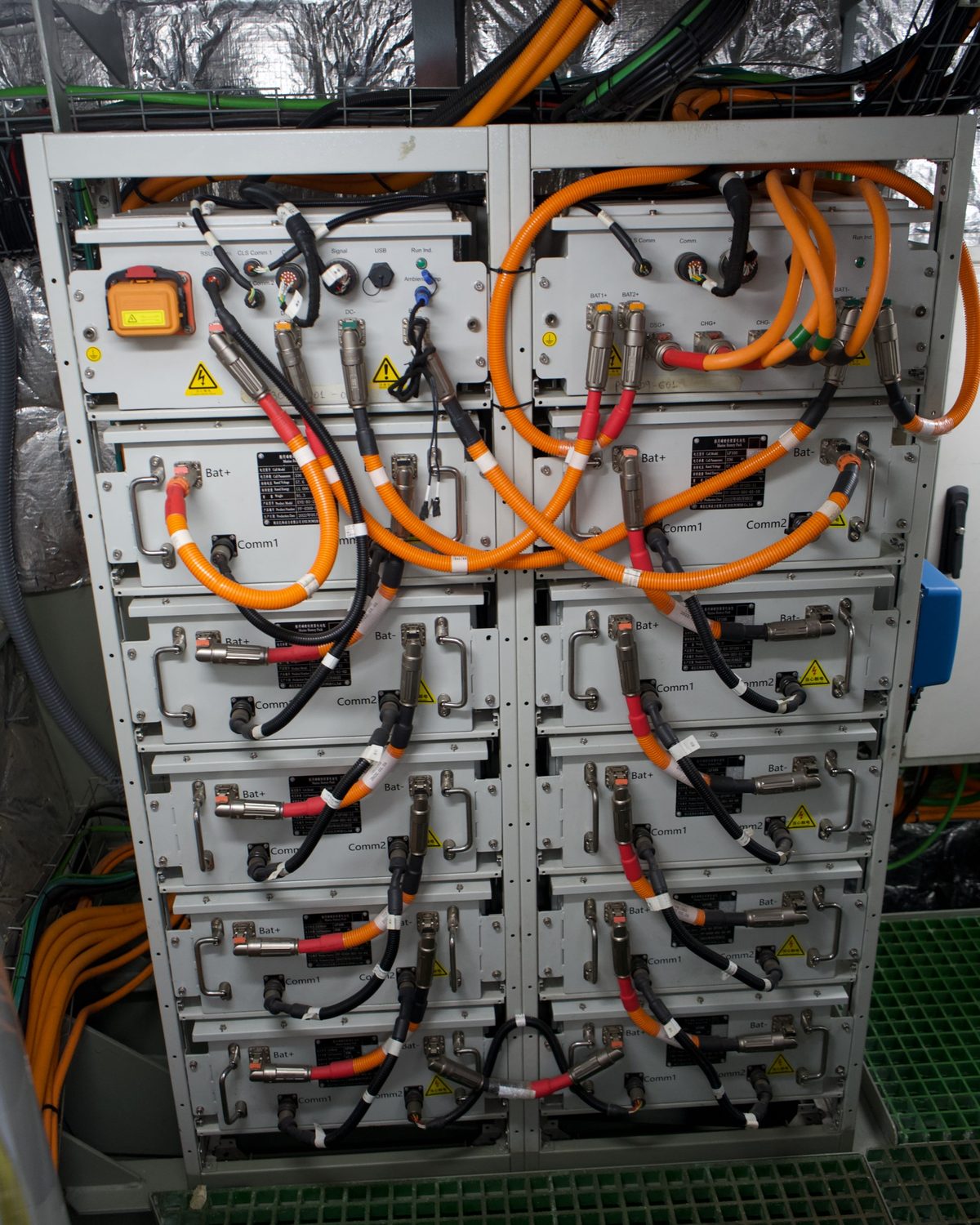
Blue Propulsion LFP battery rack on board Castalia
On-board installationCastalia's battery system

Modular and redundant

Each battery pack has its own BMS and the EMS coordinates the whole system. One pack can charge while another discharges, without stopping the service.

Long service life and recognised standards

Modules rated for 6,000 to 8,000 cycles, IP67 protection and compliance with IACS standards, which classification societies recognise and which are taken into account when financing and insuring the vessel.

Simpler maintenance

Without the systems of a combustion engine, maintenance is simpler and more predictable, with a lower operating cost per cycle.

No direct emissions

Less noise and vibration on board. It can make licence renewals easier, as well as operating in ports with restrictions and in environmentally sensitive areas.

Adding it to your fleet

Three ways to adopt Blue Propulsion

Blue Propulsion is offered as a fully independent system. It can be installed to electrify an existing vessel in operation or, alternatively, from the start of a new shipbuilding project.

Conversion of a vessel in service

SYM Naval replaces the diesel propulsion with Blue Propulsion and carries out the work at its shipyard. Before the project is committed, the hull condition, available space and weights, stability, operating profile and charging are assessed. Conversion extends the service life of a vessel whose hull is in good condition.

Study a conversion
System supply

For owners who prefer to work with their usual shipyard, SYM Naval supplies the system configured for the vessel, with the interfaces and documentation required for its integration.

Request a proposal

A new 100% electric vessel

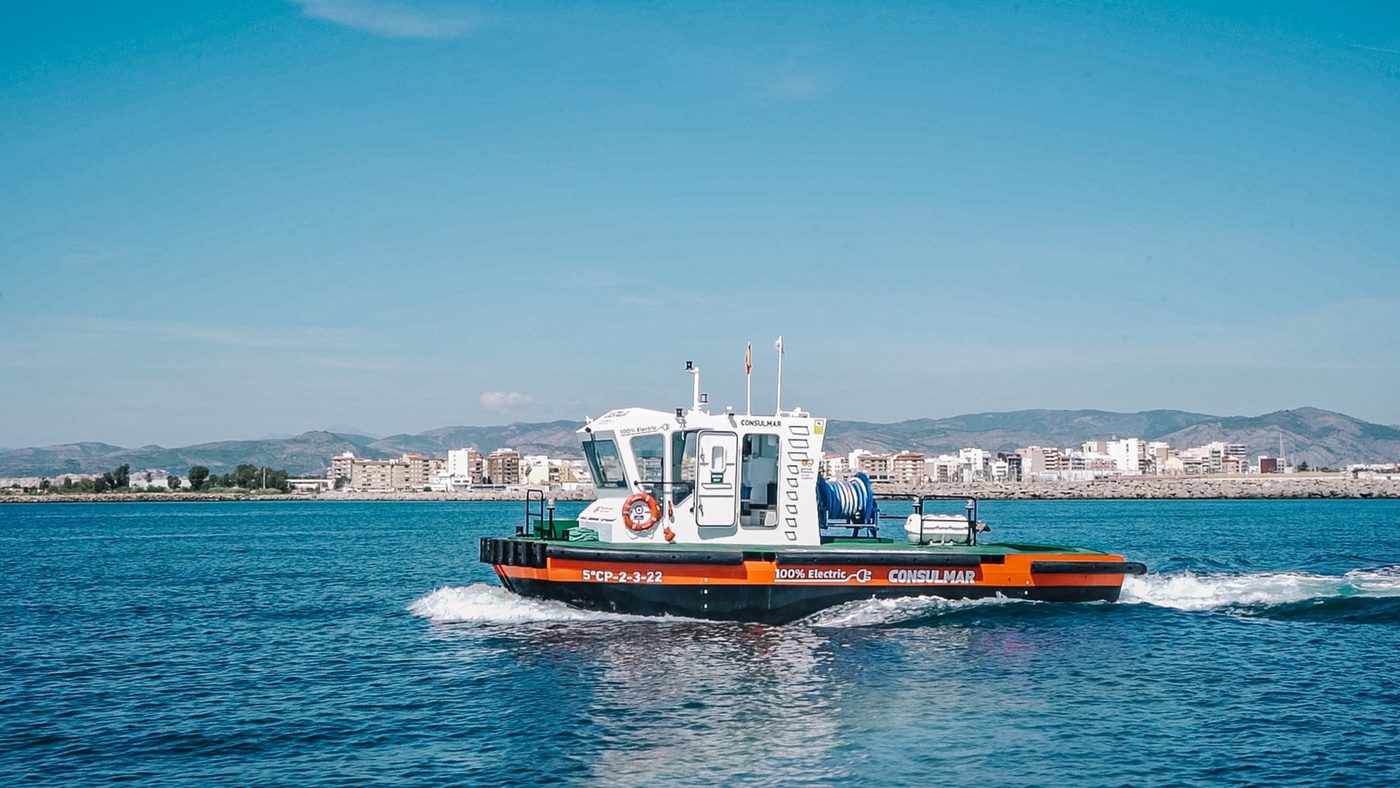
For a new project, SYM Naval designs and builds the vessel with Blue Propulsion integrated from the outset: harbour tugs, service vessels and multipurpose craft, such as Castalia.

Discuss a new build

If you prefer, you can write directly to our sales team: comercial@sym-naval.com

Reference

Electric propulsion is already in service

A SYM Naval milestone

A fully electric harbour vessel, designed and built by SYM Naval

Castalia has been in daily service in port since 2023, demonstrating electric propulsion in real operation.

Castalia, the fully electric harbour vessel built by SYM Naval, under way
CastaliaFully electric multipurpose harbour vessel View the project
≈90%Electric motor efficiency, compared with ≈30% for diesel
CastaliaFully electric harbour vessel, in service
EMSSYM Naval's own energy management system
EUEnergy savings rewarded in several EU countries
Energy-efficiency incentives

Energy savings with economic value

Several European Union countries reward verified energy savings, under schemes based on energy efficiency rather than emissions that implement the EU Energy Efficiency Directive. Electrifying a vessel produces exactly that kind of saving, which can help recover part of the investment, on top of the operating savings in fuel and maintenance.

Spain

Energy Savings Certificates (CAE)

Each certificate equals 1 kWh of final energy saved. The owner can transfer the savings to the energy companies obliged by the scheme in exchange for payment. Vessels are processed as a singular action, for work carried out before 2031 and verified by an ENAC-accredited body.

MITECO · CAE system
France

Energy Savings Certificates (CEE)

Standard operation sheets for inland waterways: TRA‑EQ‑126 covers the electric re-engining of an inland vessel and TRA‑EQ‑127 the purchase of a new electric or hybrid inland vessel. The premium is calculated in kWh cumac, and the application must be filed before the investment is committed.

VNF · CEE
Italy

White Certificates (Certificati Bianchi)

Managed by GSE. Its transport guidelines include replacing engines and installing alternative propulsion systems to improve the efficiency of fossil-fuelled vessels.

GSE · Certificati Bianchi
Netherlands

Energy transition of inland vessels (RVO)

RVO's tender for the energy transition of inland vessels covers electric, hydrogen and methanol energy lines, in new builds and retrofits. Applications can be submitted from 17 November 2026 to 16 March 2027 by inland shipping operators established in the Netherlands.

RVO · Inland vessels

Other countries, and how SYM Naval supports the process

For Germany, Belgium, Poland and other European countries, SYM Naval reviews which mechanisms apply to each project and the documentation they require.

In Spain, SYM Naval manages the process with a trusted partner specialised in energy savings certificates, so the owner has experts at every stage and documentation that is reliable and verified.

Frequently asked questions

Common questions from shipowners

Can a vessel already in service be electrified?

Yes, through a conversion, provided the vessel allows it. The hull condition, available space and weights, stability, duty cycle, charging options and class and flag requirements are reviewed. Feasibility is confirmed by that study, before the project is committed.

How is a vessel's energy saving determined?

From its real operation: route, service hours, loads, stops and current consumption. With that data the system is sized and the final energy saving is calculated, which is also the basis for applying to energy-efficiency schemes.

What range does the system offer and how is it charged?

Whatever the operation requires: the system is sized according to the route, the work phases and the time available for charging in port. As a reference, Castalia operates for up to 10 hours continuously with 0.5 MWh of batteries. The battery banks are compatible with shore power.

What happens if a battery pack goes out of service?

Each pack works independently, with its own BMS, and the system has at least two independent banks. That redundancy allows operation to continue with the rest of the system.

Does it meet classification society requirements?

The battery modules comply with IACS standards. In new builds and conversions, SYM Naval coordinates the technical side with the classification society and the flag administration. When only the system is supplied, each party's responsibilities and documentation are agreed before delivery.

Which countries offer incentives for electrifying a vessel?

Spain (CAE), France (CEE) and Italy (Certificati Bianchi) reward verified energy savings. In the Netherlands, RVO accepts applications for new builds and retrofits of inland vessels from 17 November 2026 to 16 March 2027. For other countries, SYM Naval will tell you which mechanisms apply to your fleet.

Any other question? Write to comercial@sym-naval.com and we will reply as soon as possible.

ContactLet us study your fleet's operation

Share the data available on the vessel or fleet. Based on the operating and consumption profile, SYM Naval’s team will assess the Blue Propulsion configuration, the scope of the work and the expected energy savings.

Fast
response

Send your request