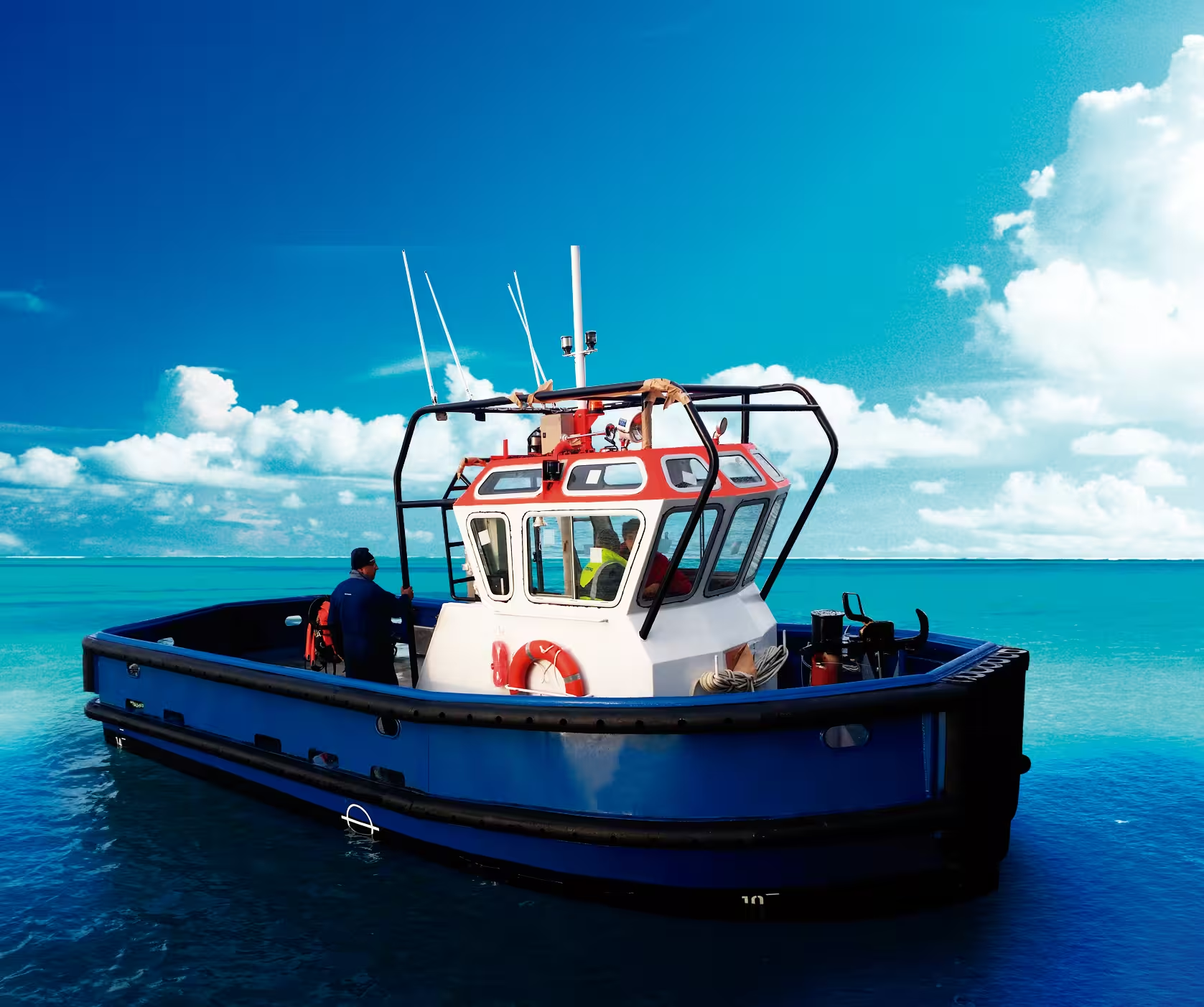
When a shipowner or port operator specifies a new tugboat, one of the first figures that comes up is bollard pull: tonnes of static pull. It is a fundamental metric, but it is not the only one that determines whether a tug will perform well.
A tug with an impressive bollard pull on paper, but poor handling in the real space of the port where it will work, becomes an operational problem. And the opposite is also true: a highly manoeuvrable tug with insufficient pull for the ships it must assist will not solve the requirement.
Designing a good harbour tug is, above all, an exercise in balance between pulling power and manoeuvring capability—defined by the specific operating profile of the port and the vessels it will serve.
What bollard pull is—and what it really measures
Bollard pull (static pull) is the maximum traction force a tug can exert while secured to a fixed point (a bollard), measured in tonnes. It is obtained through a standardised test and is the universal reference for comparing pulling capability between tugboats.
It is useful because it provides an objective benchmark: if a port or pilotage requirement calls for a 30-tonne tug to assist a given ship size, that is the reference to meet.
However, bollard pull is measured under static and ideal conditions: the tug pulling in a straight line at maximum power against a fixed point. Real port manoeuvres are different: currents, crosswinds, residual swell, tight spaces, rapid changes of direction and a moving assisted vessel. In that context, bollard pull tells only part of the story.
Manoeuvrability: what bollard pull doesn’t tell you
Manoeuvrability is the tug’s ability to change direction quickly, hold position, move laterally, pivot on its own axis and respond with precision to the master’s commands. In daily port operations, manoeuvrability is as critical as pulling power.
A tug that takes too long to reposition, has a wide turning radius or loses control at low speed increases risk and slows manoeuvres. In congested ports—with close quays, narrow basins or heavy traffic—manoeuvrability can be even more decisive than static pull.
Key factors that influence manoeuvrability include hull form, propulsion and steering arrangement, weight distribution/centre of gravity, and visibility from the wheelhouse.
Propulsion systems and their impact on the balance
Propulsion selection is probably the design decision with the biggest impact on the balance between bollard pull and manoeuvrability. The two main configurations are:
Conventional propulsion (shaft, propeller and rudder)
This is the classic arrangement: one or two fixed shafts with fixed- or controllable-pitch propellers, often with a nozzle to increase thrust at low speed, and a rudder to steer the flow. In well-designed configurations, the nozzle can significantly boost bollard pull at low speed, and a high-performance flap rudder improves steering response.
It is a reliable system, mechanically simpler and typically easier on maintenance and spares. Manoeuvrability is solid for many general harbour operations, although it does not provide true lateral movement or on-the-spot pivoting like an azimuth solution.
Azimuth propulsion
Azimuth units can rotate 360 degrees, directing thrust in any direction. This delivers substantially higher manoeuvrability: lateral movement, pivoting on the spot, and faster, more precise repositioning.
It is often the reference option for complex manoeuvres in congested ports, or for operations involving very large vessels where precise tug positioning is critical. Maintenance is more complex and capital cost higher than conventional systems, but for certain operating profiles the performance difference justifies it.
There is no “universal tug”: operations define the design
The most common mistake in tug specification is starting from a bollard pull figure without considering the full operational context. The questions that actually define the design are different:
- Which port will it operate in? What space constraints exist? What are the typical current and wind conditions?
- What vessels will it assist? What is the range of lengths and displacements?
- Which manoeuvres dominate? Berthing/unberthing, escort, channel towage, auxiliary operations?
- How many hours per day does it operate? What is the power-use profile (peaks vs average)?
- Are there emissions or noise requirements from the port authority?
A compact, highly manoeuvrable tug may be exactly what a mid-size port needs for daily operations. In other environments, a high-capacity tug with advanced control and configuration will be essential. The point is that the design must respond to the real operating profile, not to a generic specification.
The role of the nozzle and steering arrangement
A design detail worth highlighting is the combination of a propeller in a nozzle with a high-performance rudder. The nozzle channels and accelerates the water flow generated by the propeller, increasing bollard pull at low speed—precisely when a harbour tug needs it most during manoeuvres.
A high-performance flap rudder complements this by improving directional response at low speed, which is the typical operating condition in port. This combination can deliver a very competitive balance between pull and control, with a mechanically simpler setup than azimuth propulsion.
How SYM Naval approaches tug design
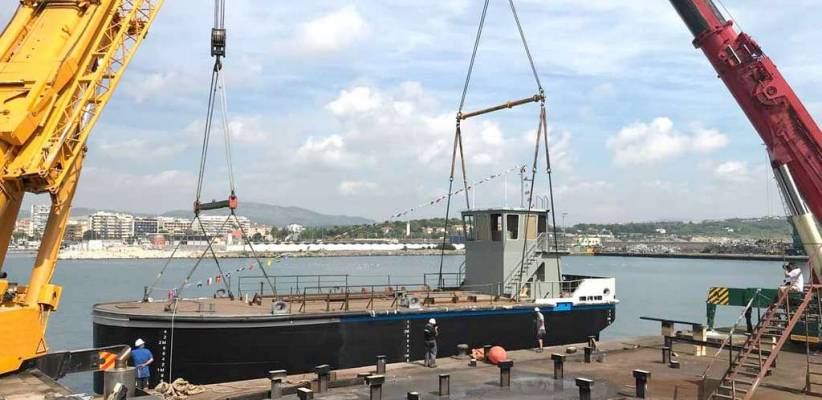
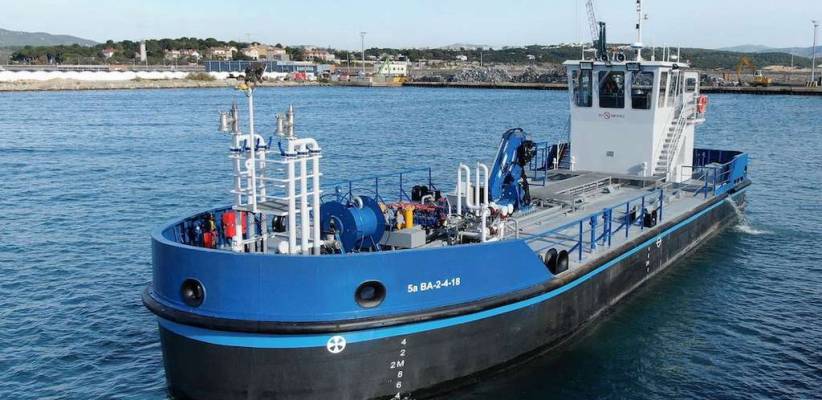
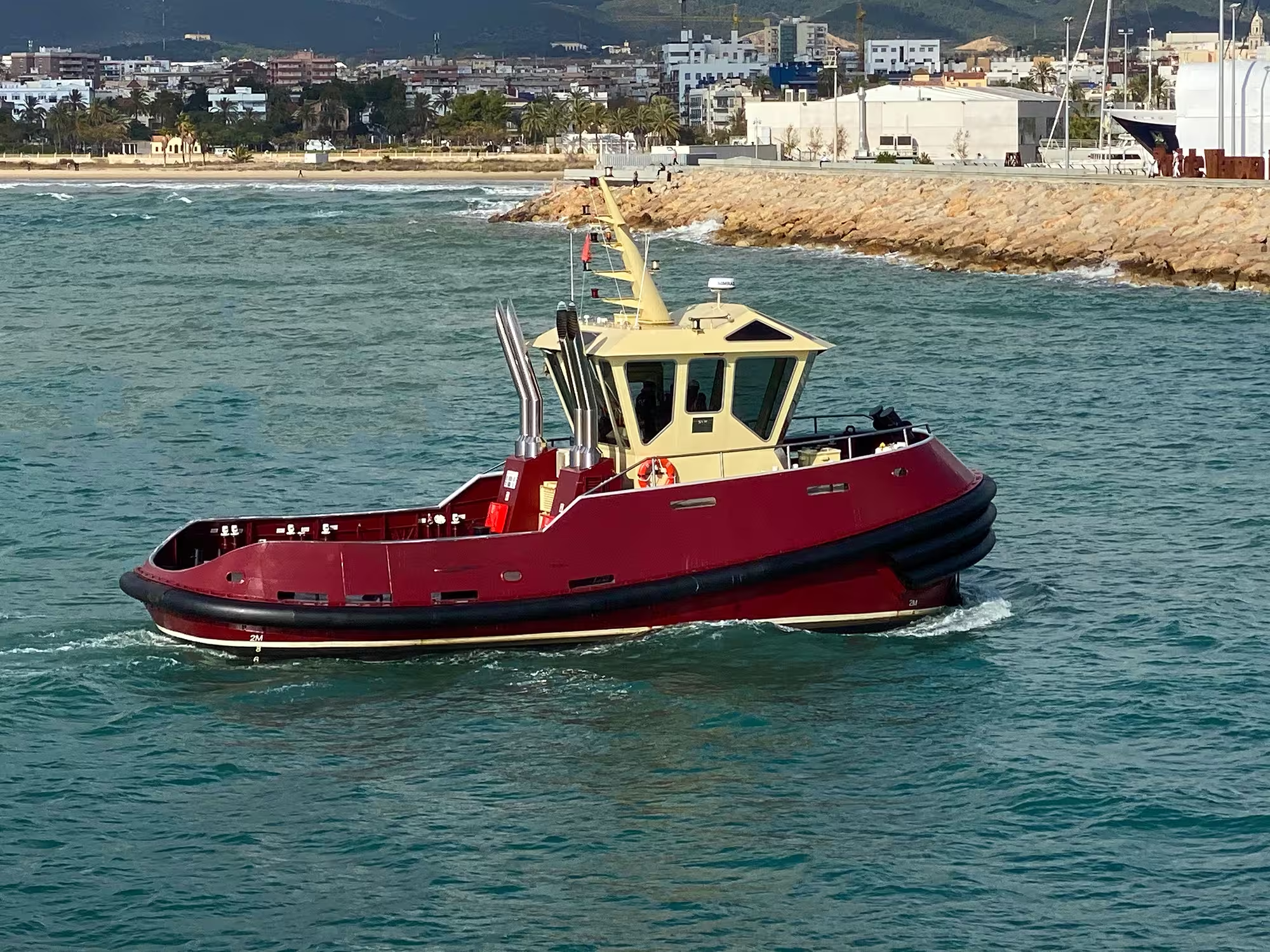
At SYM Naval, each tug design starts from the shipowner’s real operation: the port environment, the vessels to assist, the predominant manoeuvres and the working conditions. From there, the technical office defines hull form, propulsion arrangement, weight distribution, deck equipment and wheelhouse layout, and validates the overall solution with digital tools before construction begins.
The range covers harbour tugs for medium-intensity operations (bollard pull up to 35 tonnes) and higher-capacity segments, with configurations selected according to each project’s operational requirements.
To explore the range and our shipbuilding approach: tugboats.
Frequently asked questions
Does higher bollard pull always mean a better tug?
No. Higher bollard pull means higher pulling capacity. But if that exceeds what the port actually needs and compromises manoeuvrability, compactness or efficiency, the result can be an oversized tug. The key is matching power and control to real operations.
Can a conventional-propulsion tug be manoeuvrable enough?
Yes. With the right hull design, nozzle configuration and a high-performance rudder, a conventional tug can be highly competitive for general port operations. Azimuth propulsion brings clear advantages in complex, precision manoeuvres, but it is not always necessary.
Can the propulsion system of an existing tug be changed?
It is technically possible through retrofit, but it is a major intervention affecting structure, machinery space, shaft line and associated systems. In many cases, it is more efficient to design a new tug with the right system from the start.
If you need a tug adapted to the real operating profile of your port, SYM Naval designs and builds tailor-made solutions with in-house engineering and propulsion options including conventional, azimuth, hybrid or electric. 👉 View tugboats