Every day, thousands of merchant vessels generate waste that cannot be discharged at sea: used oils, oily water, sewage, solid garbage and, increasingly, exhaust gas cleaning residues. That waste has to go somewhere. And that somewhere starts at the port.
The MARPOL vessel is the tool that makes collection possible. It rarely makes headlines, but without it a port cannot meet its environmental obligations or properly serve the fleets that call there. It is, quite literally, the front line of maritime waste management.
This article covers what a MARPOL vessel is, the technical requirements it must meet, how to design and build one that actually works in daily port operations, and what options exist today in terms of capacity and propulsion — including the fully electric alternative.
What Is a MARPOL Vessel and What Role Does It Play?
A MARPOL vessel is a harbour craft designed specifically for the collection, transport and — in some configurations — supply of waste generated by ships in port. Its name comes from the international convention that regulates the prevention of pollution from ships — the MARPOL Convention — but in practice, when people refer to a “MARPOL vessel” they mean the unit that handles waste classified under the convention’s annexes.
The waste categories these vessels can manage are defined by those annexes. Annex I covers hydrocarbons: used oils, sludge, oily water and fuel residues. Annex IV addresses sanitary sewage (black and grey water). Annex V encompasses solid waste: garbage, cargo residues, dunnage. And Annex VI covers residues from exhaust gas cleaning systems (scrubbers).
Not every MARPOL vessel handles all four categories simultaneously. The configuration depends on the port’s needs and traffic profile. But the most versatile units are designed to operate across multiple categories at once, with segregated tanks and independent loading/unloading systems for each waste type.
What sets a MARPOL vessel apart from other harbour craft is its specific environmental function. It is not a tugboat, a supply barge or a pilot boat. It is a service unit whose purpose is to ensure that waste from transiting vessels is collected safely, efficiently and in compliance with regulations, without disrupting port or vessel operations.
Regulatory Framework: Why Ports Need These Vessels
The MARPOL Convention, adopted by the International Maritime Organization (IMO), requires ports to provide adequate reception facilities for ship-generated waste. This is not optional: it forms part of the international regulatory framework, and non-compliance can result in sanctions, operational restrictions and loss of port competitiveness.
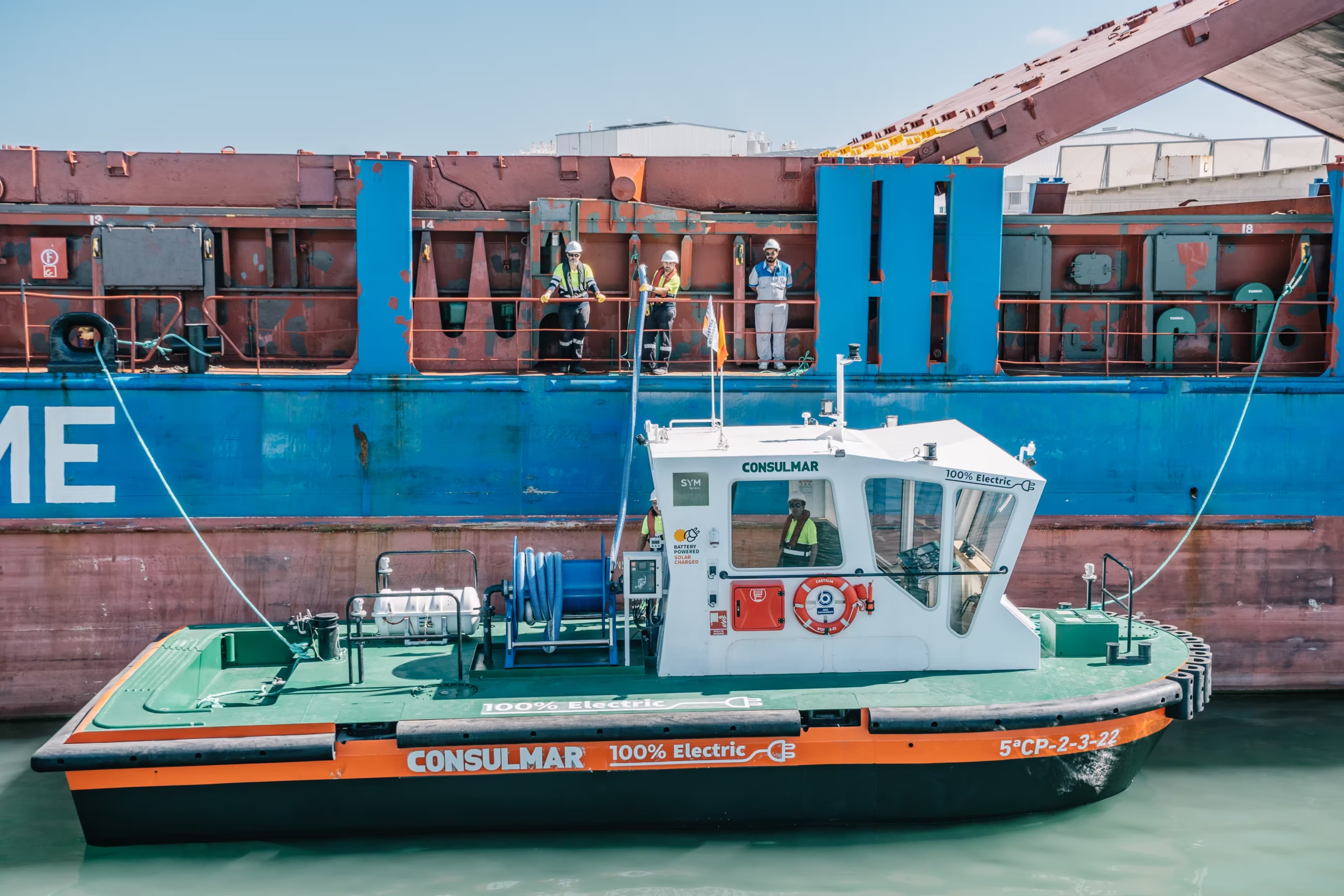
In practice, every commercial port needs waste reception capacity proportionate to its traffic. That capacity, in many cases, takes the form of MARPOL vessels that go alongside the anchored or berthed merchant vessel, collect waste and transport it to shore-based treatment facilities.
The entry into force of the Emission Control Area (ECA) in the Mediterranean has added a further layer of demand. Ports operating in these zones must offer solutions aligned with the strictest environmental standards, driving demand for MARPOL vessels with clean propulsion and greater operational capability.
We won’t detail the full convention here — there’s a dedicated article on MARPOL regulation on our blog. What matters in this context is understanding that a MARPOL vessel is not an optional add-on: it is a regulatory and operational necessity for any port seeking compliance and competitive service.
How a MARPOL Vessel Is Designed: Technical and Operational Requirements
Designing a MARPOL vessel is not simply fitting tanks into a hull and adding a pump. It is an engineering exercise that must simultaneously address capacity, safety, manoeuvrability and regulatory requirements, all within the space and budget constraints of a port environment.
Cargo capacity and waste segregation
The first design parameter is tank capacity and layout. A MARPOL vessel handling categories I, IV, V and VI needs segregated tanks for each waste type, with independent loading and unloading systems. Segregation is not a preference — it is a regulatory requirement. Mixing waste from different categories invalidates handling and can constitute a violation.
Total capacity varies by market. A vessel for a regional port may need 30 to 50 m³. A port handling large merchant vessels, tankers or cruise ships may require units of 200 to 500 m³ or more. At SYM Naval, the construction range spans from compact 30 m³ configurations to high-capacity designs of up to 1,200 m³.
Loading and discharge systems
Collection operations require reliable pumping systems, hoses and connections compatible with the international standards of the vessels being served, and in many cases a deck crane for handling solid waste, containers or auxiliary equipment. The TM-083-23 model from SYM Naval, for example, features a hydraulic crane with a 2.5-tonne capacity at 8 metres reach, enabling efficient multi-category waste handling.
Flash point and safety
When the vessel handles Annex I waste — hydrocarbons, used oils, oily sludge — the cargo’s flash point is a critical design factor. Waste with a low flash point (below 60°C) requires ventilation systems, gas detection, fire protection and explosion-proof electrical equipment in cargo areas. All of this must be integrated from the design phase, not retrofitted afterwards.
Manoeuvrability in the port environment
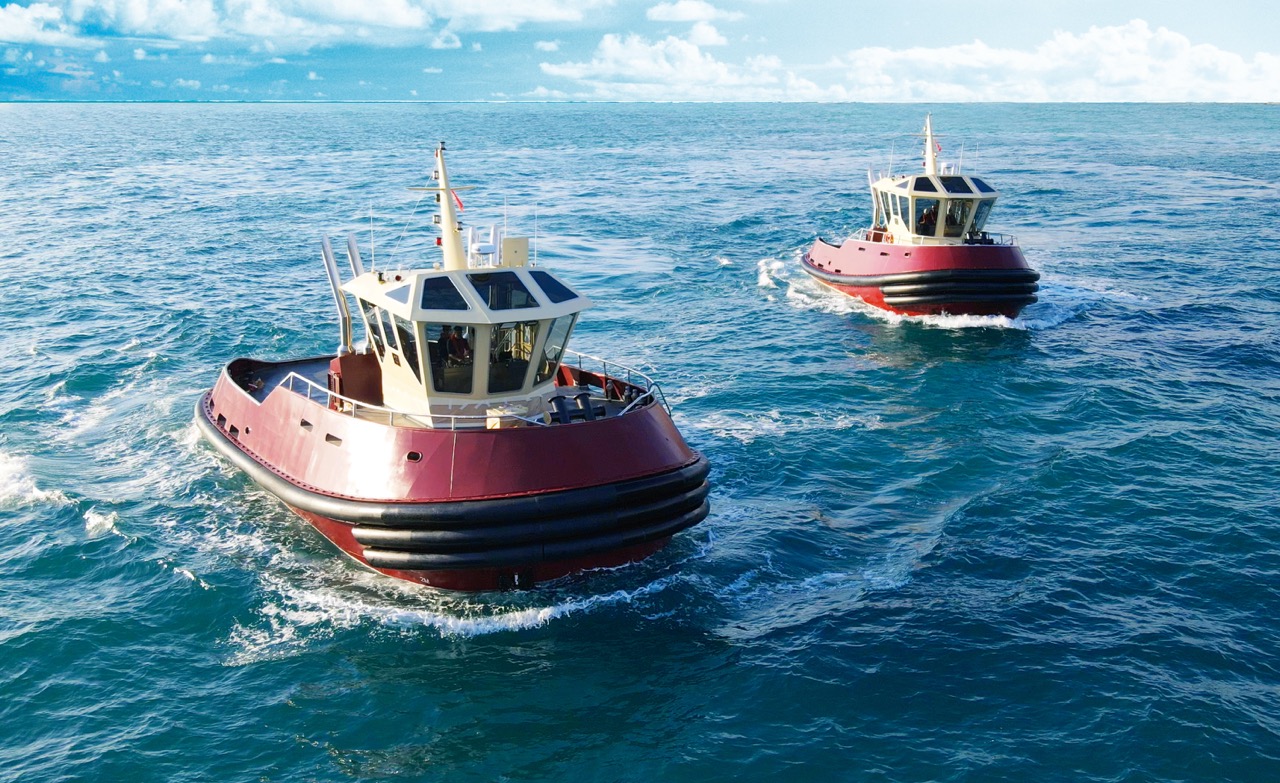
A MARPOL vessel operates in a confined and demanding space: it berths alongside much larger merchant ships, manoeuvres between quays, buoys and other harbour craft, and must position itself precisely for hose connections or crane operations. This demands a hull optimised for low speed, high-response steering systems (such as rudders with high-performance flaps) and 360° visibility from the wheelhouse.
Class and flag compliance
Like any vessel, a MARPOL craft must be designed and built in accordance with the rules of the relevant classification society (DNV, ABS, LR, BV, RINA, NK or other IACS members) and comply with the flag state regulations of the country where it will operate. For vessels handling hazardous waste, class requirements are stricter than those for conventional harbour craft.
Propulsion Options: Diesel, Hybrid and Fully Electric
Propulsion selection for a MARPOL vessel is no longer a purely technical decision. It is a strategic choice affecting operating costs, the port’s environmental footprint and, increasingly, regulatory viability.
Diesel propulsion remains the most widespread option, particularly in ports demanding high autonomy or where electric charging infrastructure is unavailable. It is mature technology with a broad service chain and lower acquisition costs. SYM Naval’s TM-083-23, with 2×360 HP diesel power, exemplifies this configuration for medium-to-high capacity (230 m³).
Hybrid (diesel-electric) propulsion enables electric-mode operation during harbour manoeuvres — where power demand is low but environmental sensitivity is high — switching to diesel for longer transits or higher-demand situations. It is the intermediate option for ports seeking emission reductions without full dependence on charging infrastructure.
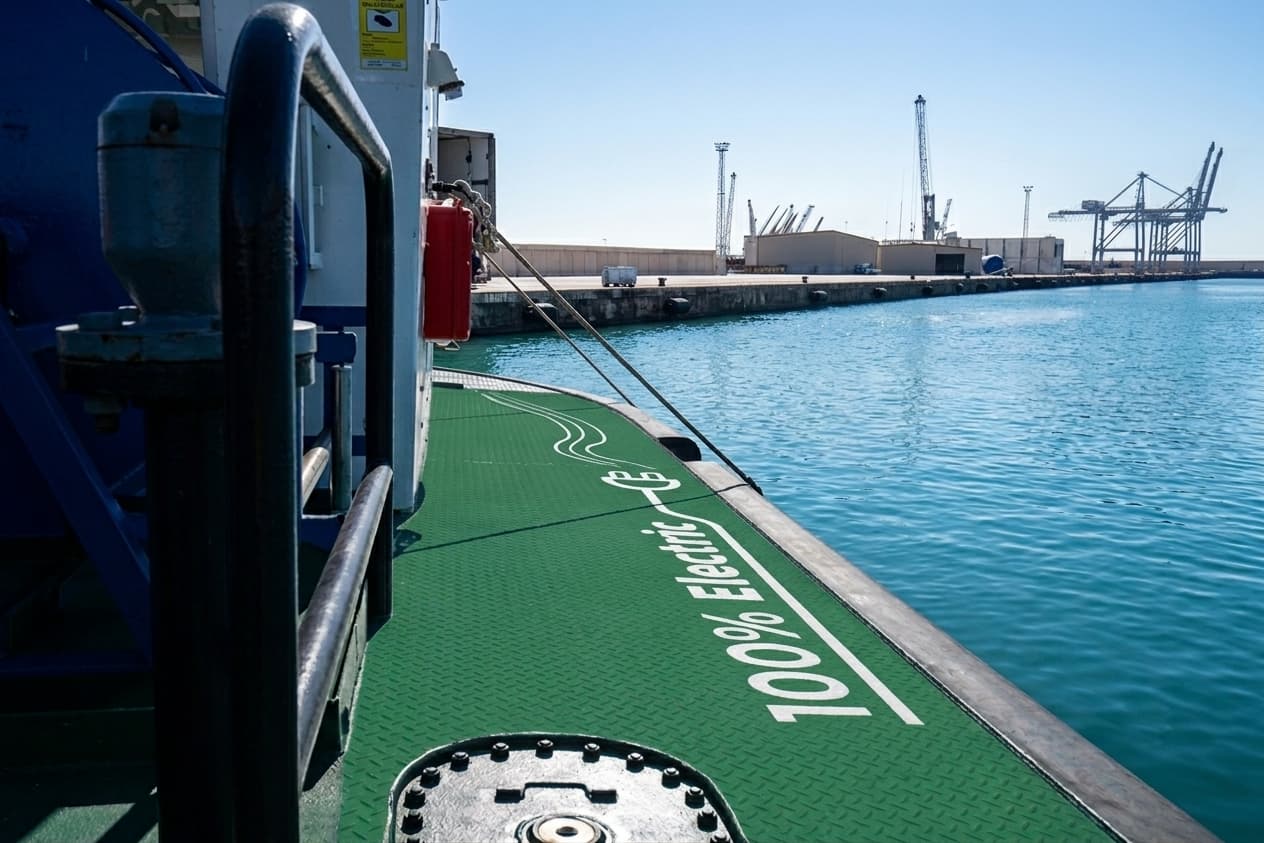
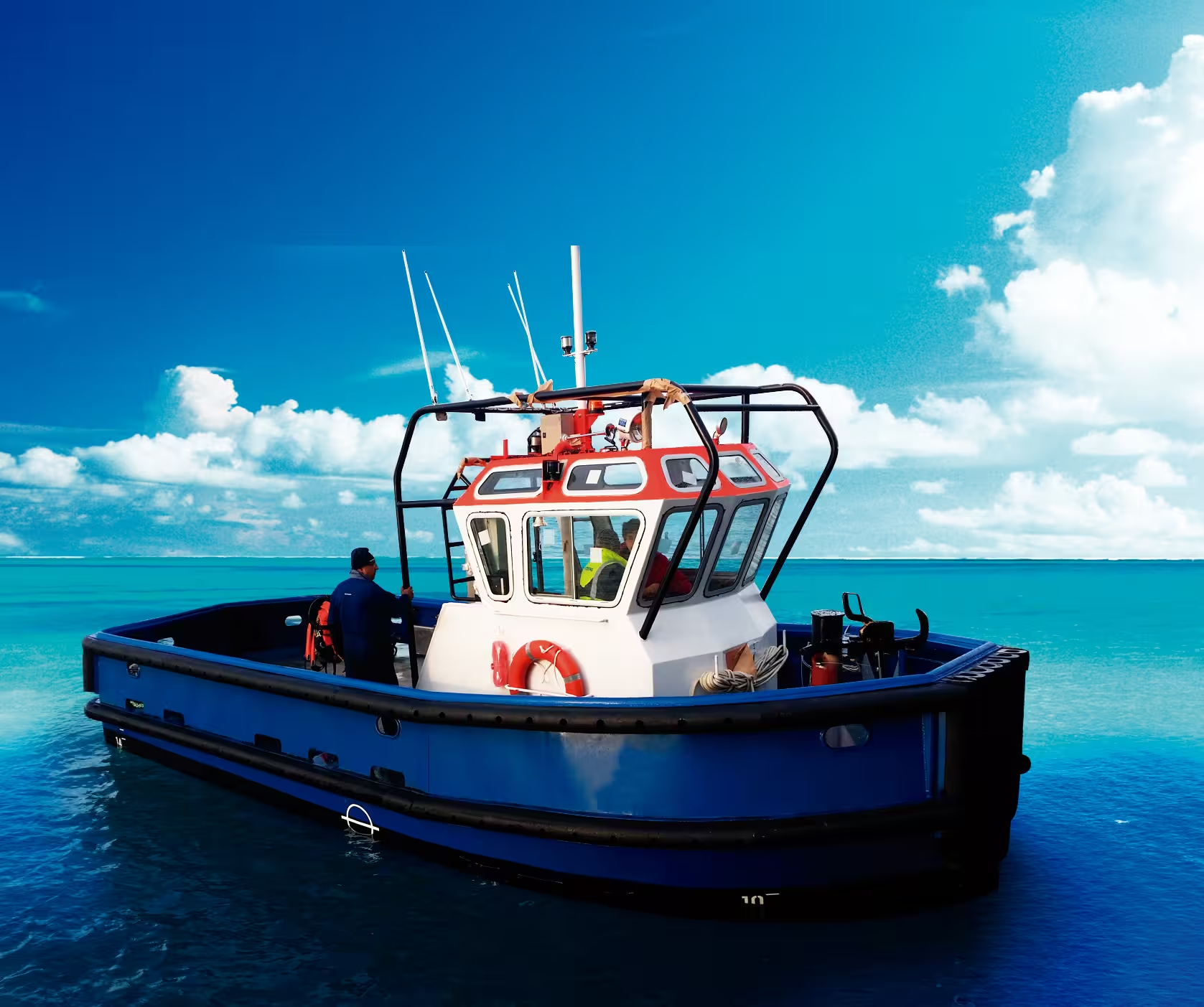
Fully electric propulsion delivers the greatest environmental impact: zero direct emissions, drastic noise reduction and elimination of fuel spill risk. The Castalia, SYM Naval’s first fully electric harbour vessel, proved the viability of this technology in a real operating environment. Building on that experience, SYM Naval now offers electric configurations in the MARPOL range too, such as the electric multipurpose vessel — 12.5 metres, 30 m³ MARPOL capacity, 0.5 MW/h battery.
The choice depends on operational profile (daily working hours, distances, peak demand), port environmental restrictions (ECA zones, local emission regulations), availability of quayside charging infrastructure, and whole-life cost analysis (acquisition + operation + maintenance over 15–20 years).
At SYM Naval, all three options — diesel, hybrid and electric — are built on the same foundation of in-house engineering and custom design, adapting propulsion to the shipowner’s and port’s real context.
The Construction Process: From Engineering to Operational Vessel
A well-built MARPOL vessel starts long before the first steel plate is cut. SYM Naval’s shipbuilding process follows a sequence designed to reduce uncertainty, avoid rework and deliver a vessel that performs from day one in its actual operating environment.
Requirements definition with the shipowner
Every project begins with a joint definition phase with the shipowner or port authority. This establishes the MARPOL categories to be handled, cargo capacity, operational profile (shifts, autonomy, home port), specific environmental and regulatory conditions, and flag and class requirements. This technical and commercial definition is the foundation for everything that follows.
Digital mock-up: validate before building
One of SYM Naval’s differentiating tools is the digital mock-up — a complete three-dimensional model of the vessel integrating structure, systems, equipment and operations before construction begins. This methodology allows the shipowner to visualise and interact with the design before fabrication, detect interferences between systems (piping, cabling, structure, deck equipment), optimise weights and spaces, and reduce errors and modifications during construction.
The result is a more precise project, with fewer surprises during build and more reliable delivery timescales.
Construction, integration and testing
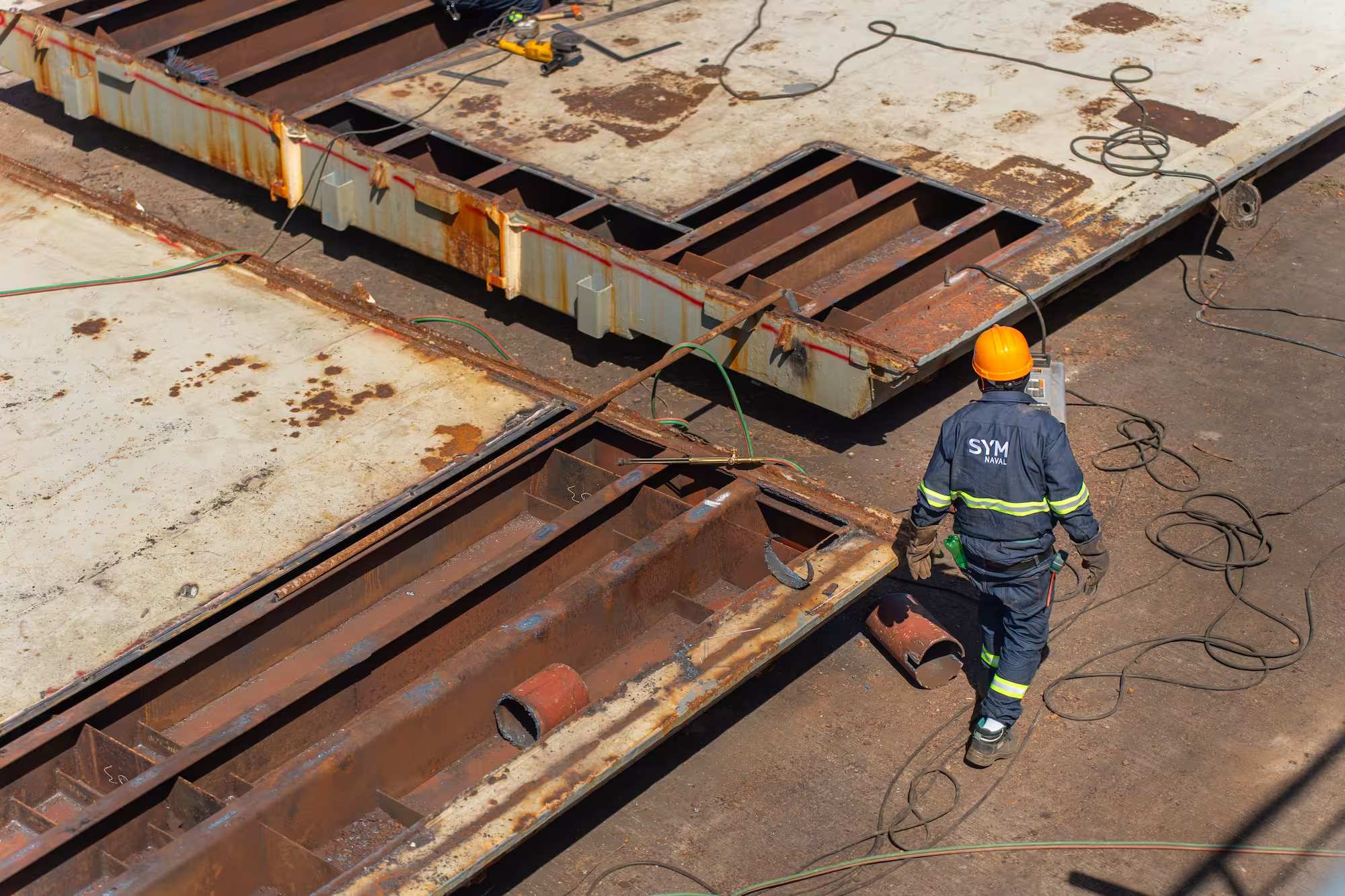
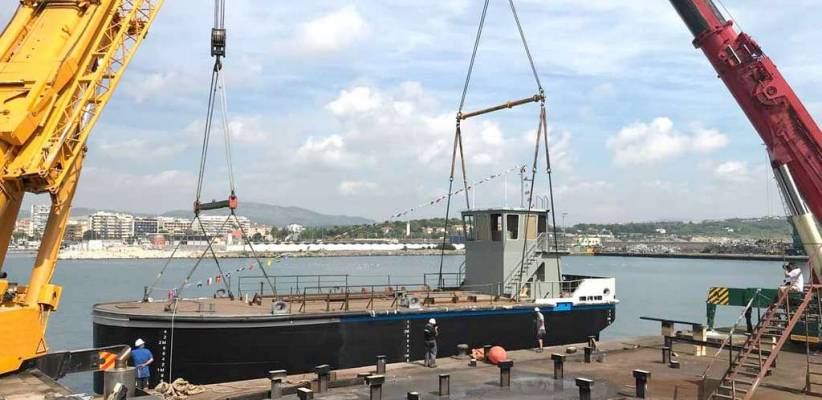
Construction is carried out at SYM Naval’s shipyards — Vilanova i la Geltrú (Barcelona) for the Mediterranean and Europe, and Boca Chica (Dominican Republic) for the Caribbean and Latin America — with full control of every phase: steel cutting and forming, block assembly, systems integration (propulsion, electrical, piping, safety), deck equipment and accommodation.
Every unit is built under ISO 9001 (quality), ISO 14001 (environment) and ISO 45001 (occupational health and safety) standards, with class supervision during critical build phases.
Delivery with destination flag
An aspect that simplifies operations for the shipowner: SYM Naval delivers vessels ready for flagging in the destination country. All technical documentation, class certification and flag homologation are managed as part of the project, sparing the shipowner post-delivery paperwork and accelerating commissioning.
The MARPOL Vessel TM-083-23 by SYM Naval
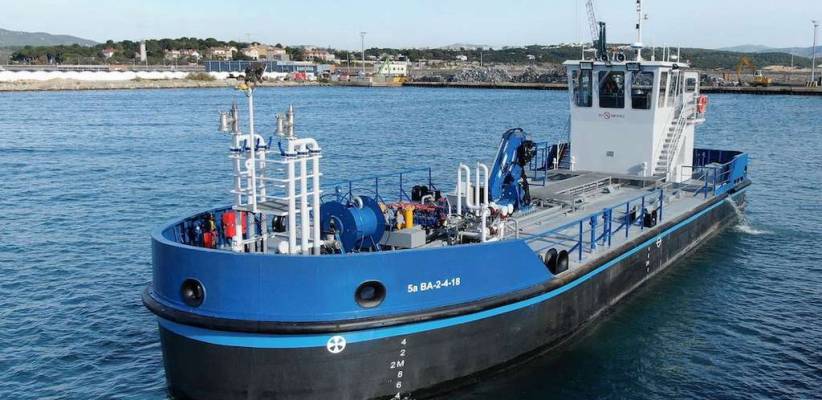
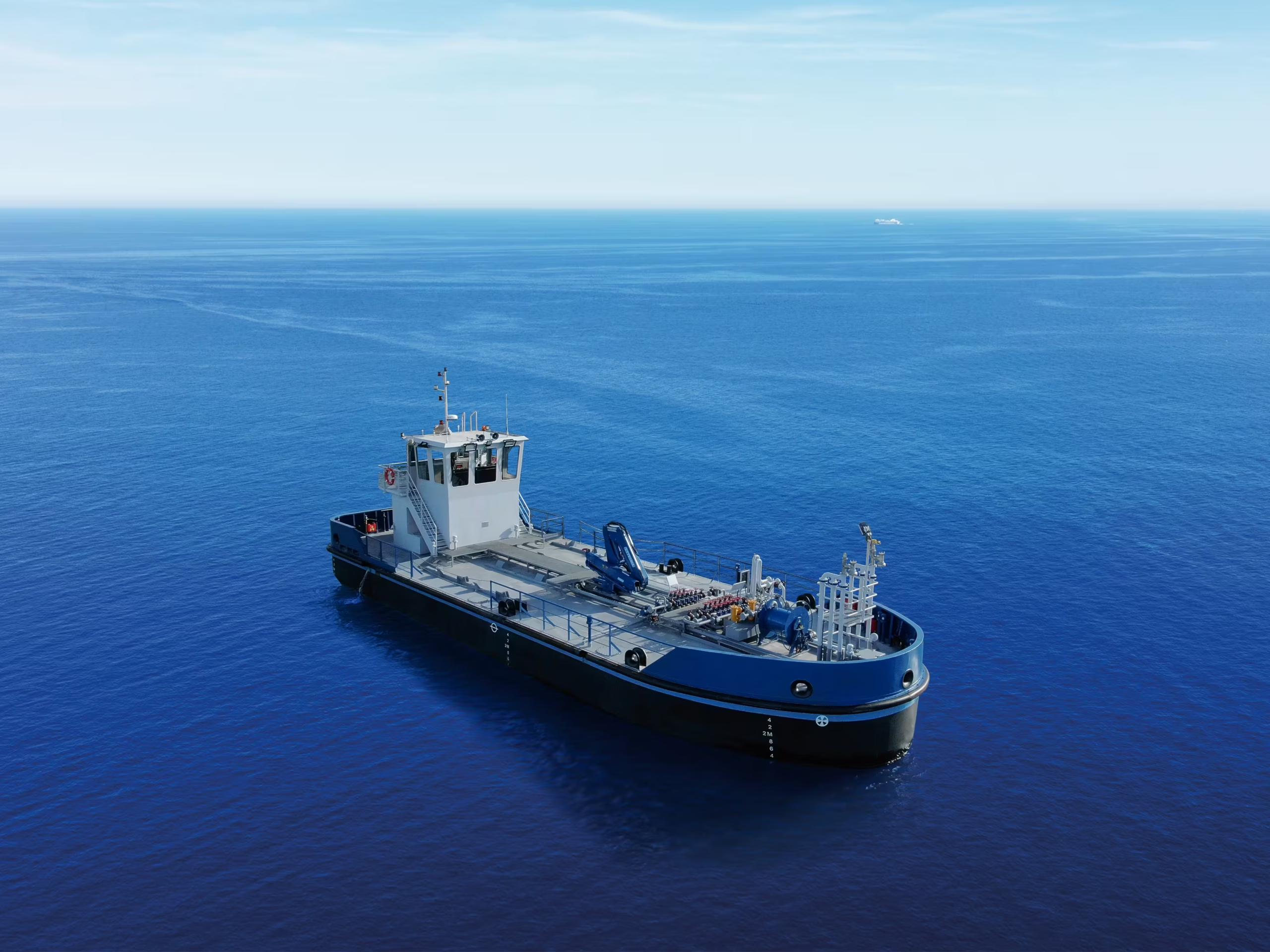
The TM-083-23 is SYM Naval’s reference model in the dedicated MARPOL vessel category. Designed and built in strict compliance with shipowner requirements, port authority demands, flag regulations and the most demanding class rules, it is a vessel conceived for real-world port waste collection.
Dimensions and capacity. At 25 metres LOA, 8 metres beam and 3 metres depth, the TM-083-23 offers 230 m³ cargo capacity handling MARPOL categories I, IV, V and VI. Its cargo flash point rating is below 60°C, qualifying it for collection of low-flash-point oily waste.
Deck equipment. It features a hydraulic crane rated at 2.5 tonnes at 8 metres reach, designed for efficient handling of solid waste, containers and auxiliary equipment during collection operations.
Propulsion and steering. Equipped with 2×360 HP diesel propulsion and a semi-balanced rudder, it achieves 7 knots. The steering system is optimised for harbour manoeuvres, where precision and rapid response take priority over speed.
Operation. Designed for a crew of 2, with an ergonomic, operator-customised wheelhouse, an engine room conceived as an ample workspace for efficient maintenance, and a cabin with rest area for crew downtime.
What defines the TM-083-23 is not just its data sheet, but the fact that every design element responds to a specific operational requirement. It is not a generic design adapted to purpose: it is a MARPOL vessel from the first line of the project.
Capacity Range: From 30 m³ to 1,200 m³
Not every port needs the same vessel. A river port with coastal traffic has very different needs from a container hub handling ULCVs and tankers. That’s why SYM Naval offers a product range covering compact units through to high-capacity configurations.
At the compact end, the 12.5-metre electric multipurpose vessel offers 30 m³ of MARPOL capacity with fully electric propulsion (0.5 MW/h battery), zero emissions and a crew of 2 plus capacity for 12 passengers. It is an ideal solution for ports with strict environmental restrictions, moderate-volume collection requirements or combined services (MARPOL + transport + harbour support).
In the mid-range, the TM-083-23 with its 230 m³ serves commercial ports with regular traffic from merchant vessels, cruise ships or mid-size tankers.
For high-traffic ports, SYM Naval designs and builds configurations of up to 1,200 m³, adapting length, beam, tank layout and loading systems to the port’s waste volume and type.
In every case, the process is the same: requirements definition with the shipowner, in-house engineering with digital mock-up, construction to European standards and delivery with complete class and flag documentation. What changes is the scale; the methodology and quality standard remain constant.
FAQ — Frequently Asked Questions About MARPOL Vessels
What types of waste can a MARPOL vessel collect? Depending on configuration, the most complete models handle four main categories: hydrocarbons and oily waste (Annex I), sanitary sewage (Annex IV), solid garbage (Annex V) and exhaust gas cleaning residues (Annex VI). The key is segregation: each waste type requires independent tanks and loading systems.
Are all ports required to have a MARPOL vessel? The MARPOL Convention requires ports to provide waste reception facilities adequate for their traffic type and volume. Not all ports need a dedicated vessel — some operate with fixed shore installations — but in ports with anchored vessels, dispersed traffic or the need to go alongside the merchant ship, a MARPOL vessel is the most efficient and flexible solution.
Can a MARPOL vessel be built with electric propulsion? Yes. SYM Naval already offers fully electric configurations for MARPOL-capable vessels. The 12.5-metre electric multipurpose vessel is an operational example. Viability depends on the port’s operational profile (working hours, distances, available charging infrastructure), but the technology is validated in real-world conditions.
Which classification society certifies these vessels? SYM Naval builds vessels classified by IACS member societies (DNV, ABS, Lloyd’s Register, Bureau Veritas, RINA, NK, among others). The choice of class society depends on the shipowner’s requirements and the flag state where the vessel will operate.
How long does it take to build a MARPOL vessel? Timescales depend on complexity and size. A mid-range unit (20–25 metres) typically requires 10 to 14 months from contract signature to delivery, including engineering, construction and trials. The use of digital mock-up and prior technical definition helps meet deadlines by reducing modifications during the build.
What’s the difference between a dedicated MARPOL vessel and a multipurpose vessel? A dedicated MARPOL vessel is designed exclusively for waste collection and transport, with segregated tanks, specific safety systems and deck equipment oriented to that function. A multipurpose vessel may include MARPOL capability as one of several functions (support, transport, light towing, supply), but its design is more general-purpose. Both have their place depending on port needs: full dedication versus operational flexibility.
Need a MARPOL vessel for your port?
At SYM Naval we design and build custom MARPOL vessels with in-house engineering, digital mock-up and diesel, hybrid or fully electric propulsion options. From 30 m³ to 1,200 m³, adapted to your real operational needs.
Tell us about your project and we’ll provide a concrete technical proposal.