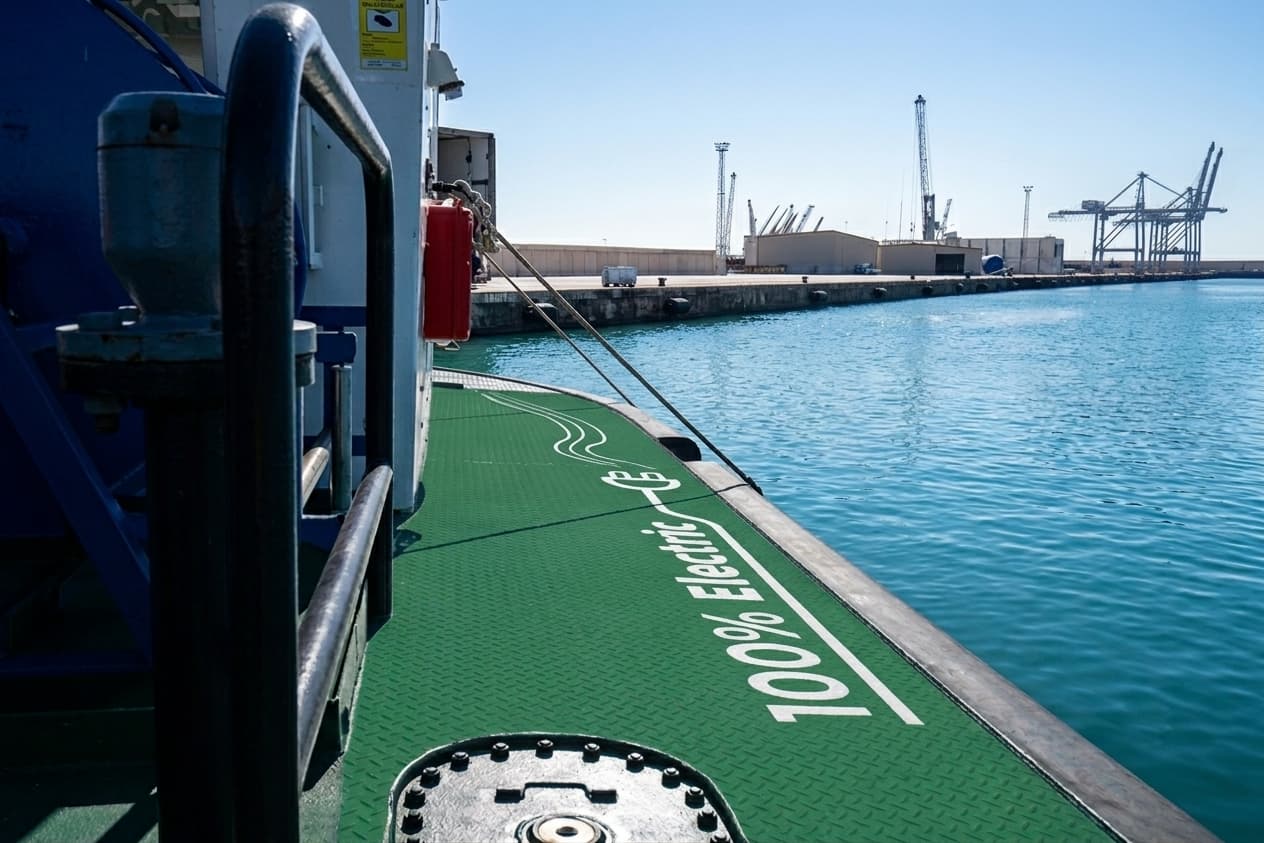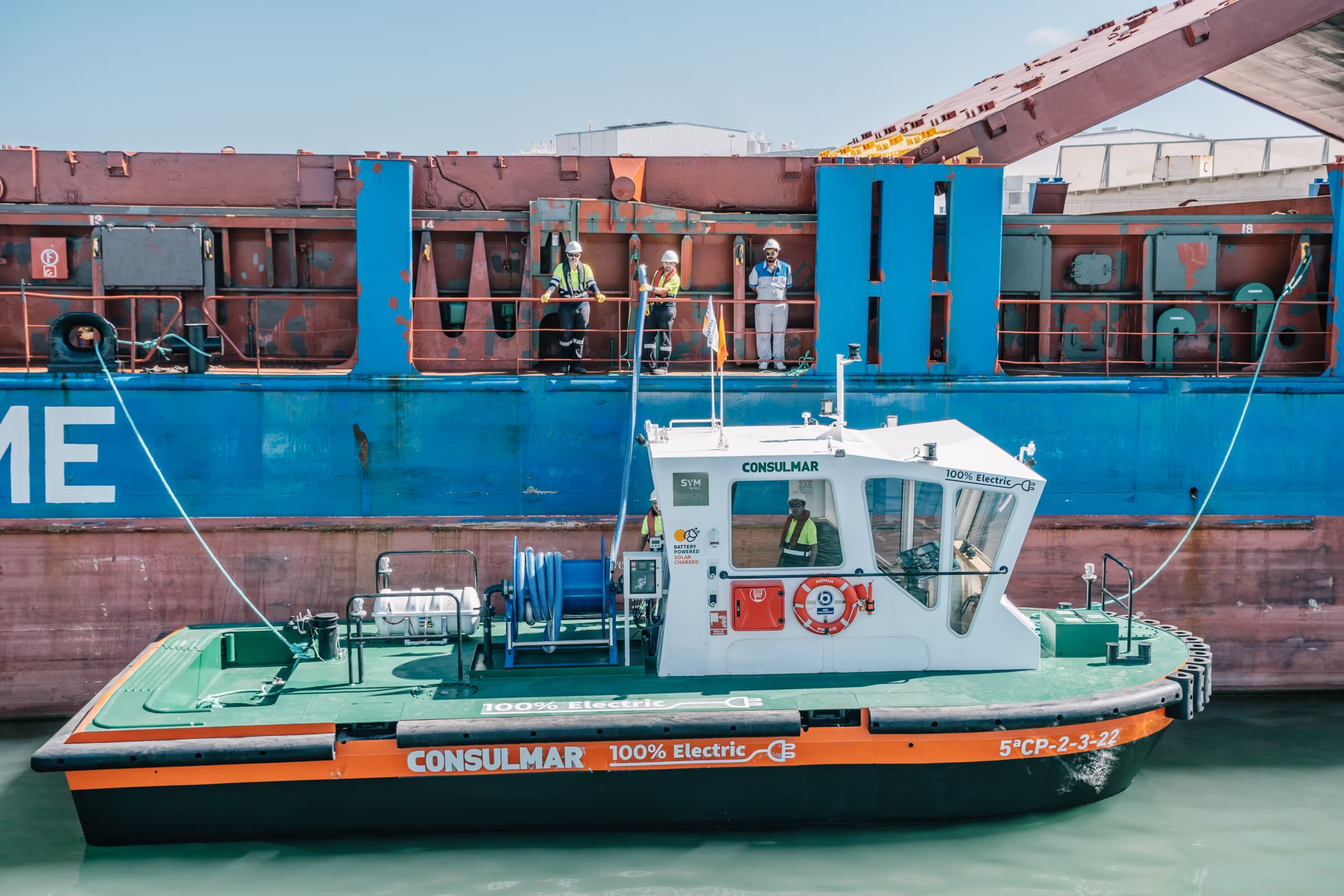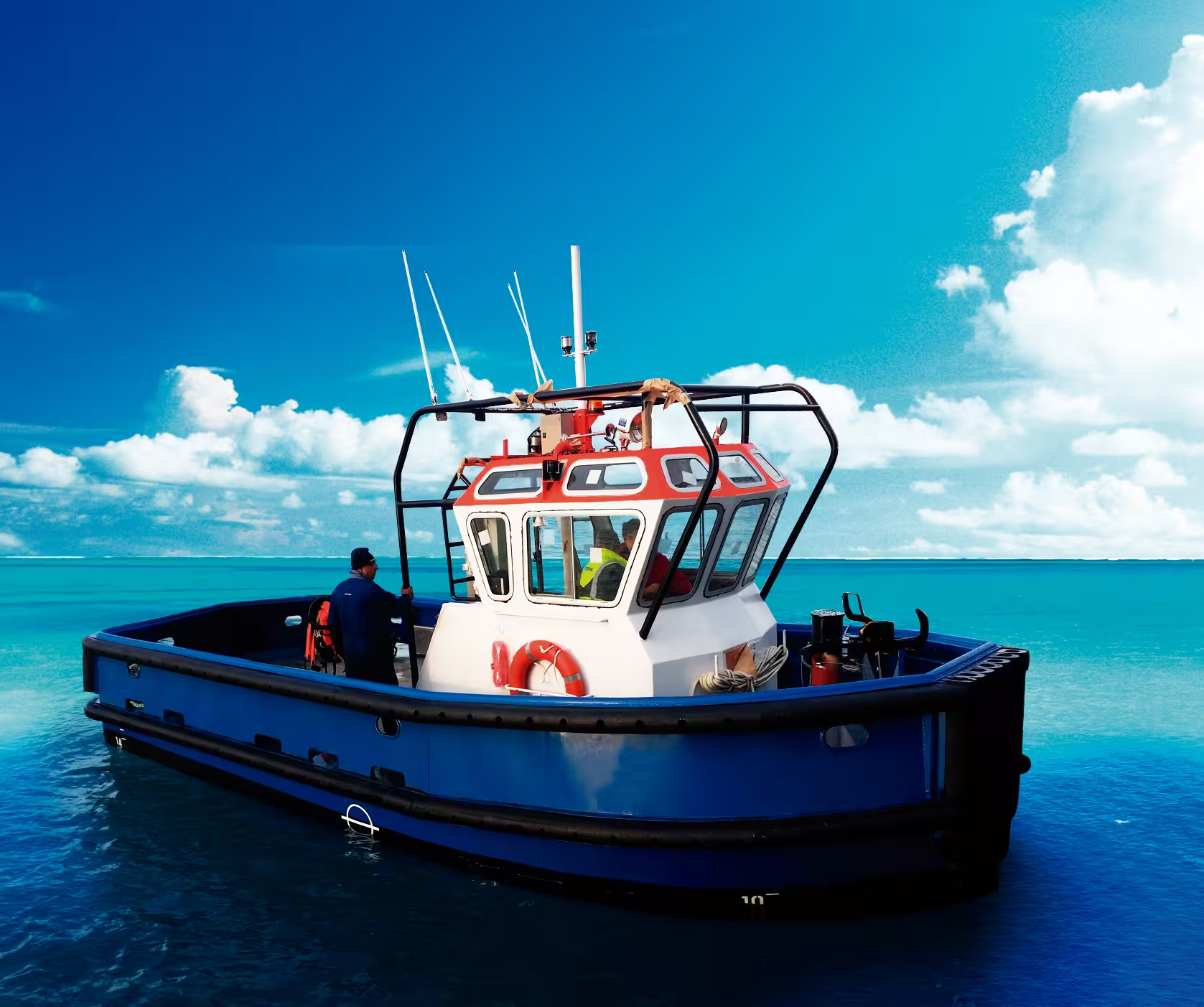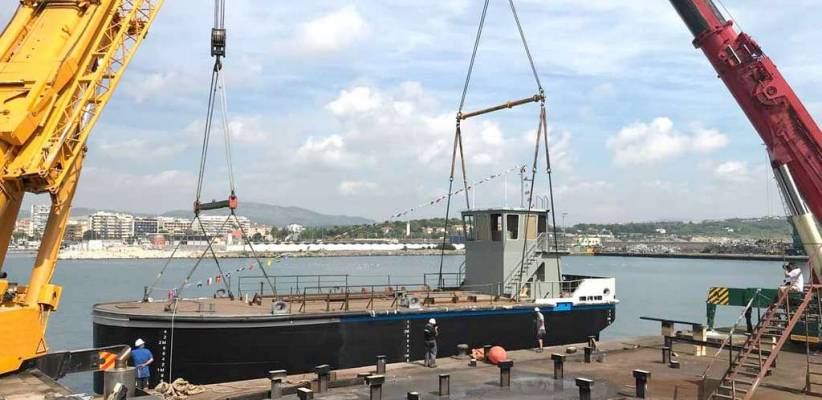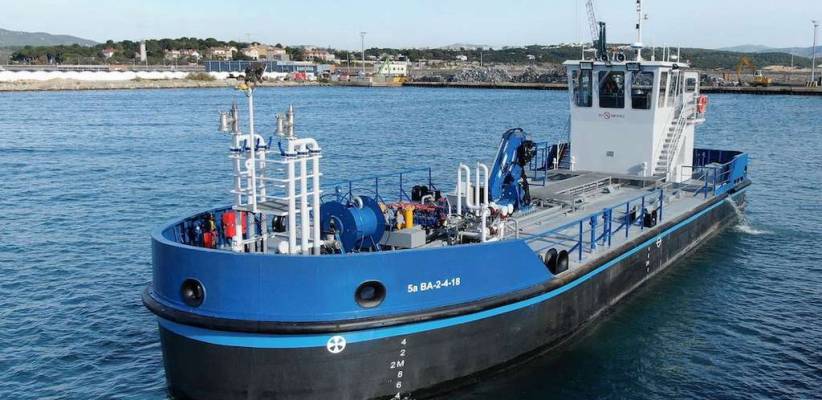
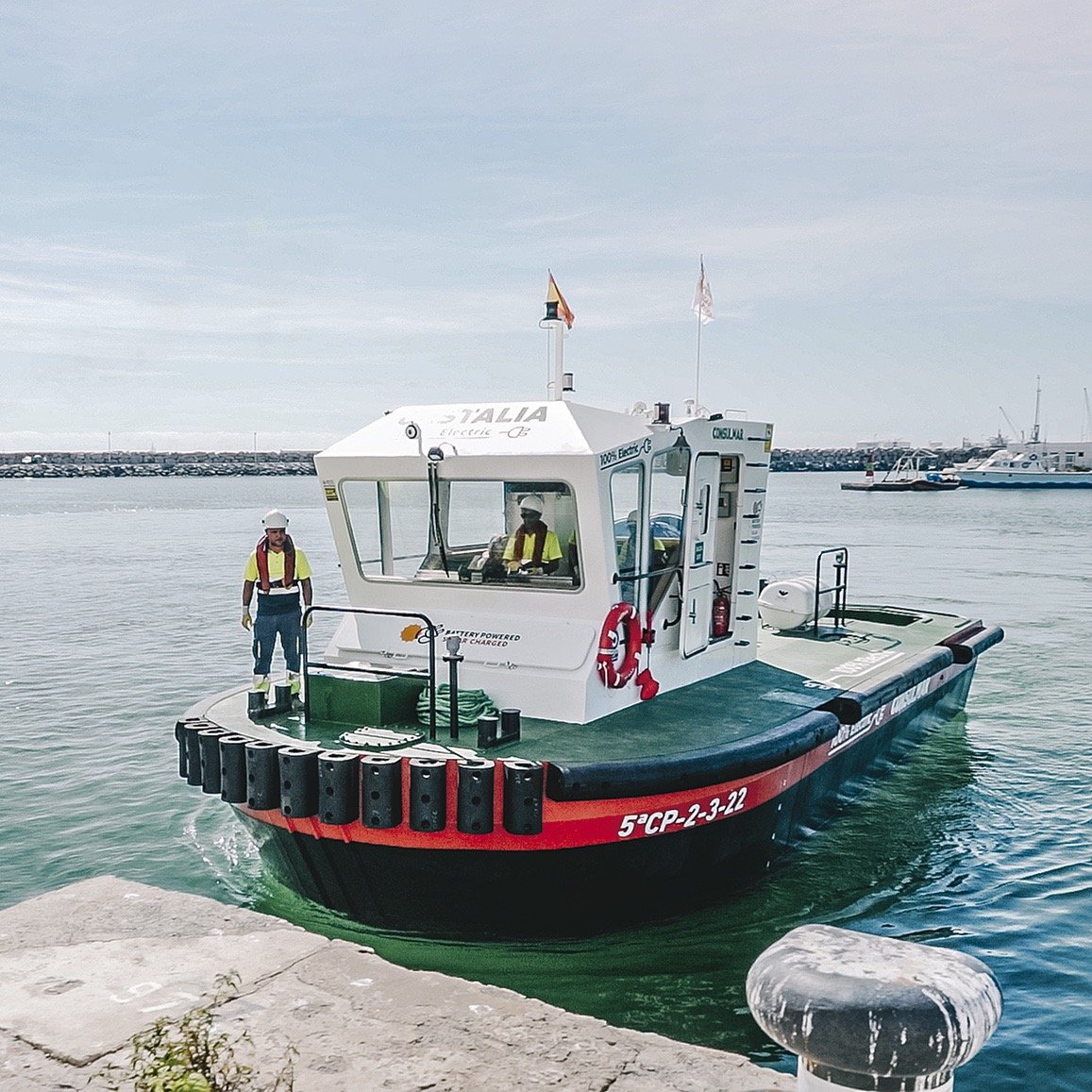
Castalia, owned by the Consulmar Group and built by SYM Naval, is a 100% electric workboat designed to operate with zero emissions and a clear objective: maximise operational efficiency, deliver predictable power management, and maintain safety in service.
Rather than a concept for the future, Castalia shows that electrification is already viable when the duty cycle is well defined. In this article we review the technical architecture and, more importantly, what it means in practical terms for day-to-day operations.
Electric architecture: propulsion and energy storage
At the core of Castalia is an energy storage system based on lithium iron phosphate (LiFePO4) batteries with a total capacity of 485 kWh. This energy feeds two 250 kW permanent-magnet electric motors, delivering a power platform designed for continuous work, immediate torque response, and predictable energy control.
The system architecture is not just about “having batteries”, but about distributing and managing energy efficiently to protect performance, availability, and service life. Under the right operating conditions, Castalia can achieve up to 10 hours of autonomy, enabling planned work cycles without relying on conventional fuels.
Zero emissions and reduced acoustic impact
Because it operates exclusively on electric power, Castalia eliminates exhaust emissions during operation. But the advantage is not only environmental. Reduced noise and vibration deliver direct operational benefits: better onboard comfort and communication, and lower acoustic impact in ports and sensitive areas.
For workboats that repeatedly manoeuvre, change power demand, and operate daily in confined environments, electric operation brings more control and smoother response—often translating into more precise operations and a more stable working experience.
Control, diagnostics and maintenance focused on availability
In an electric platform, control and diagnostics are part of reliability. Castalia integrates monitoring technologies that help optimise performance and anticipate issues:
- CAN BUS communication to integrate and coordinate electronic systems, improving control precision and energy management.
- Real-time propulsion diagnostics to support predictive maintenance and early detection of deviations before they become downtime.
The objective is not “more screens”, but less uncertainty and higher availability: fewer unexpected failures, better maintenance planning, and tighter operational control.
Battery room safety and continuous supervision
Electric safety is not treated as an add-on—it is designed in. On Castalia, continuous supervision and prevention systems are focused on stable operation and risk minimisation:
- Alarm and pre-alarm logging to continuously monitor battery condition and critical parameters.
- Gas monitoring in the battery room with automatic activation of extraction or extinguishing systems if abnormal levels are detected.
This approach supports an industrial operating logic: monitor, detect, act, and document—essential for reliable work in demanding environments.
Operating modes designed for real efficiency
Energy management becomes operational decision-making. Castalia includes navigation modes that adjust power delivery to the task, avoiding unnecessary consumption and optimising autonomy:
- Eco mode: prioritises energy savings for low-demand operations.
- Transit mode: balances consumption and performance for standard passages.
- Manoeuvre mode: delivers higher control and precision in confined spaces, designed for port operations.
This ability to “operate by profile” is what separates theoretical electrification from useful electrification: it adapts to what the vessel actually does every day.
What it delivers to operators: efficiency, control and continuity
Beyond sustainability messaging, Castalia delivers three advantages operators value in practice:
1) Predictability. Energy and performance can be managed with data, improving planning.
2) Operational precision. Controlled power delivery, especially during manoeuvres.
3) Availability. Diagnostics and supervision designed to anticipate issues and reduce unplanned stops.
Learn more
For the full Castalia project overview and technical information, visit the main page: Castalia: electric, zero-emission vessel.
To explore other shipbuilding solutions designed around real operational requirements, see: Shipbuilding by SYM Naval and auxiliary harbour vessels.