Maritime transport relies on vessels designed for very specific functions. The type of each vessel depends on what it carries, how that cargo is loaded and discharged, and the service it provides in port or at sea.
This guide covers the 16 most common types of vessels, grouped into three families: cargo ships, service and support vessels, and passenger ships. For each one, it explains what it carries or does and the design features that set it apart.
The 16 types of vessels at a glance
| Vessel type | What it carries or does | Group |
|---|---|---|
| Container ship | Cargo in standardised containers | Cargo |
| Bulk carrier | Dry bulk: grain, ore, coal or cement | Cargo |
| Oil tanker | Crude oil and petroleum products | Cargo |
| Chemical tanker | Liquid chemicals in segregated tanks | Cargo |
| Gas carrier (LNG and LPG) | Liquefied natural gas or liquefied petroleum gas | Cargo |
| General cargo ship | Mixed cargo, packaged or in pieces | Cargo |
| Ro-ro | Rolling cargo: cars, trucks and trailers | Cargo |
| Reefer | Perishable cargo at controlled temperature | Cargo |
| Heavy lift and semi-submersible | Oversized items and floating structures | Cargo |
| Tugboat | Assistance with berthing, unberthing and towing | Service and support |
| Dredger | Removal of sediment to maintain or increase depth | Service and support |
| Cable layer | Laying and repair of subsea cables | Service and support |
| Offshore support and supply vessel | Supply and services to platforms and other units | Service and support |
| Waste collection vessel (MARPOL) | Collection in port of ship-generated waste | Service and support |
| Multipurpose and port auxiliary vessel | Mooring, crew transfer, supplies and port services | Service and support |
| Cruise ship and ferry | Passengers and, on ferries, also vehicles | Passenger |
Cargo ships
Cargo ships are classified by the nature of the cargo (dry, liquid, gas, rolling or perishable) and by the loading and discharging system they need in port.
1. Container ships
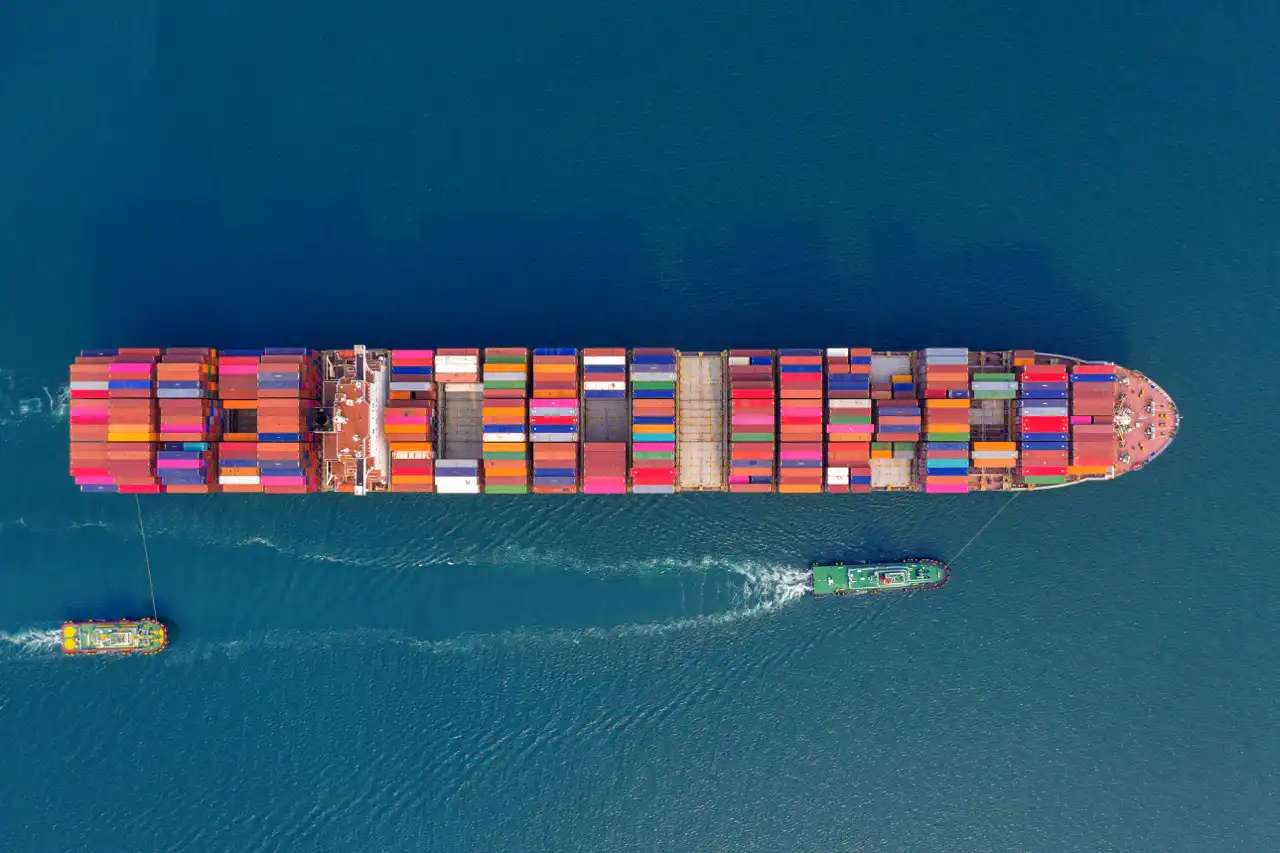
They carry cargo in standardised containers. Their capacity is expressed in TEU, units equivalent to one 20-foot container. They are the backbone of trade in manufactured goods and range from feeder ships, which distribute containers between regional ports, to the large ships on intercontinental routes. Loading and discharging is done with gantry cranes at specialised terminals.
2. Bulk carriers
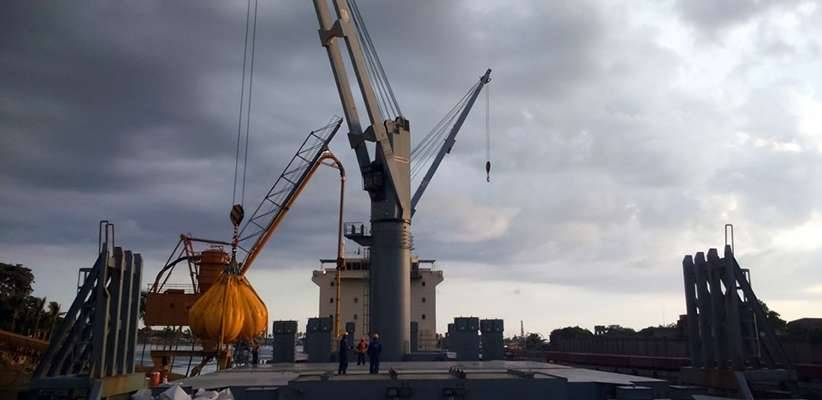
They are optimised for dry bulk cargo, such as grain, ore, coal or cement. They have large holds and wide hatches, and may carry their own cranes or rely on terminal equipment.
3. Oil tankers
They are tankers for crude oil and petroleum products. Their design follows strict safety and pollution prevention requirements, such as the double hull. Depending on their size, they operate at oil terminals or transfer cargo at anchorage areas.
4. Chemical tankers
They carry liquid chemicals in segregated tanks, with independent pumping and piping systems to prevent incompatible cargoes from mixing. Tank coatings and safety systems depend on the products they are authorised to carry.
5. Gas carriers (LNG and LPG)
LNG carriers transport liquefied natural gas at very low temperatures in insulated tanks. LPG carriers transport liquefied petroleum gases, such as propane and butane, under pressure or refrigerated. They are highly specialised units, with their own cargo containment and control systems.
6. General cargo ships
They carry mixed cargo (packaged, palletised or in pieces) and usually have their own cranes to operate in ports with limited infrastructure. They are common on mixed routes, where a specialised ship would not be cost-effective.
7. Ro-ro ships
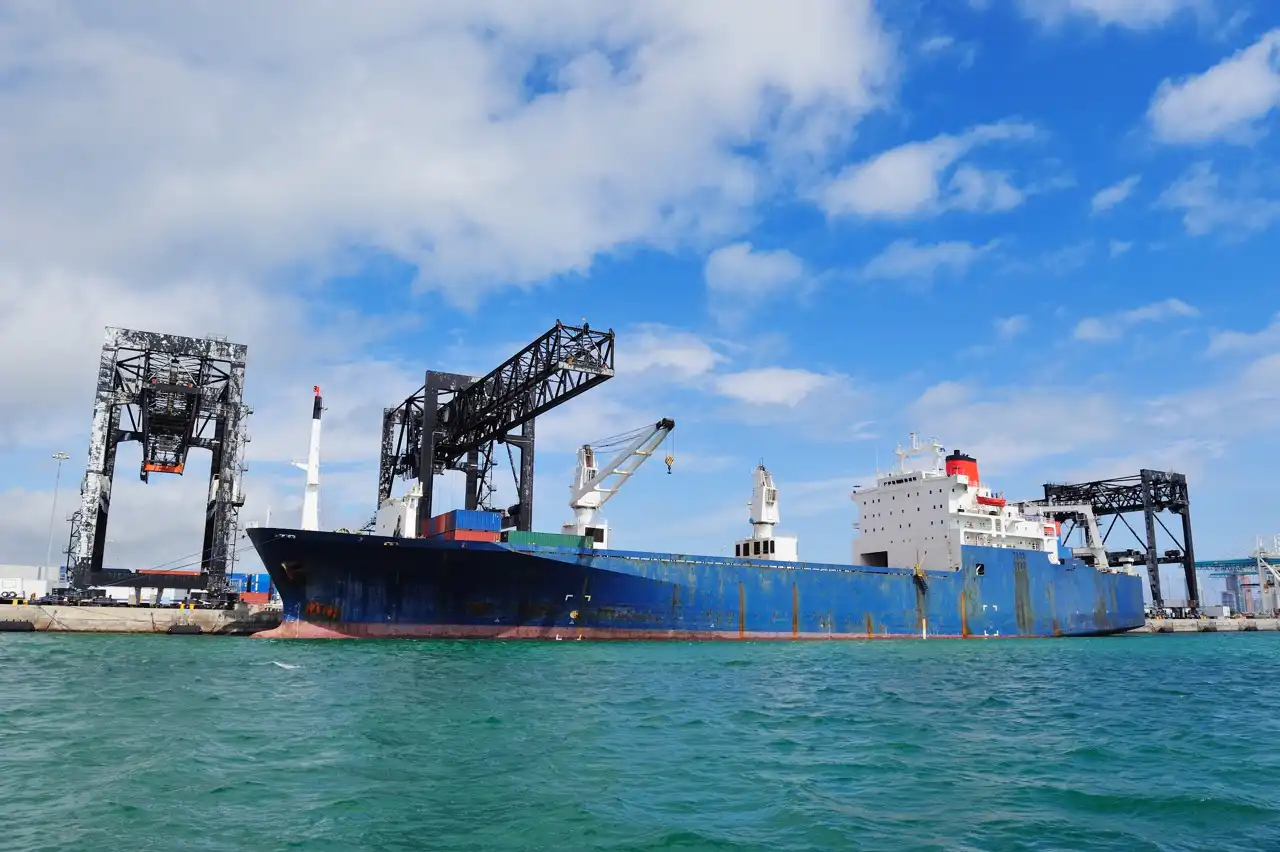
Roll-on/roll-off ships carry rolling cargo, such as cars, trucks and trailers, which is loaded and discharged over ramps, under its own power or with towing equipment. They reduce time in port because they do not depend on cranes. Ships dedicated to carrying cars also belong to this family.
8. Reefers
Reefers carry perishable cargo, such as fruit, meat or fish, in temperature-controlled holds. A growing share of this trade now travels in refrigerated containers on board container ships.
9. Heavy lift and semi-submersible ships
Heavy lift ships carry very large or heavy items, with reinforced decks and high-capacity cranes. Semi-submersible ships ballast down to submerge their deck, so that floating cargo, such as platforms or other ships, is positioned over it and lifted clear of the water when they deballast.
Service and support vessels
Besides moving cargo, ports and maritime operations need workboats to assist manoeuvres, maintain depths, provide technical services or supply other units. These vessels prioritise manoeuvrability, working capacity and availability.
10. Tugboats
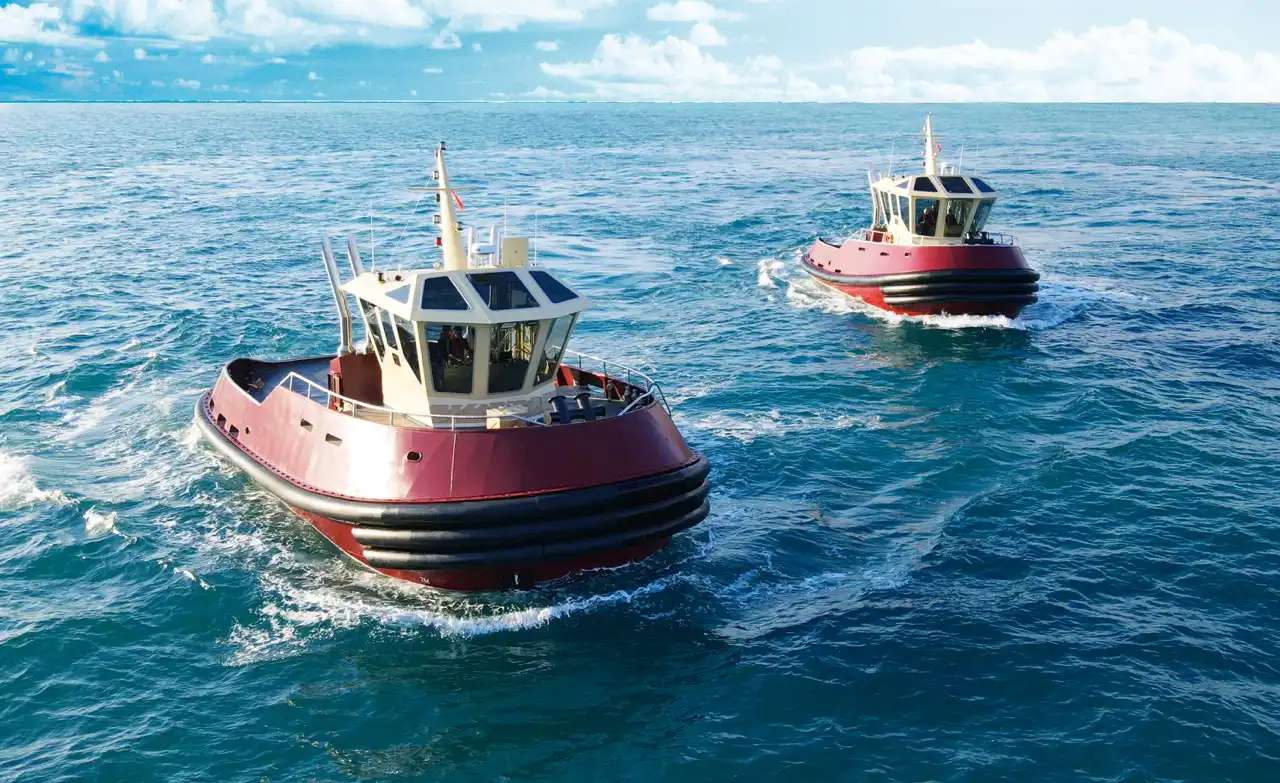
They assist ships with berthing and unberthing and carry out towing inside and outside the port. Their key figure is bollard pull, which expresses the pulling force they can exert. Harbour tugs combine high power with compact dimensions to work in confined spaces. Our guide to harbour tugs explains the main types and how bollard pull is chosen.
11. Dredgers
They remove sediment from the seabed to maintain or increase the depth of ports and navigation channels, or for land reclamation and beach nourishment. The most common are trailing suction hopper dredgers, which load the material into their own hopper, and cutter suction dredgers, which work while stationary.
12. Cable layers
They lay and repair subsea telecommunications and power cables. They are fitted with dynamic positioning systems and equipment to store, lay and recover the cable in a controlled way.
13. Offshore support and supply vessels
They serve platforms and other units at sea: they carry supplies, fuel, water and personnel, and support anchor handling and towing operations. This group includes platform supply vessels (PSV) and anchor handling tug supply vessels (AHTS).
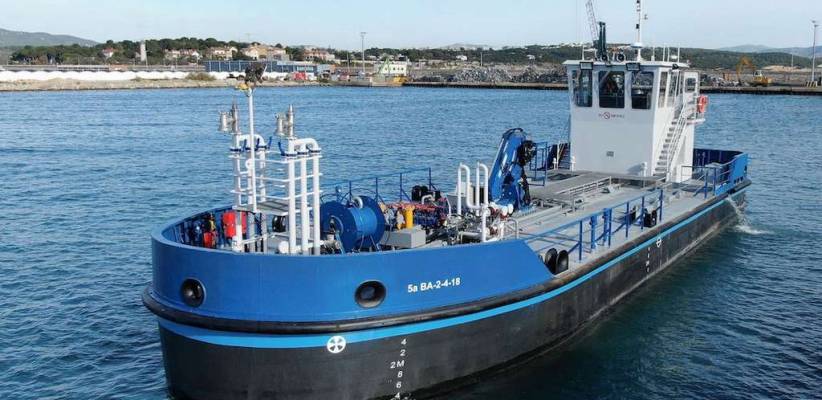
14. Waste collection vessels (MARPOL)
They collect in port the waste generated by ships, such as oily water, sewage or garbage, in accordance with the annexes of the MARPOL convention. They allow each ship to deliver its waste without moving to a shore facility. SYM Naval designs and builds MARPOL vessels for waste collection under Annexes I, IV, V and VI.
15. Multipurpose and port auxiliary vessels
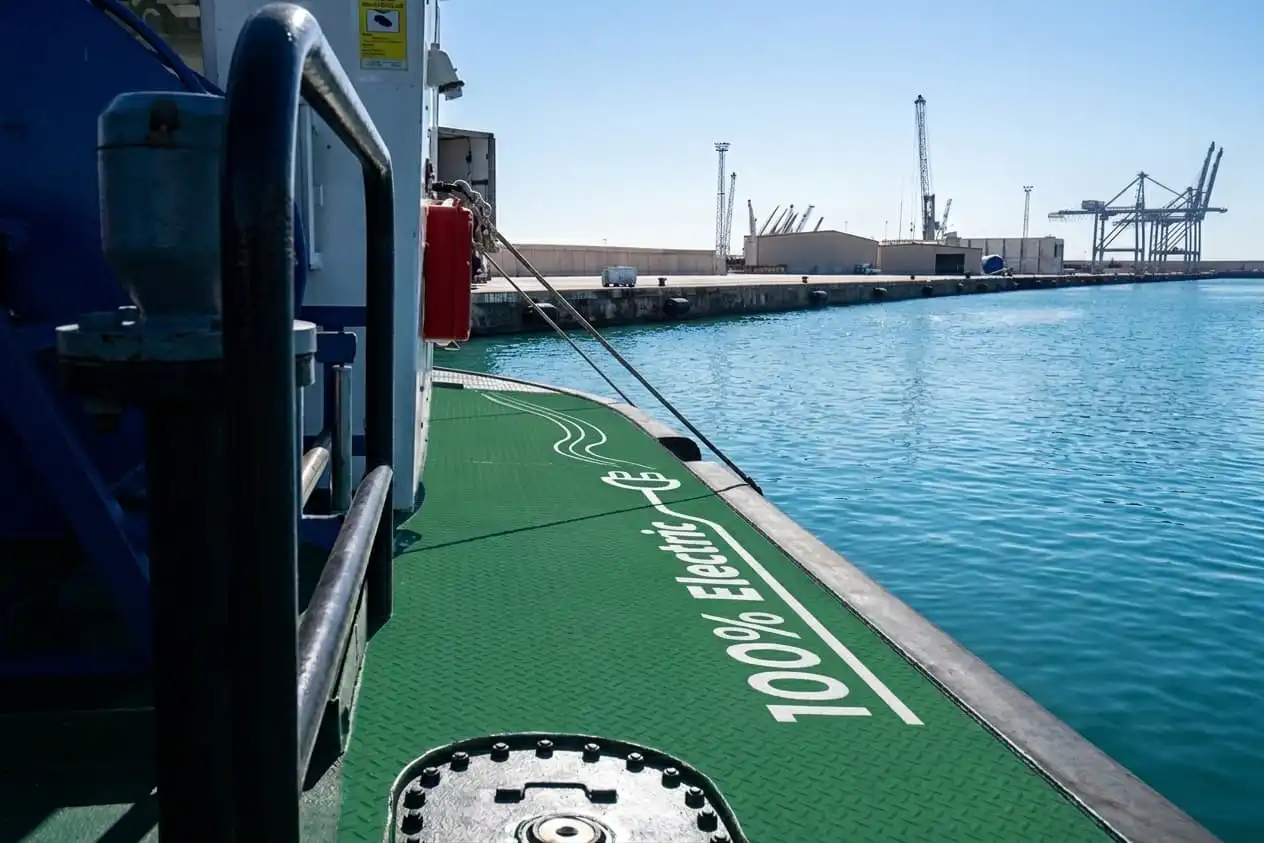
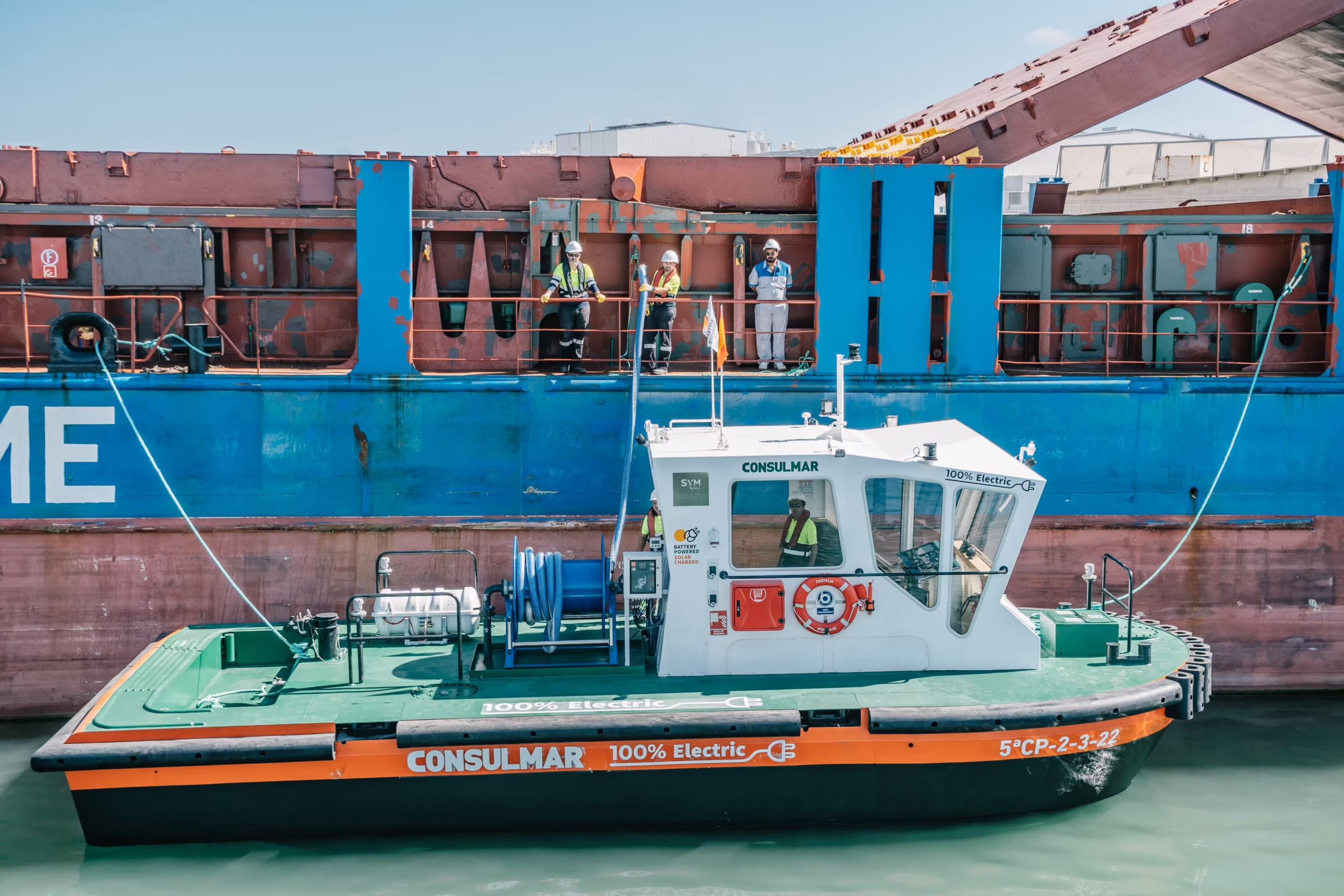
They combine several port services in a single unit: mooring assistance, crew and supply transfers, waste collection or emergency support. Their design is adapted to the tasks of each port. One example is Castalia, a 100% electric multipurpose workboat built by SYM Naval and in daily port service since 2023.
Passenger ships
16. Cruise ships and ferries
Cruise ships are designed for tourism, with priority on accommodation, comfort and onboard services. Ferries operate regular passenger routes and, in many cases, also carry vehicles, so they share features with ro-ro ships.
Other vessel types
Outside this classification are naval vessels, designed for defence roles with their own systems and requirements, and river and inland waterway vessels, shaped by shallow drafts and beam and air draft restrictions. Fishing vessels also form a family of their own, with variants such as trawlers, purse seiners and longliners.
Where SYM Naval fits in
SYM Naval designs and builds harbour and work vessels: harbour tugs of up to 80 tonnes bollard pull, MARPOL vessels for waste collection and auxiliary harbour vessels, including multipurpose vessels such as Castalia, powered by Blue Propulsion, its 100% electric propulsion system. It also provides ship repair services for merchant vessels, cruise ships and port-service fleets.
Frequently asked questions
What are the main types of vessels?
By function, vessels fall into three main families: cargo ships (container ships, bulk carriers, oil tankers, chemical tankers, gas carriers, general cargo ships, ro-ro ships, reefers and heavy lift ships), service and support vessels (tugboats, dredgers, cable layers, offshore support vessels, waste collection vessels and multipurpose vessels) and passenger ships (cruise ships and ferries).
What is a ro-ro ship?
It is a ship that carries rolling cargo, such as cars, trucks and trailers, which is loaded and discharged over ramps, under its own power or with towing equipment, without the need for cranes.
What is a bulk carrier?
It is a ship designed to carry dry cargo in bulk, that is, unpackaged, such as grain, ore, coal or cement, in large holds.
What is the difference between a ship and a vessel?
Vessel is the broader term: it covers any craft designed to navigate on water, from small boats to large ships. In general use, a ship is a large vessel designed for ocean-going or commercial navigation.