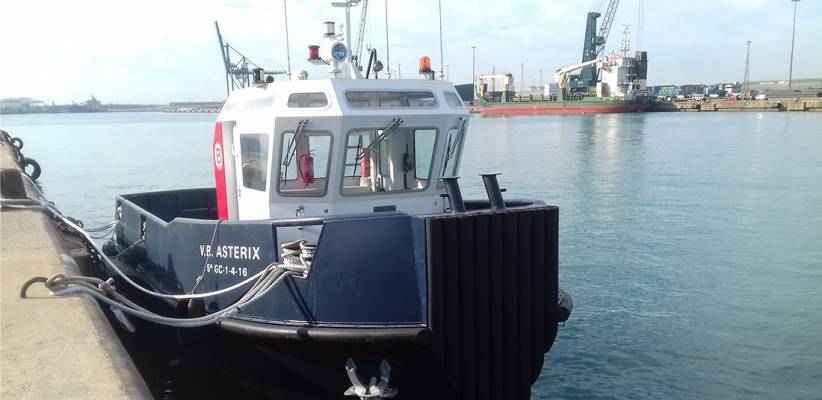
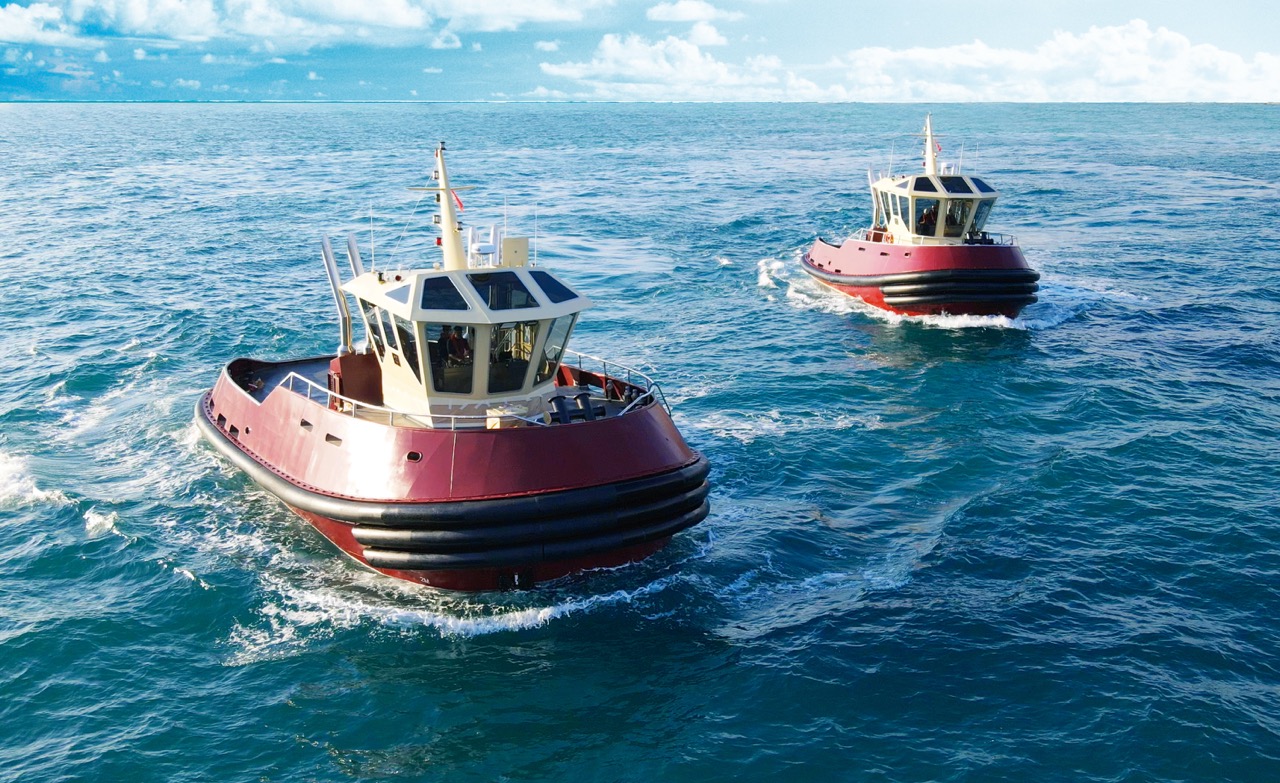
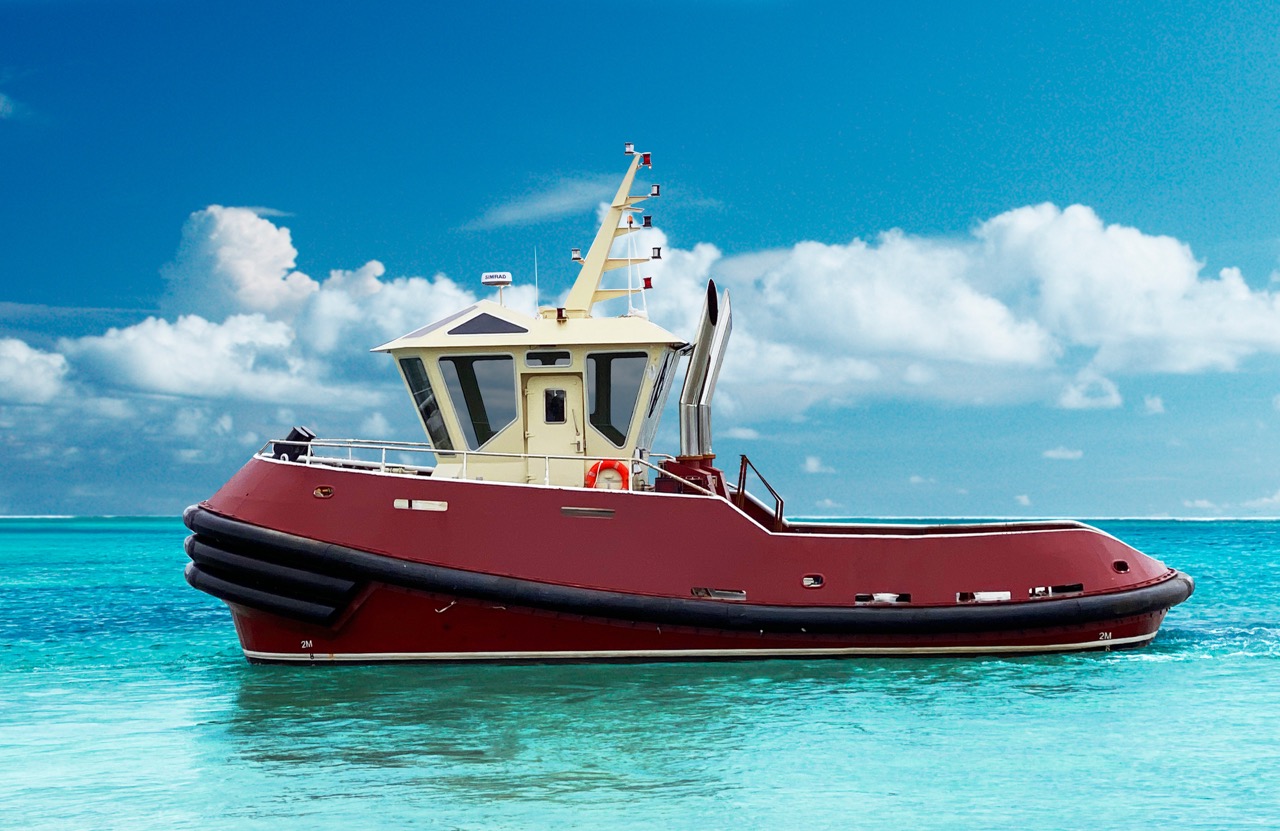
Harbour tugboats are among the most used vessels in port activity. Their role is decisive for the manoeuvrability of large ships in confined waters and for support and emergency operations. Compact, robust and with an exceptional power-to-size ratio, tugboats are a key asset for operational safety and overall efficiency across the maritime logistics chain.
What is a harbour tugboat?
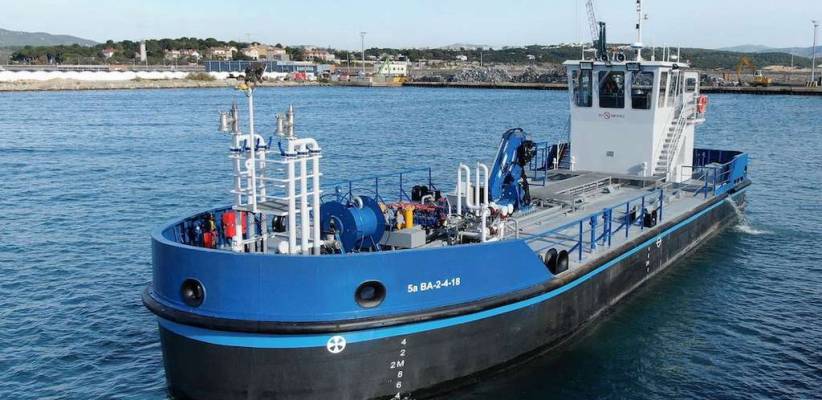
A harbour tugboat is a vessel designed to assist other ships and floating units during manoeuvres within port environments. Its performance relies on three fundamentals: available power, fine thrust control and immediate response capability. In many cases, this is achieved through advanced propulsion arrangements (such as azimuth propulsion), enabling precise thrust direction and safe execution of demanding manoeuvres.
In practice, a tugboat does not simply “accompany” a vessel—it controls the manoeuvre. That difference becomes clear when wind, current, waves, spatial constraints and the inertia of large ships come into play.
Key roles of harbour tugboats
Working in coordination with the pilot and port authority, the tugboat’s objective is to minimise risk and ensure manoeuvres are performed in a stable, predictable manner without unnecessary delays. Typical tugboat roles include:
- Berthing and unberthing, providing lateral control and controlled pushing force.
- Turning a vessel within limited space.
- Compensating for wind, current and wave action during manoeuvres.
- Assistance in braking and speed control in critical situations.
- Towing and pushing vessels that have lost propulsion or steering.
- Moving floating units and supporting internal port logistics.
- Escort support in higher-risk operations, including certain dangerous cargo transits.
In many ports, tug assistance is mandatory for large vessels during arrivals and departures for a straightforward reason: it directly reduces incident probability and increases response capability in the event of contingencies.
Why tugboats are critical for large vessels
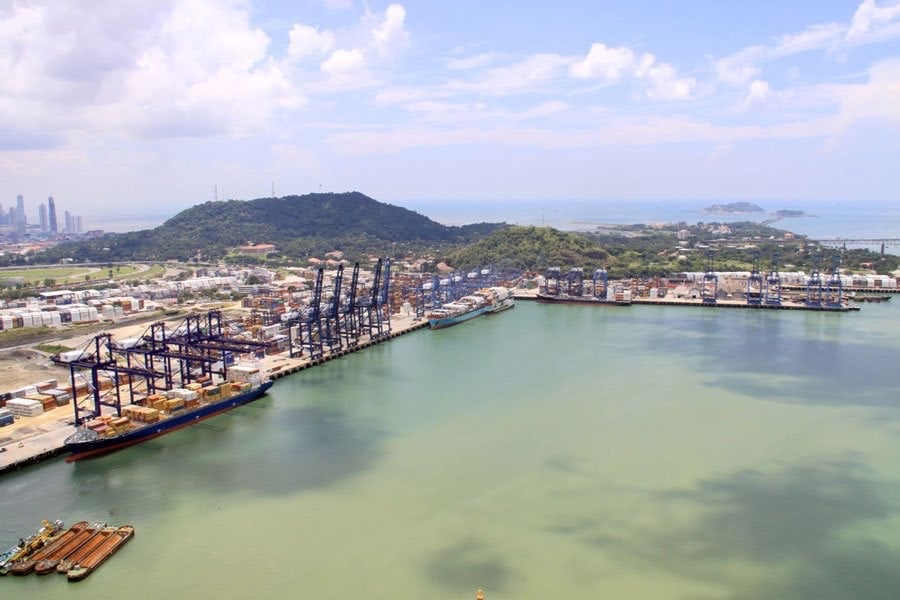
Cruise ships and container vessels rely heavily on tug assistance due to limited manoeuvrability at low speed and the strong influence of wind. On cruise ships, the superstructure can act like a “sail,” amplifying crosswind effects and demanding precise control throughout every stage of the manoeuvre. On container ships, the combination of length, draft and mass makes inertia and drift management a defining factor.
Human factors are equally important. Tug crews operate under strict procedures and constant coordination with the ship’s captain, pilot and port control. Safe operations require training, communication and a vessel that performs reliably under real conditions.
Key design factors in a harbour tugboat
To fulfil its mission, a tugboat must be designed around real operations. Manoeuvrability, stability and power are not optional—they are baseline requirements. Practically, the design must resolve key aspects such as hull behaviour, propulsion response, structural robustness and deck ergonomics to support safe and efficient work.
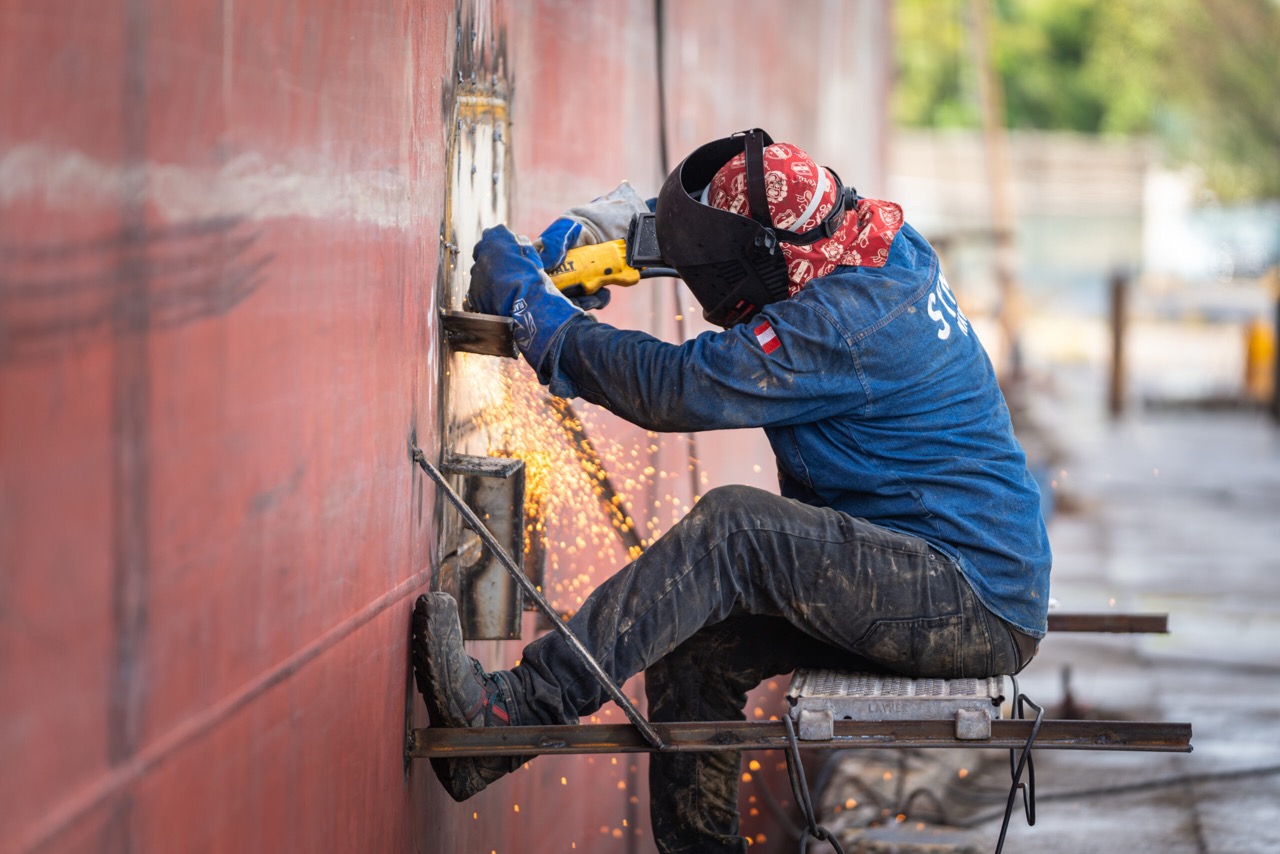
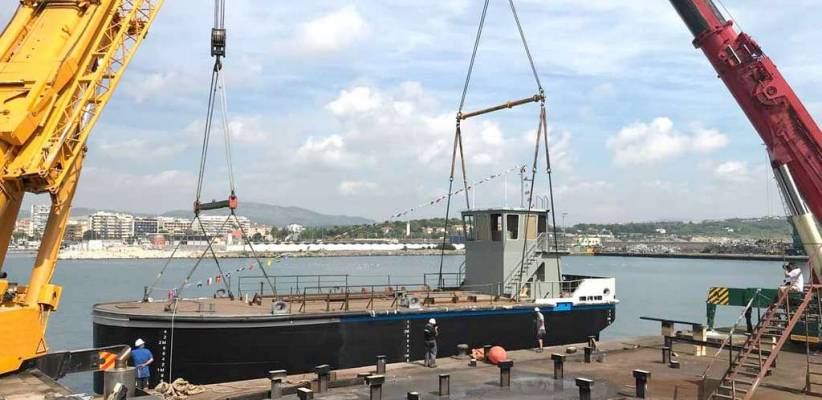
At SYM Naval, we develop tugboats oriented to real port operations, involving the owner from early project stages and validating design decisions before construction. This approach aligns the tugboat with the intended environment (port characteristics, metocean conditions, service profile and operator requirements) and reduces uncertainty during execution.
To learn more about our dedicated line, visit harbour tugboat shipbuilding. For a broader overview, see our shipbuilding capabilities.
For technical enquiries or projects, you can contact our team through the contact form.