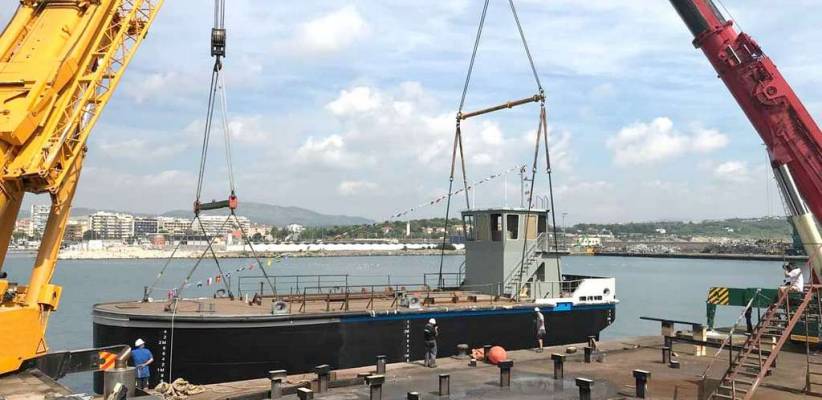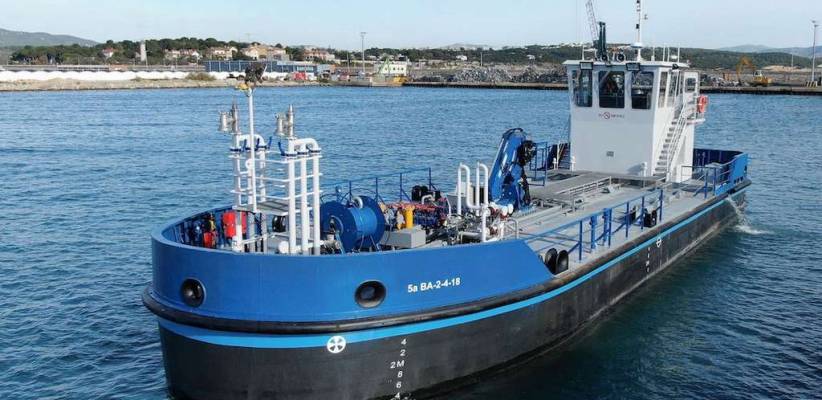
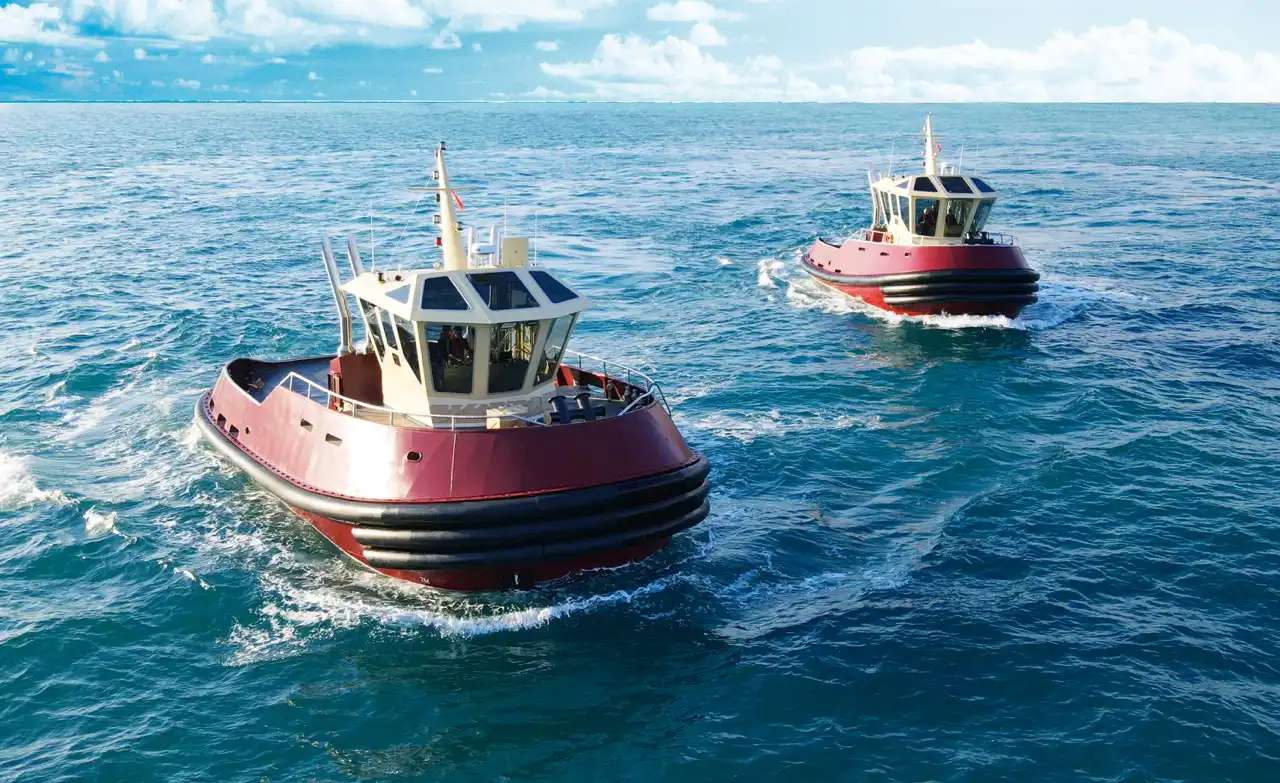
Harbour tugboats are among the most used vessels in port activity. Their role is decisive for the manoeuvrability of large ships in confined waters and for support and emergency operations. Compact, robust and with an exceptional power-to-size ratio, tugboats are a key asset for operational safety and overall efficiency across the maritime logistics chain.
What is a harbour tugboat?
A harbour tugboat is a vessel designed to assist other ships and floating units during manoeuvres within port environments. Its performance relies on three fundamentals: available power, fine thrust control and immediate response capability. In many cases, this is achieved through advanced propulsion arrangements (such as azimuth propulsion), enabling precise thrust direction and safe execution of demanding manoeuvres.
In practice, a tugboat does not simply “accompany” a vessel—it controls the manoeuvre. That difference becomes clear when wind, current, waves, spatial constraints and the inertia of large ships come into play.
Key roles of harbour tugboats
Working in coordination with the pilot and port authority, the tugboat’s objective is to minimise risk and ensure manoeuvres are performed in a stable, predictable manner without unnecessary delays. Typical tugboat roles include:
- Berthing and unberthing, providing lateral control and controlled pushing force.
- Turning a vessel within limited space.
- Compensating for wind, current and wave action during manoeuvres.
- Assistance in braking and speed control in critical situations.
- Towing and pushing vessels that have lost propulsion or steering.
- Moving floating units and supporting internal port logistics.
- Escort support in higher-risk operations, including certain dangerous cargo transits.
In many ports, tug assistance is mandatory for large vessels during arrivals and departures for a straightforward reason: it directly reduces incident probability and increases response capability in the event of contingencies.
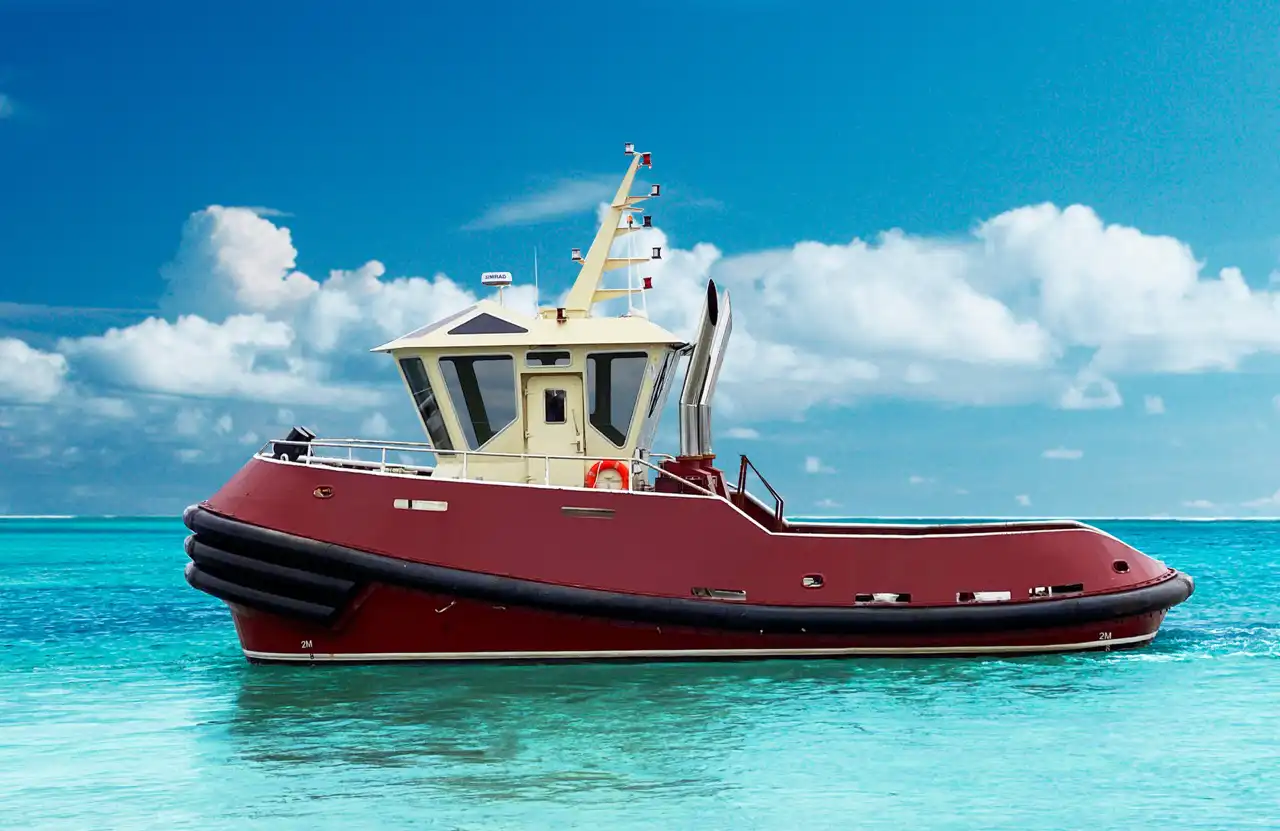
Why tugboats are critical for large vessels
Cruise ships and container vessels rely heavily on tug assistance due to limited manoeuvrability at low speed and the strong influence of wind. On cruise ships, the superstructure can act like a “sail,” amplifying crosswind effects and demanding precise control throughout every stage of the manoeuvre. On container ships, the combination of length, draft and mass makes inertia and drift management a defining factor.
Human factors are equally important. Tug crews operate under strict procedures and constant coordination with the ship’s captain, pilot and port control. Safe operations require training, communication and a vessel that performs reliably under real conditions.
Key design factors in a harbour tugboat
To fulfil its mission, a tugboat must be designed around real operations. Manoeuvrability, stability and power are not optional—they are baseline requirements. Practically, the design must resolve key aspects such as hull behaviour, propulsion response, structural robustness and deck ergonomics to support safe and efficient work.
At SYM Naval, we develop tugboats oriented to real port operations, involving the owner from early project stages and validating design decisions before construction. This approach aligns the tugboat with the intended environment (port characteristics, metocean conditions, service profile and operator requirements) and reduces uncertainty during execution.
To learn more about our dedicated line, visit harbour tugboat shipbuilding. For a broader overview, see our shipbuilding capabilities.
For technical enquiries or projects, you can contact our team through the contact form.
The two segments and their bollard pull ranges
Harbour tugs fall into two segments according to their bollard pull, and that figure drives everything else: length, beam, power and propulsion type.
| Harbour tugs | High-capacity tugs | |
|---|---|---|
| Bollard pull | Up to 35 tonnes | Between 35 and 80 tonnes |
| Profile | Compact and manoeuvrable | Powerful, robust and precise |
| Typical use | Assisting mid-sized vessels and auxiliary tasks in port | Manoeuvring large vessels and heavy towage |
| Propulsion | Conventional or azimuth | Azimuth, in addition to conventional options |
| Power train | Diesel, hybrid or fully electric | Diesel, hybrid or fully electric |
Two points that clear up common misunderstandings: both segments accept all three power trains — there is no bollard pull ceiling above which only diesel remains — and both are customised to the port’s operation and the applicable regulations.
Bollard pull ranges, with figures
Bollard pull is the reference specification. These are the steps in our range, with datasheet figures:
| Model | Length | Beam | Bollard pull | Engines | Speed |
|---|---|---|---|---|---|
| TM036-80 (multipurpose) | 12 m | 4.5 m | 8.5 t | 2 × 360 HP | 8 kn |
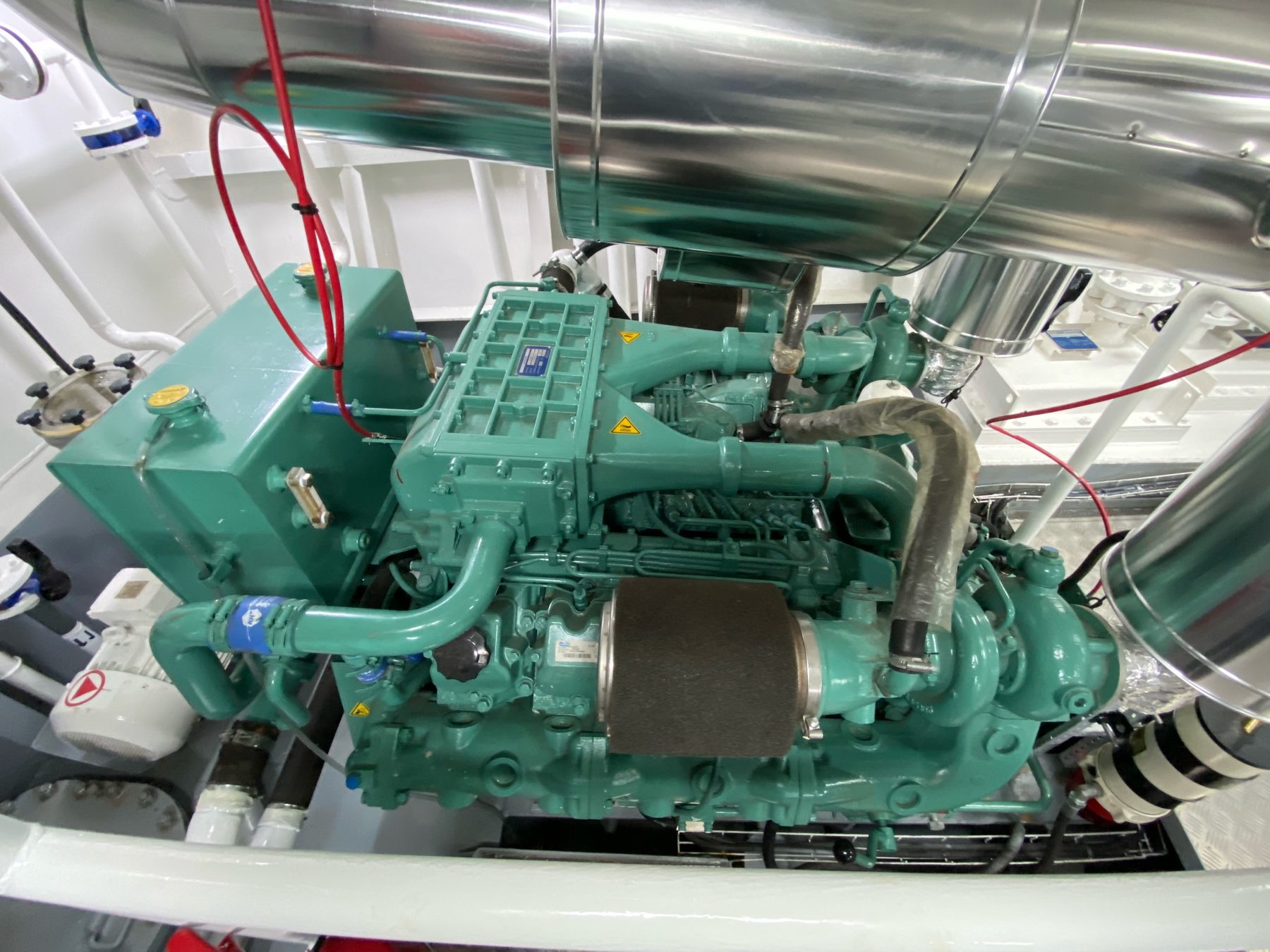
| TSHT 3611 | 16 m | 6 m | 11 t | 2 × Doosan V158TIH (480 HP) | 10 kn |
| TM036-110 (multipurpose) | 12 m | 4.5 m | 11 t | 2 × 400 HP | 9 kn |
| TSHT 3616 | 16 m | 6 m | 16 t | 2 × 715 HP | 10 kn |
| TSHT 5422 | 18 m | 8 m | 22 t | 2 × Doosan 4V222TIH (800 HP) | 10 kn |
| TSHT 5430 | 18 m | 8 m | 30 t | 2 × 1,000 HP | 10 kn |
Above 30 tonnes the high-capacity segment takes over, reaching up to 80 tonnes with a rule length below 24 metres and azimuth propulsion.
A practical detail that is often overlooked: between the TSHT 3616 (16 t) and the TSHT 5430 (30 t) the bollard pull almost doubles with only 2 metres more length, but the beam goes from 6 to 8 metres. If your port has beam or manoeuvring-space restrictions, that is the real limit — not the length.
Conventional or azimuth propulsion
| Conventional (shaft and propeller) | Azimuth | |
|---|---|---|
| Main advantage | Reliability and low cost | Superior manoeuvrability |
| Best application | General port manoeuvres | Complex, precise manoeuvres |
| Maintenance level | Low | Moderate |
Conventional propulsion uses a fixed shaft and propeller: simple design, low maintenance cost, good durability and accessible spare parts. It suits small to medium capacity tugs performing general manoeuvres.
Azimuth propulsion uses thrusters that rotate 360 degrees, allowing the vessel to move sideways or turn on its own axis with precise control in confined spaces. It is the choice for medium and high capacity tugs working on berthing and unberthing of large vessels.
The short rule: if the vessel will work close alongside other hulls in tight spaces, go azimuth; if it performs general manoeuvres with room to spare, conventional does the job and costs less to maintain. We cover the balance between pulling power and manoeuvring capability in detail in our article on bollard pull versus manoeuvrability.
Power train: diesel, hybrid or fully electric
| Power train | Main advantage | Best application | Environmental impact |
|---|---|---|---|
| Fully electric | Zero emissions and low noise | Urban ports with strict environmental regulation | Minimal |
| Hybrid (diesel-electric) | Flexibility and reduced emissions | Operations with variable demand | Reduced |
| Diesel | Power and efficiency | Constant, high-demand operation | High |
Hybrid allows operation in diesel mode, electric mode or both as needed, and is the middle option when power and sustainability have to be balanced. Fully electric removes fossil fuel and runs almost silently, with low operating energy cost. Diesel remains the reference where continuous high-demand operation is required.
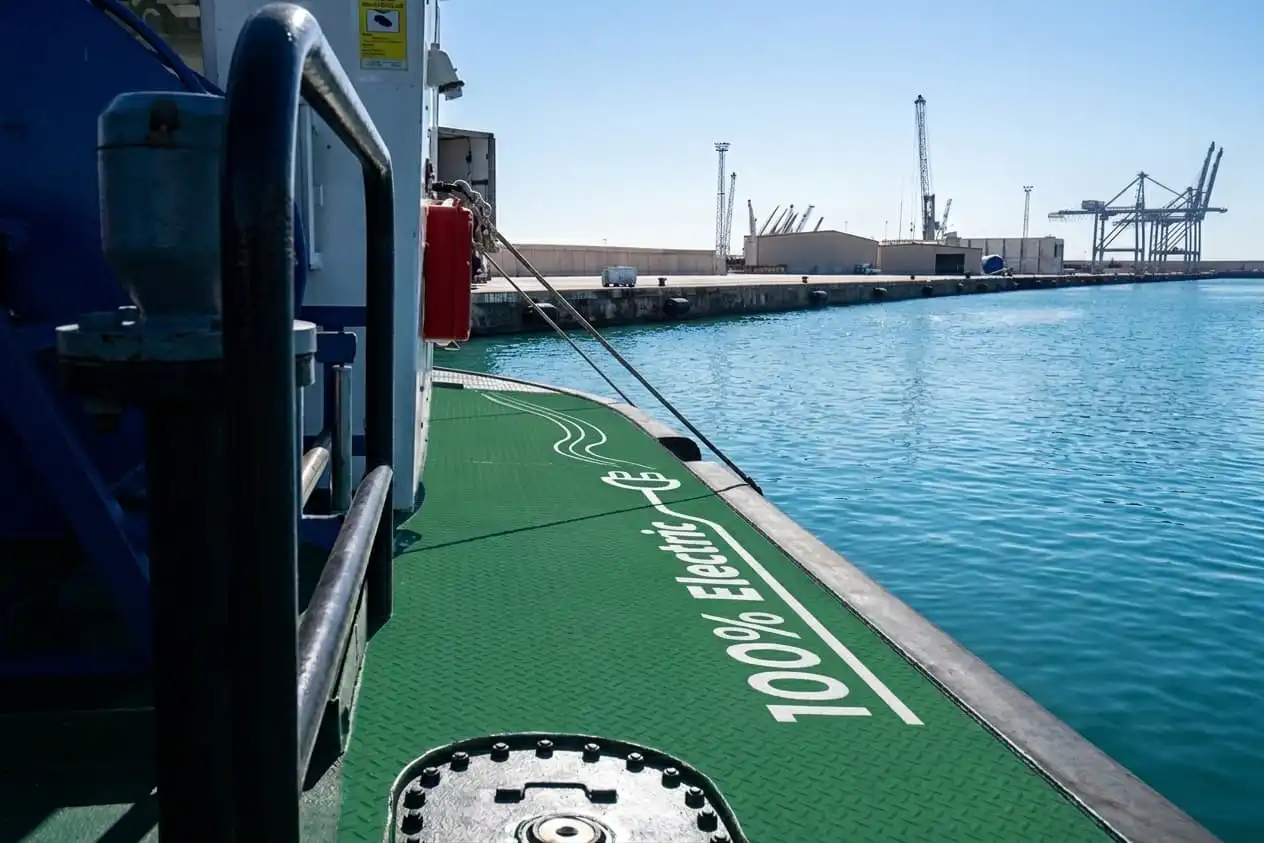
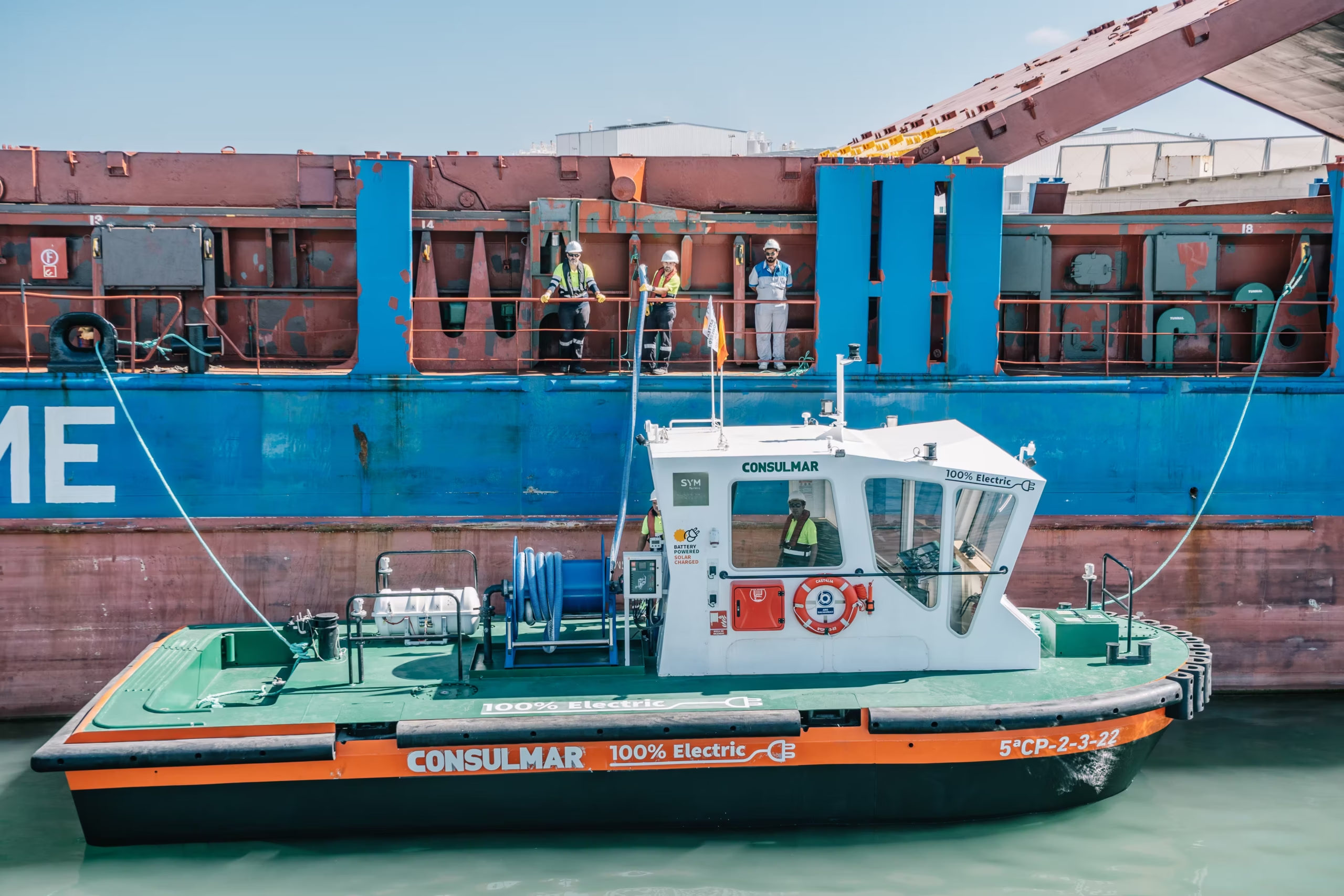
At SYM Naval we have developed Blue Propulsion, our 100% electric propulsion system, and with it we built the first fully electric harbour tug in Spain. With this system we design and build electric harbour tugs adapted to the operational needs of each vessel.
How the specification is defined
The sequence that works when defining a tug:
- Required bollard pull, based on the largest vessel to be assisted and the port conditions (wind, current, draught).
- Physical constraints of the port: available beam and manoeuvring space, not just length.
- Propulsion type, depending on how tight the manoeuvres are.
- Power train, based on the operating profile, the port’s environmental requirements and the charging infrastructure if electric or hybrid is being considered.
- Class and flag: vessels are built classed by IACS member societies, and the flag of destination is best defined from the engineering stage.
Frequently asked questions
What is bollard pull?
It is the pulling force the tug exerts with the vessel moored to a fixed point, measured in tonnes. It is the reference specification for sizing a tug, although it does not tell the whole story: manoeuvrability matters as much as pulling power.
How much bollard pull do I need?
It depends on the size of the vessel to be assisted and on port conditions. Harbour tugs cover up to 35 tonnes; above that, up to 80, the high-capacity segment takes over.
What is the difference between a tug and a multipurpose vessel?
A tug is optimised for towage and manoeuvring assistance. A multipurpose vessel takes on several missions — support, transport, anchoring, light towage, supply — with lower bollard pull. If the vessel is to do several jobs, multipurpose usually pays off better.
Can a high-capacity tug be fully electric?
Yes. The 35 to 80 tonne segment accepts electric or hybrid configuration as well as diesel.
What material are they built in?
Steel and aluminium, with customised design and construction, and classed by IACS member societies.
How long does construction take?
It depends on the model and the degree of customisation. It is one of the figures fixed when the technical definition of the project is closed.
What is harbour towage?
Harbour towage is the assistance service provided to vessels inside the port: berthing, unberthing, turning and positioning, as well as emergency support. It is performed by harbour tugs working with the pilot, and differs from ocean towage, which moves a vessel or floating unit between ports.
What is a utility or multi-purpose tug?
A utility or multi-purpose tug is a vessel that combines towage with other port duties — supply, transport, anchoring support or light salvage — instead of being optimised for towage alone. It usually offers lower bollard pull than a dedicated tug of the same size, and pays off when a single unit has to cover several jobs. Our multipurpose models, the TM036-80 and TM036-110, sit in this category with 8.5 and 11 tonnes of bollard pull.
Next step
If you know the largest vessel you need to assist and your port’s constraints, you already have what we need to propose a specific step in the range. You can see the full range and its datasheets on our harbour tug construction page.
Or write to us at comercial@sym-naval.com with the estimated bollard pull, the maximum admissible beam and the type of manoeuvre.