When a tug goes out of service, the operator has to cover the port’s manoeuvres with the units that remain available. The impact depends on the size of the fleet, the bollard pull required by the vessels expected and how long the stop lasts. That is why harbour tug maintenance is not decided on technical grounds alone: it has to fit into the service schedule.
This article reviews which systems a tug maintenance plan should cover, which work can be done afloat and which requires dry-docking, and how to prepare a maintenance stop so that it is as short as possible.
What a tug maintenance plan should include
A tug’s work alternates transits, waiting time and manoeuvres, with highly variable power demands and towing loads that recur in every job. The maintenance plan has to reflect that profile, the vessel’s specific configuration and the instructions of its equipment manufacturers.
In addition to the engines and auxiliary equipment, these are the systems the plan should cover:
| System | What to include in the plan |
|---|---|
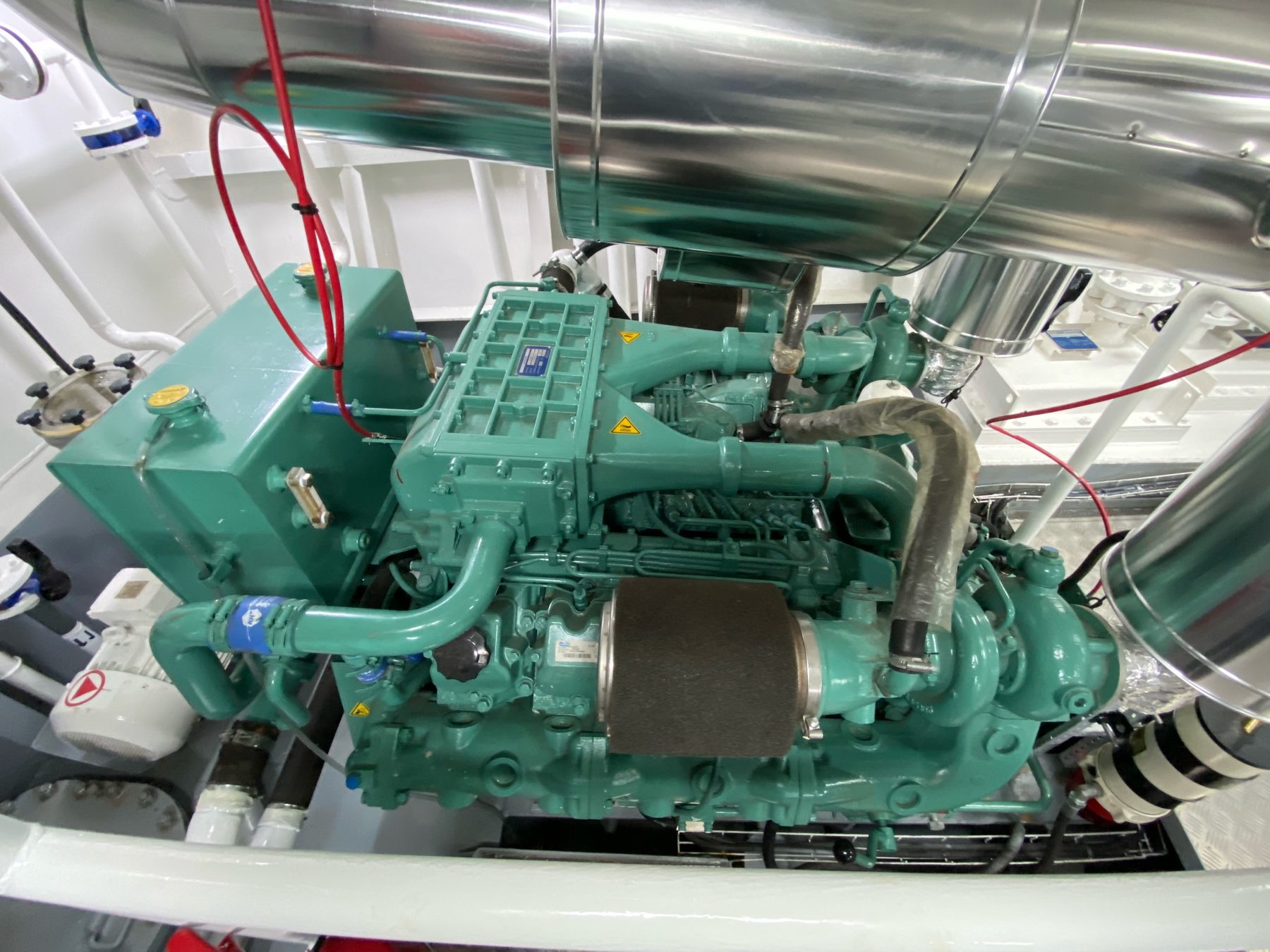
| Propulsion and steering | Engines, gearboxes, shaft lines or azimuth thrusters, lubrication, cooling and controls. |
| Towing equipment | Winches, hooks, lines, fairleads, towing points and quick-release devices. |
| Hydraulic systems | Pumps, actuators, hoses and circuits serving the deck and the steering gear. |
| Fenders and structure | Condition of the fenders, their fastenings and the hull areas that take contact during manoeuvres. |
| Electrical installation and controls | Switchboards, connections, alarms and control systems. |
| Underwater hull and safety | Submerged hull, coatings, corrosion protection, firefighting and safety equipment. |
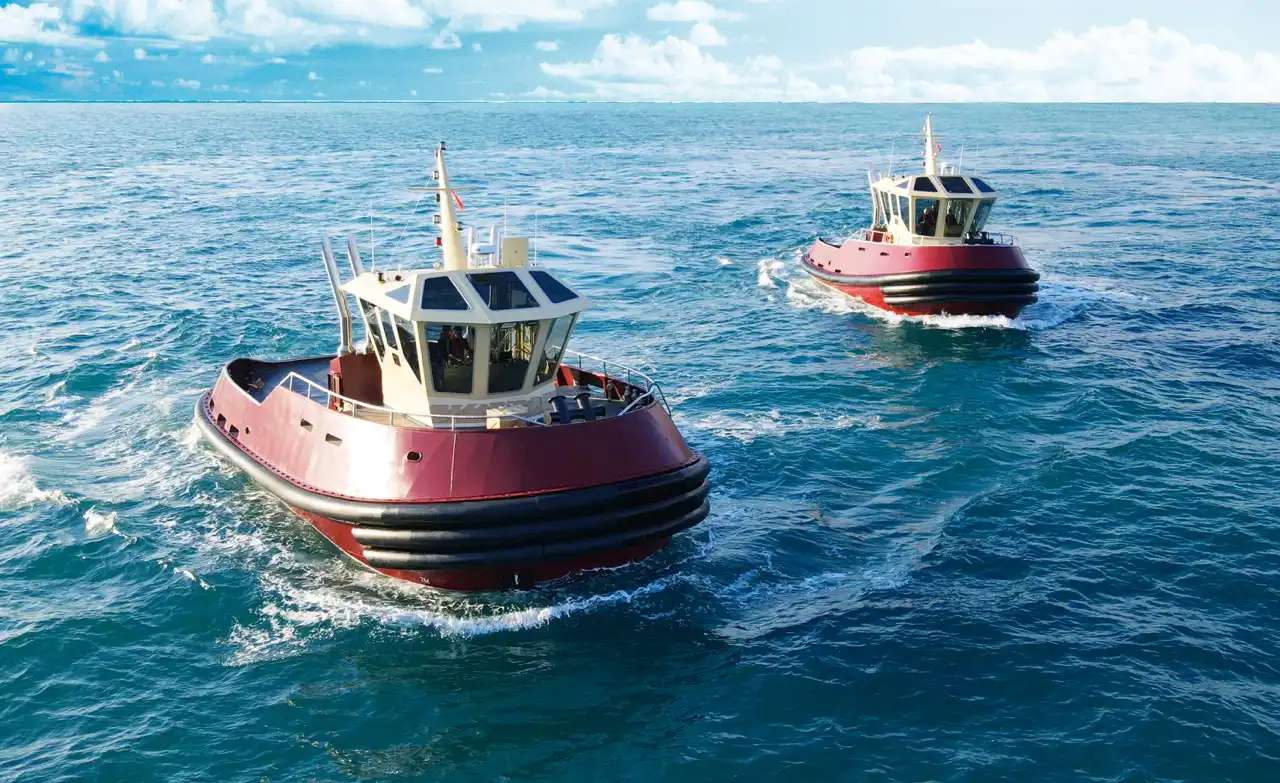
The propulsion configuration shapes the plan. An azimuth tug needs more complex maintenance than a conventional shaft-and-propeller tug, because the propulsion units and their steering and control systems have to be inspected; in return, it offers superior manoeuvrability. On a conventional tug, maintenance is simpler and spare parts are easier to source.
It is also worth distinguishing expected wear from damage. Fenders are there to absorb contact with other vessels, and their wear is part of the job. A broken fastening or a deformation of the hull in that area, on the other hand, calls for an assessment and, where necessary, a repair.
What can be done afloat and what requires dry-docking
A tug under repair usually stays out of service while the work lasts, even if it remains afloat. The advantage of repairing afloat lies elsewhere: it avoids dry-docking and, in many cases, allows the work to be done in the same port where the tug operates, without moving it to a shipyard.
Afloat, in its home port or at a repair quay
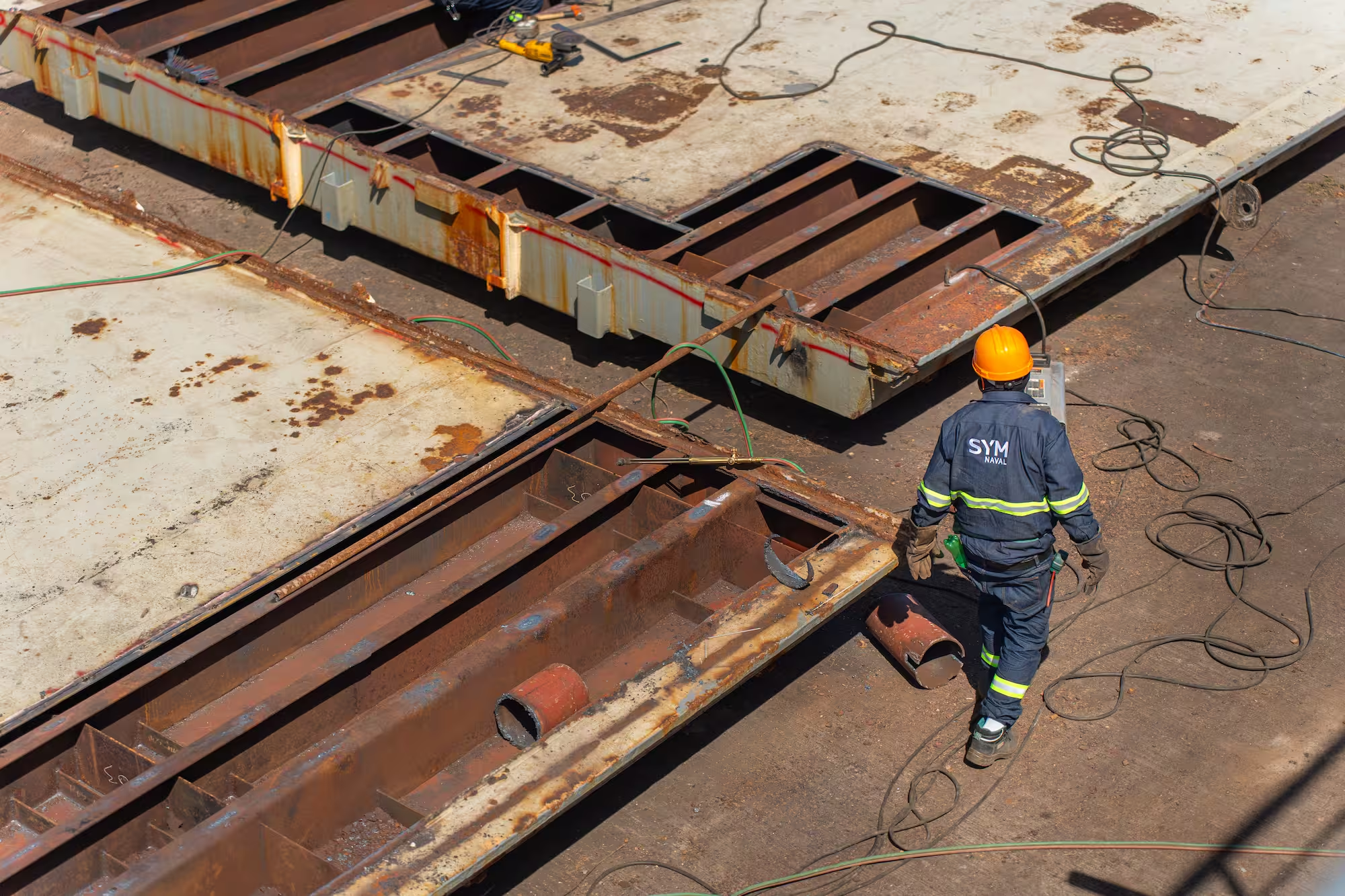
Work on accessible equipment and areas can be carried out with the vessel moored: electrical installation, machinery, hydraulic systems, piping, deck equipment and certain steel repairs. There are two ways to organise it:
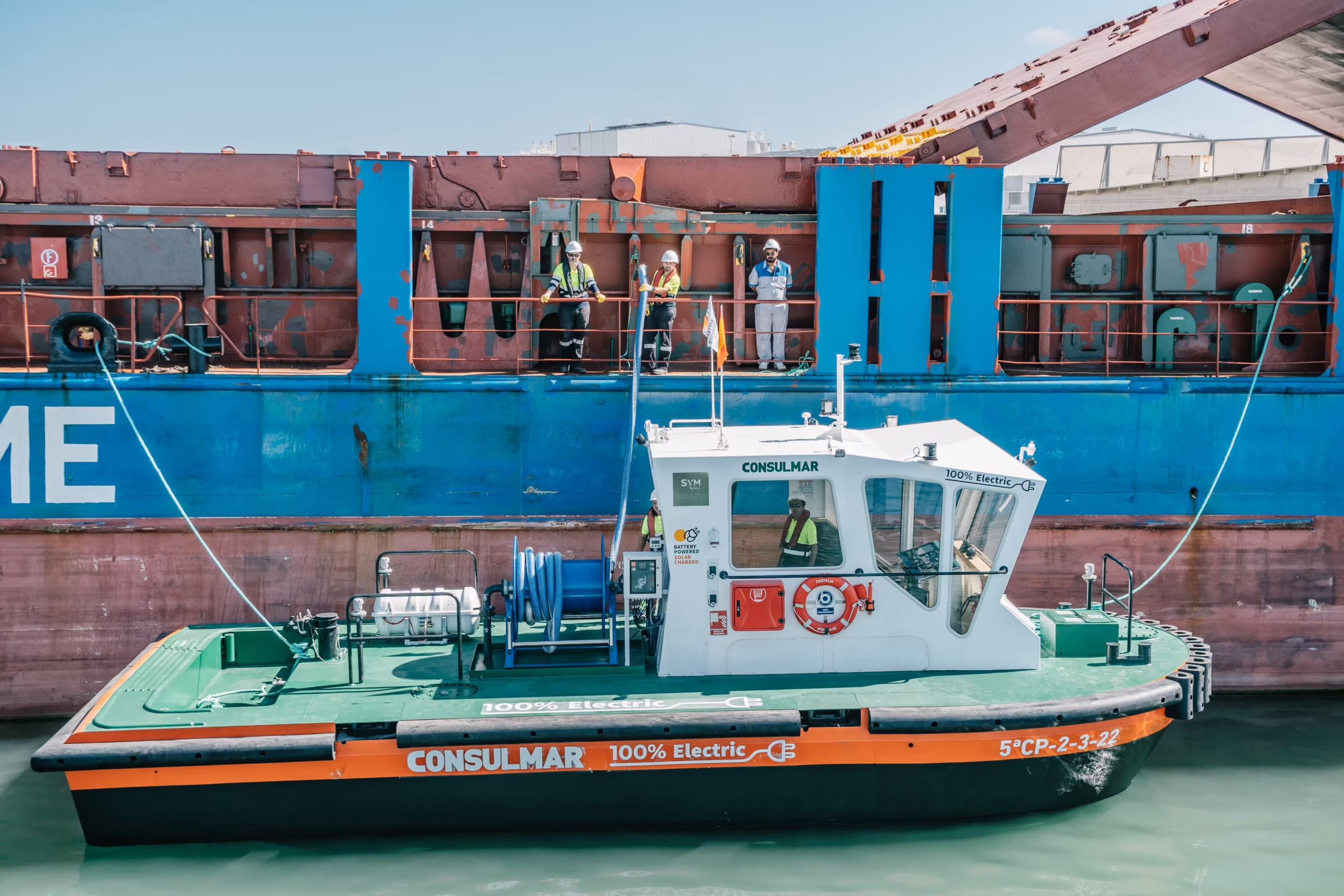
- In the port where the tug operates. A mobile repair team (riding squad) travels there with the necessary resources and carries out the work on board. The tug does not have to sail to another port and, as soon as the job is finished, it is available again at its base.
- At a repair quay. When the job is larger or requires several trades at once, it is better done at an equipped quay. SYM Naval has its own quay for afloat repairs in Vilanova i la Geltrú, prepared for simultaneous electrical, mechanical, welding, piping and painting work.
In dry dock
Dry-docking is needed when the work requires external access to the submerged part of the vessel: full treatment of the underwater hull, corrosion protection and certain work on the hull, shaft lines, propellers or thrusters. Its schedule is set by classification society and flag requirements, together with the condition of the hull.
What can be decided is how much work reaches the dry-docking. Everything resolved afloat beforehand shortens the time out of the water, which is the most expensive part of the stop. The comparison between afloat repair and dry-docking explains these criteria in more detail.
How to prepare a maintenance stop
A short stop is prepared before the tug stops operating. These are the five points that most influence its duration:
- Information on each unit. Running hours, failure history, crew observations, outstanding work and upcoming inspections. This defines the scope and reveals recurring issues.
- Priority and scope of each job. Each intervention is assessed by its effect on safety, manoeuvring capability and continuity of service. This determines what is immediate, what can be scheduled and what has to wait for dry-docking.
- Spare parts, resources and sequence. References, materials, access and dismantling are confirmed before the vessel is immobilised, and it is decided which jobs can run in parallel. Grouping interventions avoids repeated stops, provided the sequence is well planned.
- Fleet cover. The stop is scheduled according to what the units still operating can cover: their bollard pull, their configuration and the manoeuvres expected. Two tugs are not always interchangeable in every job.
- Testing before returning to service. The plan includes the functional tests appropriate to each job and the documentation of the intervention.
Condition monitoring complements scheduled maintenance. Operating records, oil analysis and vibration measurements help to detect changes before they turn into a failure. At SYM Naval we apply data-based strategies to anticipate failures and plan interventions with better information. Preventive maintenance and off-hire planning covers this approach for the vessel as a whole.
Tug repair at SYM Naval
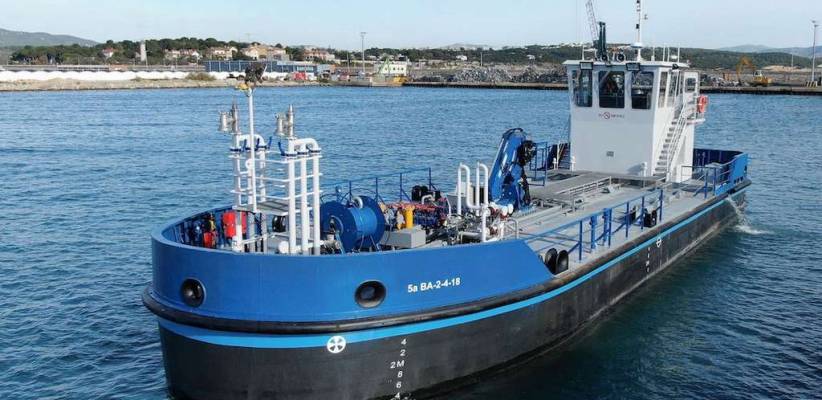
SYM Naval designs and builds harbour tugs of up to 80 t bollard pull and provides maintenance and ship repair services to tug fleets in electrical, mechanical, hydraulic, piping and steel work. It works in three ways:
- With mobile teams that travel to the port where the tug operates, anywhere in the world.
- At its own quay in Vilanova i la Geltrú, for afloat repairs and technical stops.
- With its own local teams in Panama City.
Assistance is available 24 hours a day, 365 days a year, including for urgent breakdowns.
Frequently asked questions
Does a tug have to go to a shipyard to be repaired?
Not always. Much of the electrical, mechanical, hydraulic, piping and steel work can be done afloat in the port where the tug operates, with a mobile team that travels there. The tug has to be moved when the work requires dry-docking or the resources of a repair quay.
How often does a tug need to be dry-docked?
The schedule is set by the requirements of the classification society and the flag state, together with the condition of the underwater hull and its corrosion protection. The intervals for the rest of the maintenance depend on the equipment installed, the manufacturers’ instructions and the running hours.
Does grouping repairs always shorten the stop?
Grouping avoids immobilising the vessel several times. The final duration depends on spare parts, access and the work sequence being resolved in advance, on which tasks can run in parallel and on what is found when the equipment is opened.
Do you work on tugs built by other shipyards?
Yes. The repair and maintenance service does not depend on who built the vessel.
How does maintenance change with electric propulsion?
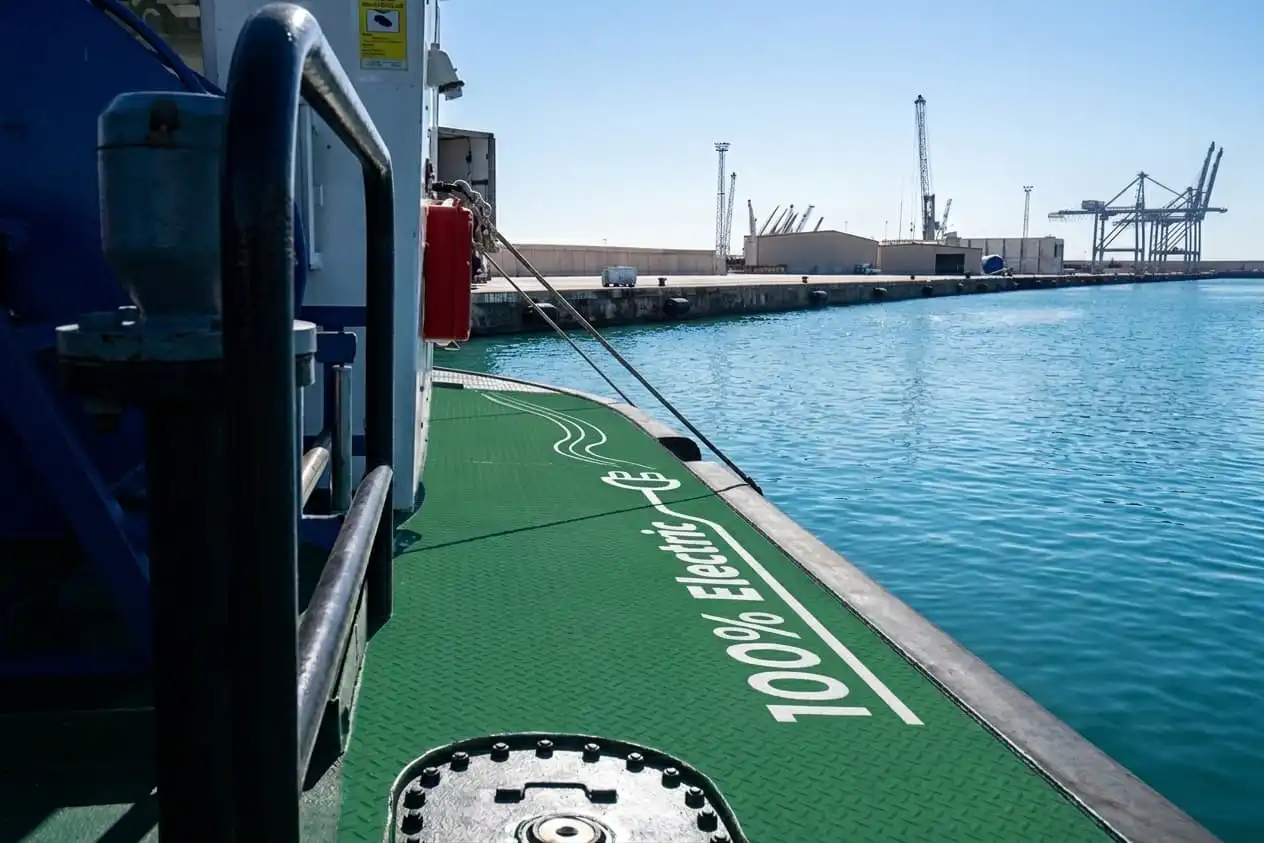
Blue Propulsion, the 100% electric propulsion system developed by SYM Naval, eliminates the complexity of diesel engine systems: maintenance becomes simpler and more predictable, with a lower operating cost per cycle. It already has operational references, such as the first 100% electric tugboat in Spain. The fleet electrification page explains how it is incorporated into an existing or newbuild vessel.
Planning the next intervention
To study the maintenance of a tug or a fleet, it helps to gather each unit’s home port, its main characteristics, outstanding work and the dates when it can be taken out of service. With this information, the SYM Naval team assesses the scope and the intervention options. You can contact us at comercial@sym-naval.com.