Sargassum has stopped being a minor seasonal event and has become a recurring, large-scale problem across the Caribbean. Beaches buried under algae are the most visible image, but the real technical challenge comes earlier: intercepting and collecting the sargassum in the water, before it builds up on the shore. And that is not solved with just any vessel, but with one conceived specifically for the task.
Sargassum in the Caribbean, a growing problem
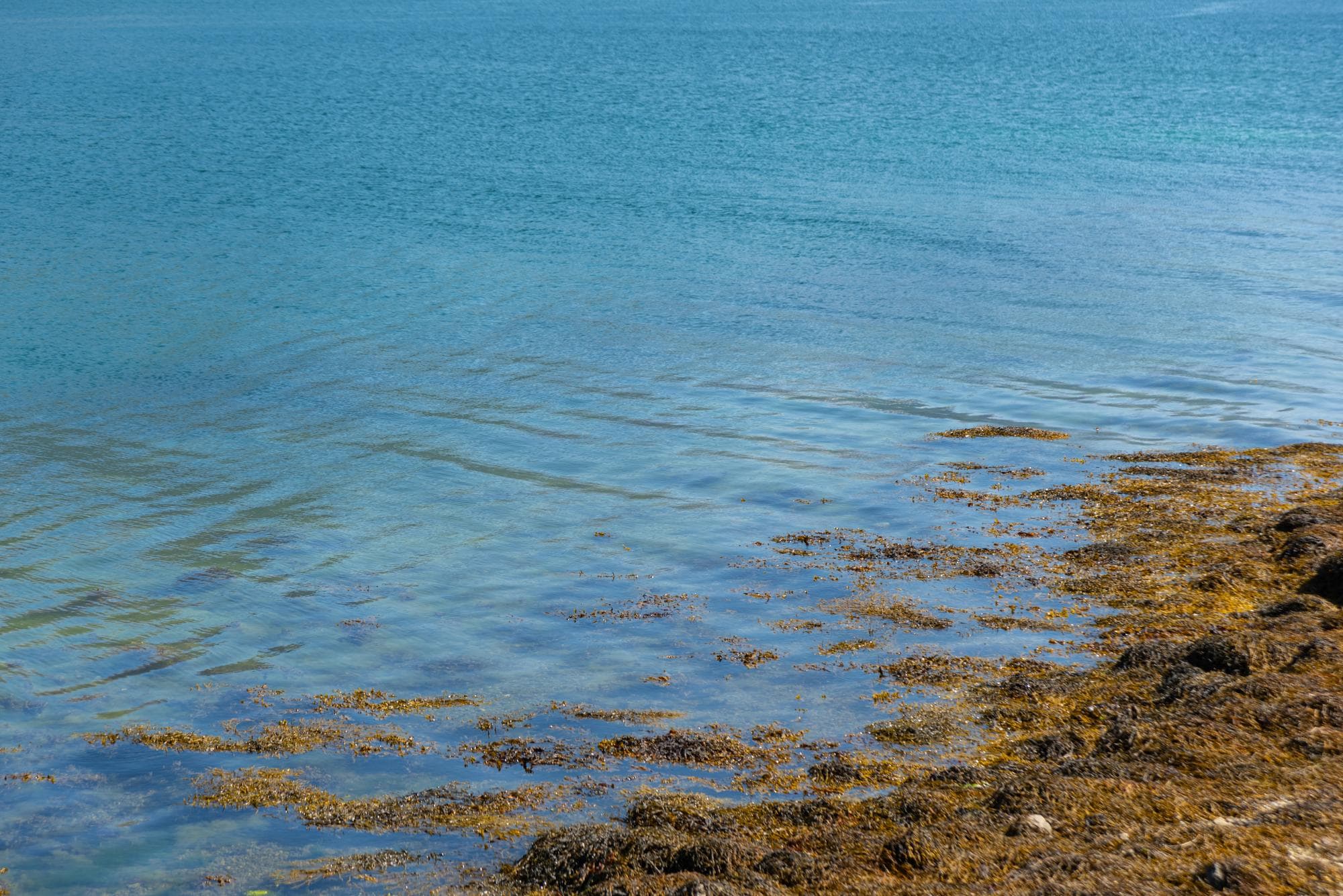
The 2026 season is shaping up to be one of the most intense on record in the Caribbean. Forecasts from LANOT, the UNAM laboratory that monitors the phenomenon by satellite, point to as much as 40 million tonnes of sargassum reaching the Caribbean over the course of the year. The so-called Great Atlantic Sargassum Belt has spread across much of the Caribbean Sea, affecting Mexico, Cuba, Florida and other stretches of the region’s coastline.
The phenomenon concentrates between June and September, with the highest volumes in July and August. Its growth is linked to rising sea temperatures, the greater inflow of nutrients from large rivers and shifts in ocean currents.
The problem is not only aesthetic. As it decomposes on the shore, sargassum releases irritant gases and degrades the environmental quality of beaches. And removing it once deposited, with heavy machinery on the sand, is costly and damages the beach itself. That is why the trend is clear: intercept the algae in the water before it makes landfall.
Why collecting sargassum is a naval engineering problem
Intercepting in the water is more efficient than cleaning the beach
Once sargassum reaches the sand, removing it is slow, costly and harmful to the environment. Intercepting it while it floats, before it makes landfall, reduces the impact on the coast and on tourism. The strategies already in use across the region combine floating barriers, collection crews and vessels that operate directly on the water.
What a sargassum collection vessel requires
Collecting sargassum at sea imposes specific technical requirements:
- Shallow draught, to operate close to shore and in the shallow waters where the algae accumulate.
- A surface collection system able to pick up floating biomass continuously.
- A hold or container with drainage, since sargassum is bulky, low-density and carries a great deal of water.
- Manoeuvrability to work in narrow coastal strips.
Why adapting a vessel built for another purpose does not work
A vessel designed to carry liquid cargo or to receive waste from other ships does not solve this problem. The collection method, the type of storage and the draught are entirely different. Adapting a unit built for another purpose would, in practice, mean redesigning it completely. The effective answer is a vessel conceived from the outset for this use.
SYM Naval’s response: a design conceived for sargassum collection
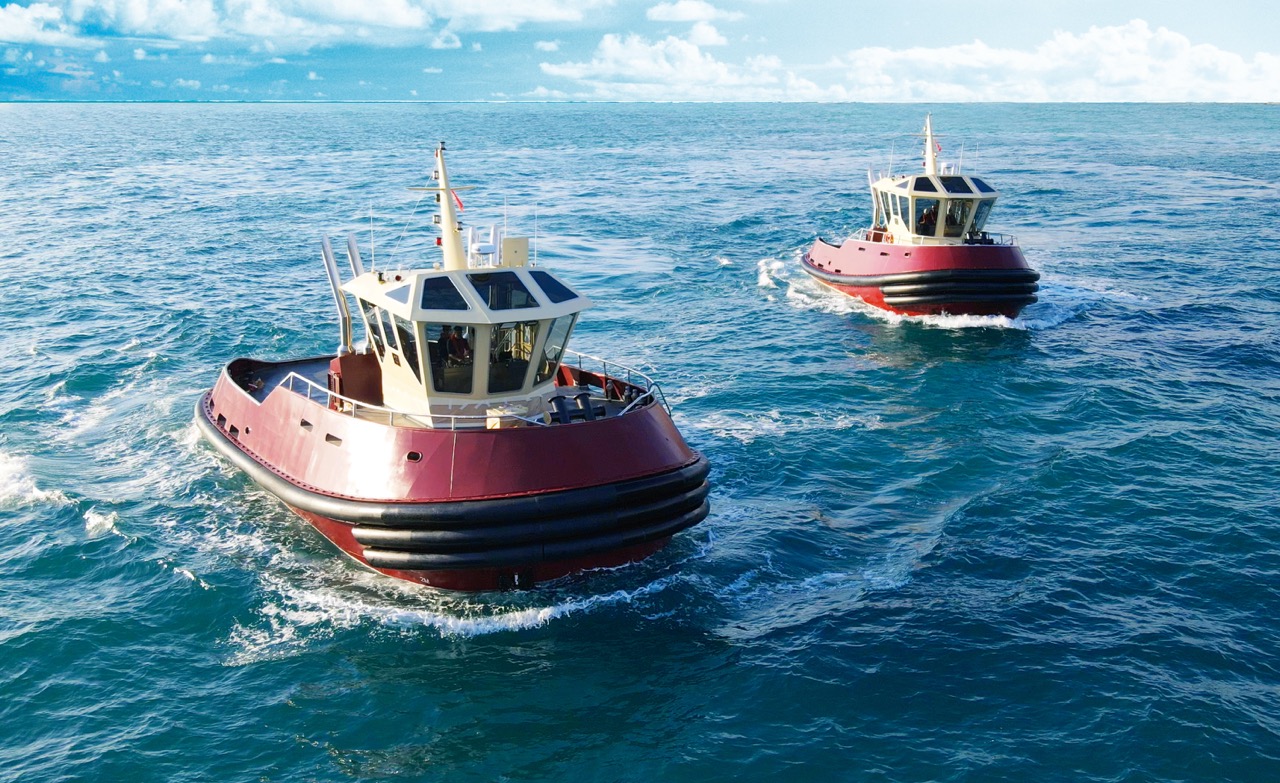
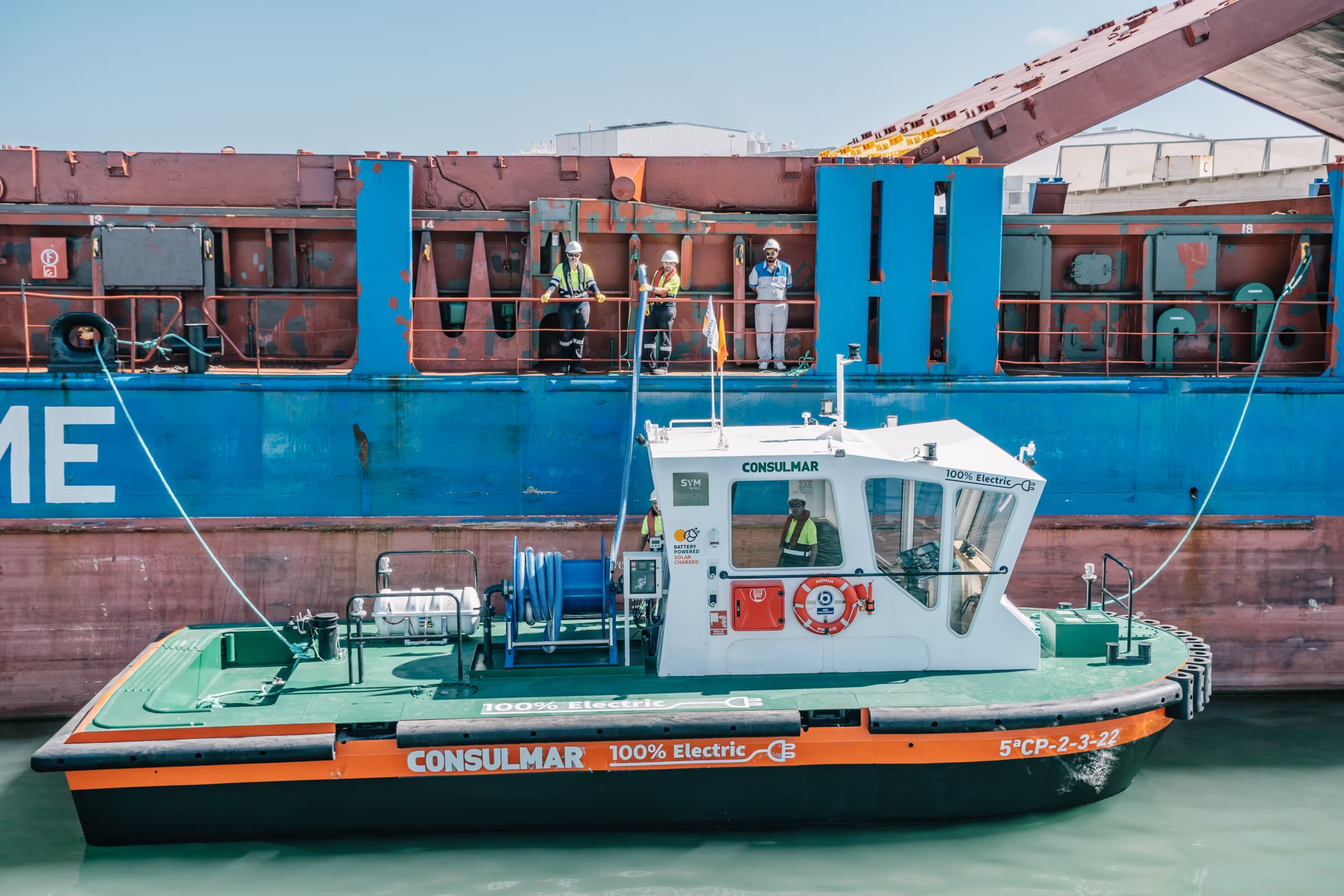
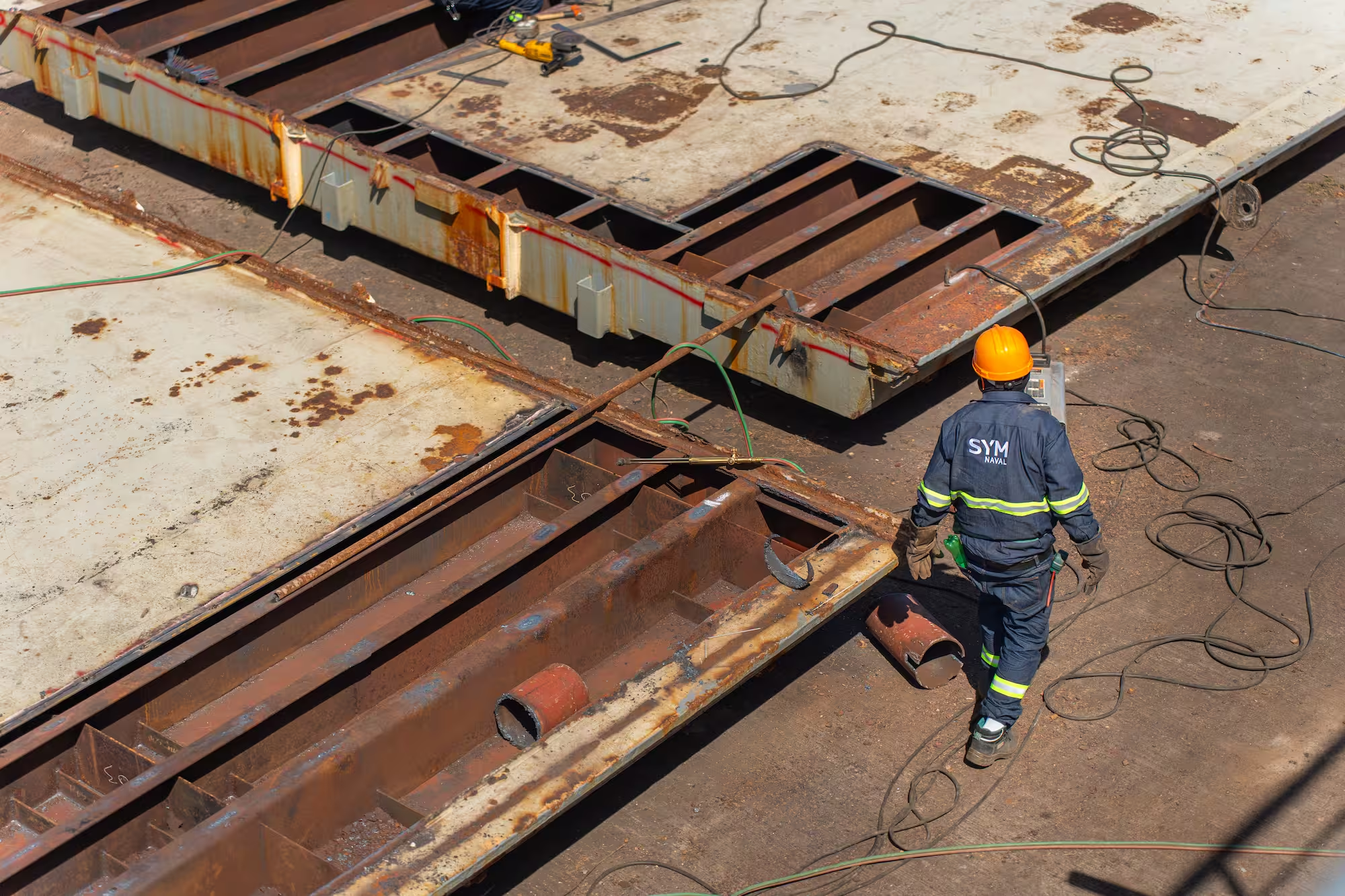
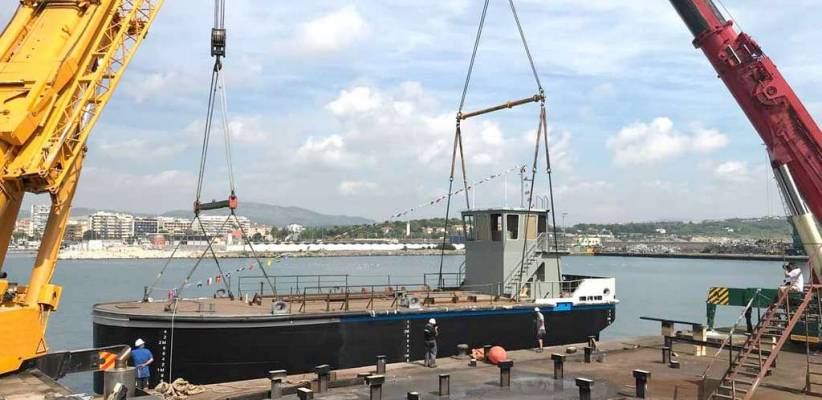
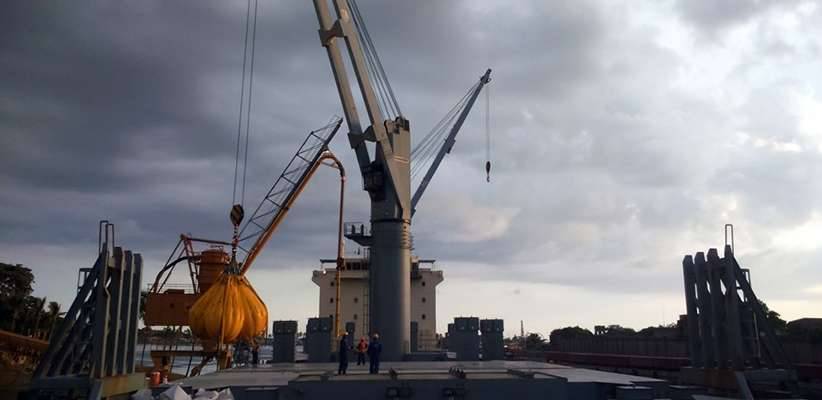
SYM Naval has what it takes to tackle this challenge. It has its own naval engineering capability, a shipyard in the Caribbean, in Boca Chica (Dominican Republic), and proven experience designing and building its own vessels for specific uses.
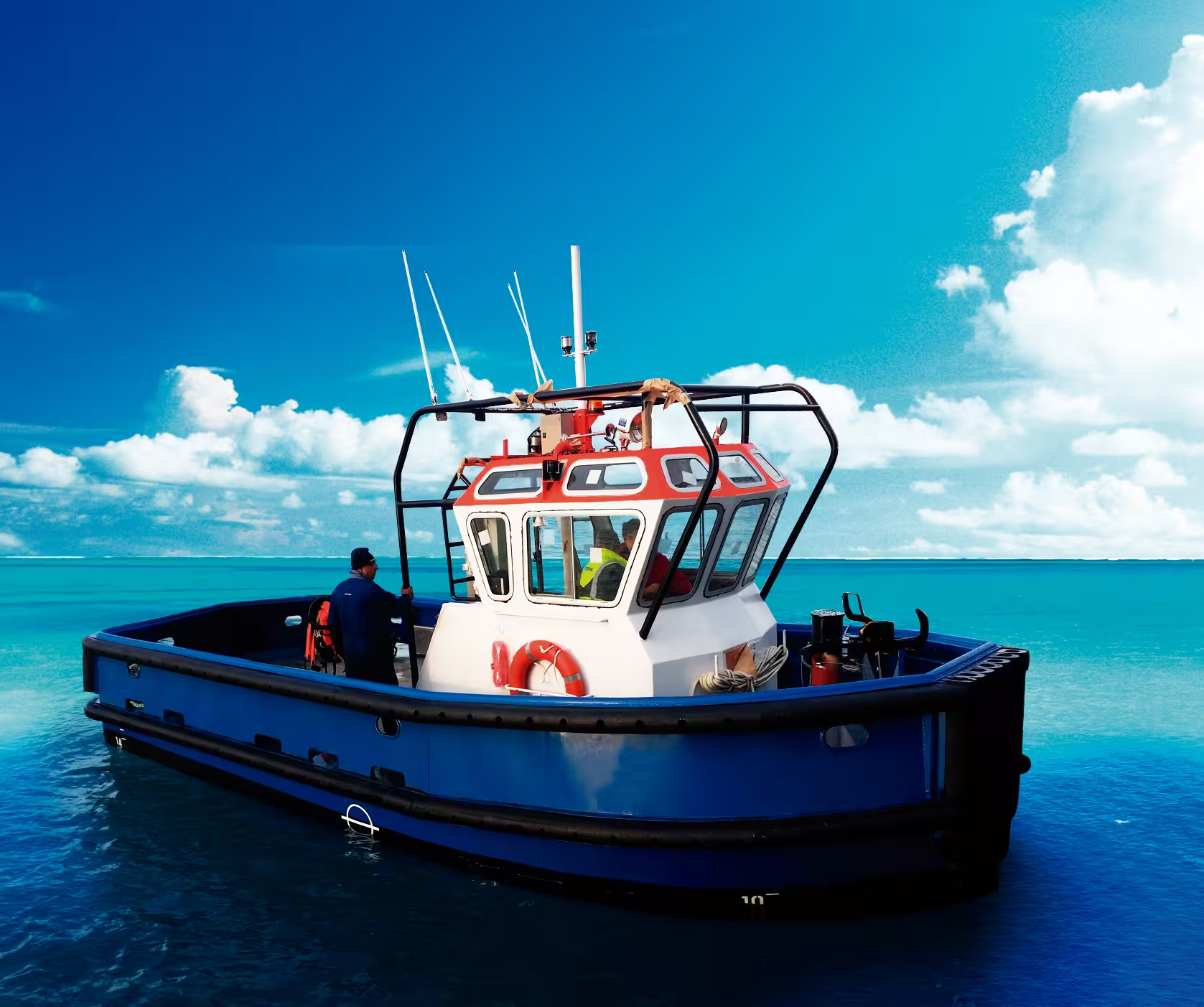
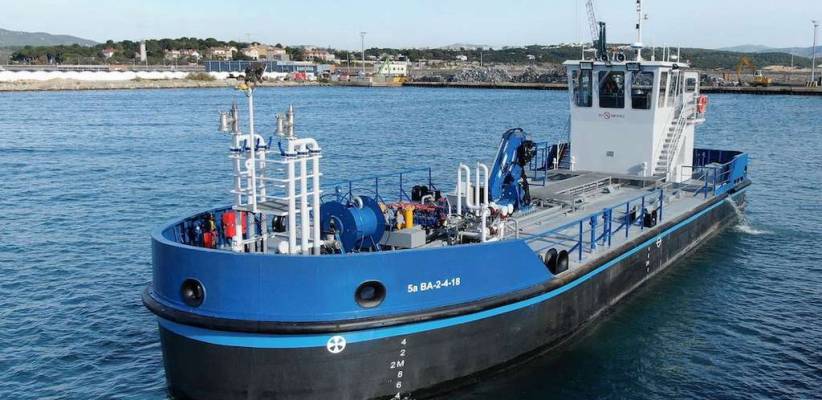
Building on that, SYM Naval has developed a design of its own for this challenge, not an adaptation of another unit. The project starts from a clear premise: to design a vessel specifically for sargassum collection, suited to the operating conditions of the Caribbean.
The differentiator is twofold: a tailored design and the ability to build it in the Caribbean itself, suited to the region’s conditions and with the European engineering standard that defines the company.
Sargassum also affects vessels in operation
Sargassum is not only a coastal problem. For vessels operating in the Caribbean it is also a maintenance issue. Large accumulations of algae block sea chests and filters, compromise cooling systems and accelerate hull fouling. For a fleet working in the area, that means more maintenance and a higher risk of unplanned downtime.
SYM Naval, with afloat repair capability in the Caribbean, also addresses this side of the problem, anticipating interventions and reducing off-hire time.
Building the solution where the problem is
Sargassum will remain a challenge for the Caribbean in the coming years. Having vessels designed to collect it, and built in the region itself, is part of the answer. SYM Naval puts its tailored design and construction capability at the service of authorities, operators and organisations that need to address this problem with a real technical solution.